

Key Highlights
Bitcoin snapped a 9-day ETF inflow streak with a $263M net outflow, signaling a pause in institutional demand.
The Coinbase Premium has turned negative, indicating weaker U.S. buying pressure.
BTC is trading around the mid-$76K range, showing mild weakness ahead of key events.
A high-impact macro week (Fed decision, PCE, GDP) could drive major volatility.
Bitcoin (BTC) is currently trading at $76,967.78, down 1.01% over the past 24 hours, as the market turns cautious following spot ETF net outflows and a negative flip in the Coinbase Premium ahead of key high-impact macro events. The leading cryptocurrency reached a daily high of $78,270.43, with its market capitalization standing near $1.54 trillion.
 Bitcoin (BTC) Price/Source: Coinmarketcap
Bitcoin Spot ETFs Snap 9-Day Inflow Streak
On April 27, U.S. Bitcoin spot ETFs recorded a notable $263.18 million net outflow, ending a strong 9-day streak of inflows. All 12 ETFs reported zero net inflows, signaling a pause in institutional accumulation.
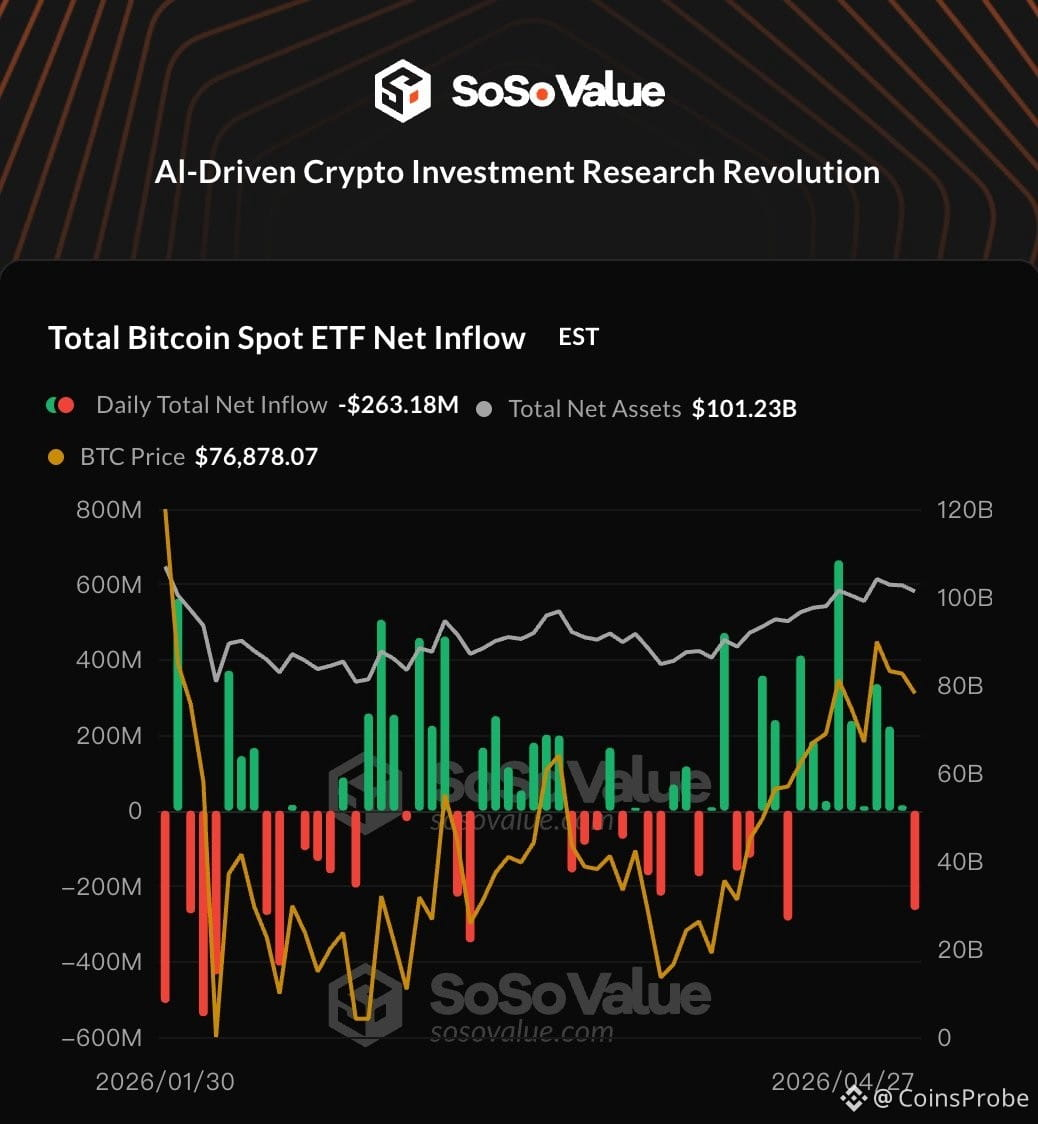 Bitcoin Spot ETF/Source: @SoSoValueCrypto (X)
Ethereum ETFs also saw $50.48 million in outflows, while Solana and XRP ETF flows remained flat. Despite this shift, total net assets in Bitcoin ETFs remain strong at $101.23 billion, suggesting this may be a temporary cooling rather than a broader exit.
Coinbase Premium Gap Turns Negative
Another key signal came from the Coinbase Premium Gap, which has turned negative for the first time in nearly 20 days.
This metric reflects the price difference between Coinbase (often dominated by U.S. investors) and global exchanges. A negative reading suggests reduced buying pressure or increased selling activity from U.S. participants, aligning with the recent ETF outflows and short-term price weakness.
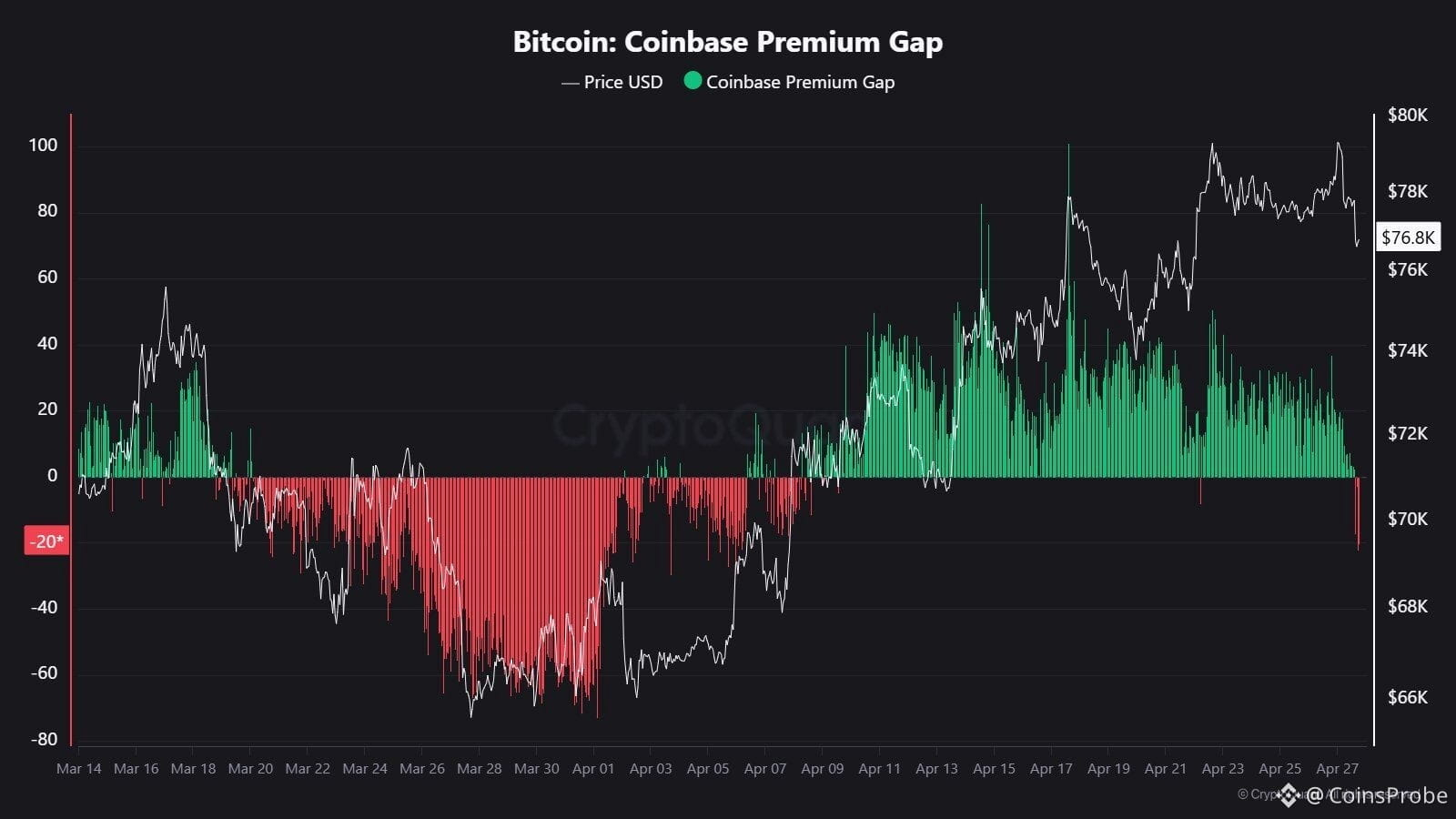 Coinbase Bitcoin Premium Gap/Source: @Cointelegraph (X)
High-Impact Macro Week Ahead
Markets are now shifting focus to a crucial week of U.S. economic data and central bank decisions:
Tuesday, April 28
S&P/Case-Shiller Home Price Index
Consumer Confidence
Wednesday, April 29
Durable Goods Orders & Housing Starts
FOMC Interest Rate Decision (2:00 pm ET)
Fed Chair Powell Press Conference (2:30 pm ET)
Thursday, April 30
PCE Price Index (Fed’s preferred inflation gauge)
Q1 GDP Growth Rate (Advance)
Personal Income & Spending
Jobless Claims
Friday, May 1
S&P Global & ISM Manufacturing PMI
The most critical events remain the Federal Reserve rate decision and PCE inflation data, both of which could significantly impact risk sentiment.
Market Outlook
Bitcoin has been consolidating in the mid-$70K range following a strong recovery earlier this year. The recent ETF outflows, combined with a negative Coinbase premium and a packed macro calendar, suggest elevated volatility ahead.
A dovish tone from the Federal Reserve or softer-than-expected inflation data could act as a bullish catalyst, potentially pushing BTC higher. On the other hand, hawkish signals or persistent inflation may trigger further profit-taking and short-term downside pressure.
Frequently Asked Questions (FAQ)
Why did Bitcoin ETF inflows stop?
ETF inflows paused due to market uncertainty and profit-taking ahead of major macroeconomic events.
What does a negative Coinbase Premium mean?
It indicates weaker demand from U.S. investors or increased selling pressure on Coinbase compared to global exchanges.
What events are impacting Bitcoin this week?
Key events include the Federal Reserve rate decision, PCE inflation data, and Q1 GDP figures.
Is Bitcoin turning bearish?
Not necessarily. The current move suggests short-term caution rather than a confirmed bearish trend.
What could push BTC higher again?
A dovish Fed stance or lower-than-expected inflation could act as bullish catalysts.
Disclaimer: The views and analysis presented in this article are for informational purposes only and reflect the author’s perspective, not financial advice. Technical patterns and indicators discussed are subject to market volatility and may or may not yield the anticipated results. Investors are advised to exercise caution, conduct independent research, and make decisions aligned with their individual risk tolerance.