
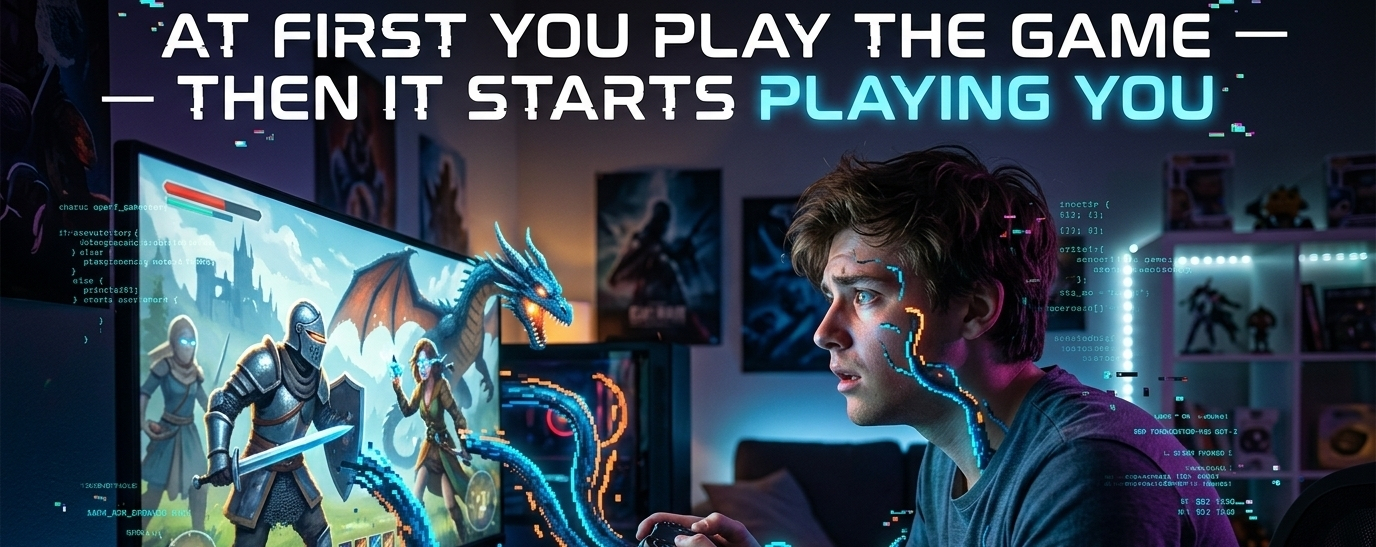
There wasn’t a clear moment where everything changed. It kind of crept in quietly. At first, I was just doing what I’ve always done in these kinds of games , logging in, running the usual loop, planting, collecting, upgrading, repeating. Even checking the chart became part of the rhythm, almost automatic. Nothing felt different on the surface. But over time, something shifted in a way that’s hard to point to exactly. It stopped feeling like I was just playing, and more like I was adjusting myself without even realizing it. Small decisions started happening faster, more naturally. I’d skip certain actions, lean into others, not because I consciously planned it, but because they just “felt” right inside the system.
That’s when it started getting interesting. I’ve been around enough Web3 games to know the usual pattern. You enter, learn the loop, push activity, extract what you can, and eventually step away once things start feeling drained or repetitive. It’s predictable most of the time. But here, it didn’t fully follow that script. The loop didn’t collapse as quickly, and people didn’t disappear at the same pace I expected. At first I thought maybe I was just overthinking it, but the longer I stayed, the more I noticed that effort and reward weren’t always directly connected in a simple way. You could spend the same amount of time doing different things and end up with completely different outcomes.
Initially, I brushed it off as normal balancing. Every game tweaks numbers. But this felt a bit deeper than that. It didn’t seem random, and it didn’t feel strictly linear either. It felt like the system was quietly reacting to how I played, not just how much I played. That’s a subtle difference, but once you notice it, you can’t really unsee it. It shifts your mindset. You stop acting randomly and start moving with intent, even if you never sat down and decided to “play strategically.” It just happens.
Efficiency becomes important, but even that word doesn’t fully capture it. It’s more about how your actions convert into something the system values. Some patterns just seem to flow better. Others slowly lose weight over time, even if they take the same effort. You don’t get a clear explanation for it, but you feel it through repetition. And gradually, your behavior adjusts to match that invisible structure.
What stands out is that it doesn’t rely purely on volume. A lot of GameFi systems reward you simply for doing more. This feels different. It feels like alignment matters , like the system is filtering for something beyond raw activity. Even the so, called “sinks” don’t just feel like obstacles. They feel like tools shaping the direction of value, forcing choices instead of letting everything pile up mindlessly. It creates a kind of controlled flow, where every decision has a bit more weight behind it.
At some point, I stopped looking at it as just a game economy. It started to feel more like an experiment , almost like a controlled environment where behavior and value movement are constantly being tested against each other. Like the system isn’t just running, it’s learning what works and what doesn’t. That gives it this strange “framework” feeling, like it could evolve into something bigger than just one game if it keeps going in this direction.
But then there’s the other side of it , the market layer , and that’s where things don’t fully line up. No matter how refined the internal system feels, the token still reacts like any other. Attention spikes, liquidity shifts, timing matters more than design. You can have a well-structured system underneath, but if demand doesn’t meet emissions at the right moment, the price moves anyway. It doesn’t wait for logic to catch up. That disconnect is real, and it’s hard to ignore once you see it.
That’s probably where the tension comes from. On one side, you have a system trying to reward meaningful behavior. On the other, you have a market that mostly rewards attention and momentum. Those two don’t always sync, and maybe they never fully will. And somewhere in between, as a player, you start questioning your own role. There were moments where I genuinely wondered if I was still playing, or if I was just optimizing myself inside a structure that had already defined what “good” looks like.
That’s the uncomfortable part. The more precise a system becomes in defining value, the more it narrows behavior. You gain efficiency, but you lose a bit of randomness , and that randomness is usually what makes games feel alive. When everything starts feeling measured, exploration slowly turns into compliance, and you don’t even notice when that transition happens.
Still, despite all of that, I keep coming back. Not because of optimization or rewards alone, but because people are still there. They return. And that matters more than anything. Because no matter how well-designed a system is, it means nothing if players don’t choose to re, enter it on their own.
So now I see it a bit differently. Not just as a game, and not just as a token economy, but as something trying to understand how value should move when behavior becomes the main input. It doesn’t feel finished, and maybe it isn’t supposed to be yet. But it also doesn’t feel like pure extraction. It feels like something in between , something testing how far incentive design can go before it starts reshaping the player too much.
And maybe that’s the real question underneath all of it. Not whether it works, but whether something this precise can still feel like a game when you’re inside it.
NFA ~ DYOR