
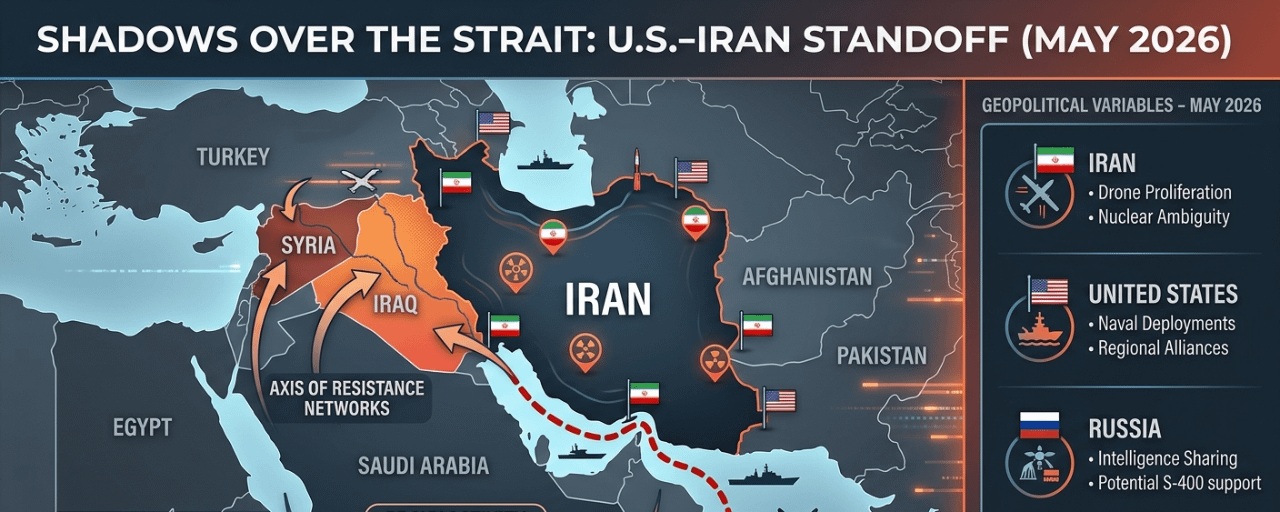
Le paysage géopolitique international est actuellement défini par une partie d'échecs à enjeux élevés centrée au Moyen-Orient, avec Washington et Téhéran déplaçant des pièces sur un échiquier encombré et instable. À partir de mai 2026, la question qui hante les analystes et le public n'est plus de savoir si ces deux puissances vont s'affronter, mais plutôt quand, où, et si une telle confrontation pourrait dégénérer en une troisième guerre mondiale. La situation actuelle est marquée par une tension extrême, des escarmouches par procuration fréquentes, et une absence précaire de canaux diplomatiques directs de haut niveau.
La Géographie de la Tension : Proxies et Prolifération
La "guerre" entre les États-Unis et l'Iran ne se déroule actuellement pas avec des déclarations formelles et de vastes invasions terrestres, mais à travers un réseau complexe de forces par procuration et d'acteurs non étatiques que l'Iran a soigneusement cultivés pendant des décennies dans la région. Les rebelles houthis du Yémen continuent de représenter une menace constante pour le trafic maritime dans le Bab al-Mandab, malgré des années de frappes aériennes coordonnées par des coalitions menées par les États-Unis visant à dégrader leurs capacités. Cette menace persistante pour les chaînes d'approvisionnement mondiales force des déploiements navals constants et des frappes de représailles, créant un état de conflit à bas niveau perpétuel.
Un développement significatif en 2026 est la consolidation accrue de l'"Axe de Résistance." Cette alliance, englobant l'Iran, le gouvernement syrien, diverses forces paramilitaires en Irak et le Hezbollah au Liban, est devenue plus intégrée, coordonnée et technologiquement sophistiquée, avec un partage étendu des technologies de drones, de missiles et de renseignement.
La prolifération de capacités avancées de drones, en particulier l'utilisation répandue de drones kamikazes, a considérablement augmenté les enjeux. "La démocratisation de la technologie de frappe de précision signifie que les acteurs étatiques peuvent infliger une douleur disproportionnée via des plateformes peu coûteuses et fabriquées localement, brouillant la frontière entre la guerre conventionnelle et asymétrique," note Dr. Anya Sharma, analyste senior en risque géopolitique. "Nous assistons à un changement profond où la supériorité militaire traditionnelle est défiée par des essaims distribués et à faible coût."
Ajoutant à l'instabilité, l'ambiguïté persistante entourant le programme nucléaire iranien. Bien que des rapports officiels indiquent que la surveillance se poursuit, les soupçons concernant des efforts avancés d'enrichissement d'uranium alimentent de profonds soucis à Washington et chez ses alliés régionaux, notamment Israël. Cette ombre nucléaire sous-tend toutes les interactions, augmentant le potentiel d'un malentendu soudain et catastrophique ou d'une action préventive.
L'Axe : Comprendre le Réseau Stratégique de l'Iran
Pour comprendre la perspective iranienne, il est essentiel de saisir le concept de l'"Axe de Résistance." Du point de vue de Téhéran, ce réseau n'est pas seulement une extension de pouvoir mais une doctrine défensive essentielle pour sa survie dans une région hostile. Après la dévastatrice guerre Iran-Irak (1980-1988), l'Iran a appris les dangers de la guerre conventionnelle contre des ennemis mieux équipés. Par conséquent, sa stratégie s'est orientée vers des réseaux idéologiques d'État profond dans les pays voisins—des organisations politiques comme le Hezbollah aux milices en Irak et au Yémen.
Cette doctrine offre à l'Iran une "profondeur stratégique," lui permettant de projeter son influence et de dissuader l'agression loin de ses propres frontières, créant une zone tampon et s'assurant que tout conflit contre l'Iran deviendrait multi-front et multi-générationnel. Bien qu'elle soit perçue de l'extérieur comme déstabilisante, cette stratégie est défendue en interne comme un rempart nécessaire contre "l'impérialisme étranger." En 2026, ce réseau est plus fort et plus interconnecté que jamais, avec des formations coordonnées et des lignes d'approvisionnement qui s'étendent du Levant à la Péninsule Arabique.
La Dimension Globale : Prédictions sur la Troisième Guerre Mondiale et le "Choc des Blocs"
La préoccupation majeure est de savoir si ces tremblements régionaux pourraient déclencher un événement sismique mondial. En 2026, le spectre de la "Troisième Guerre Mondiale" est souvent évoqué non pas comme un scénario spéculatif mais comme une conséquence potentielle de l'ordre mondial fragmenté actuel. L'ancien système international, faiblement organisé, s'est fragmenté en sphères d'influence distinctes et concurrentes—une réalité multipolaire que beaucoup appellent "La Grande Fracture."
Une potentielle Troisième Guerre Mondiale à cette époque ne découlerait probablement pas d'une invasion délibérée unique, mais d'une escalade rapide et en cascade de méscalculs parmi ces blocs concurrents. La préoccupation principale est la formation et l'alignement d'un axe "révisionniste" vaguement défini : Iran, Russie, Corée du Nord et Chine. Bien que ces nations aient des objectifs et des idéologies à long terme différents, elles sont unies par un désir commun de démanteler l'ordre mondial dirigé par les États-Unis après 1945.
"La caractéristique déterminante de 2026 est la coalescence d'un 'axe révisionniste' composé d'États qui croient que le système international existant est structurellement biaisé contre eux," explique l'ambassadeur Liam O’Sullivan, un diplomate chevronné spécialisé dans la sécurité mondiale. "C'est une dynamique précaire. Un conflit isolé en Europe de l'Est, en Asie de l'Est ou dans le Golfe Persique pourrait désormais activer des accords de défense mutuelle, des traités économiques, ou même des garanties de soutien non déclarées, nationalisant rapidement une crise régionale en une catastrophe mondiale."
Dans ce scénario, un conflit entre les États-Unis et l'Iran ne resterait pas localisé. Si les États-Unis lançaient une campagne complète contre l'Iran, la Chine—en tant que principal acheteur d'énergie iranienne—pourrait considérer cela comme une attaque économique directe ou une tentative d'atteindre l'hégémonie régionale, entraînant des déploiements navals significatifs ou de sévères contre-mesures économiques. La Russie, embourbée dans ses propres engagements européens à long terme, pourrait augmenter le partage de renseignement, le transfert d'armements avancés (par exemple, systèmes S-400), et le soutien politique à Téhéran pour étirer les ressources américaines. La Corée du Nord, toujours opportuniste, pourrait profiter de la distraction mondiale pour augmenter les provocations en Asie de l'Est.
Le Seuil de la Guerre : Un Avenir Précaire
L'état actuel n'est pas une "paix" dynamique mais une "confrontation gérée," où les deux parties testent continuellement les lignes rouges de l'autre sans les franchir. Le danger est que la capacité à gérer cette confrontation diminue alors que le coût politique d'apparaître faible augmente dans toutes les capitales, et que la marge d'erreur tactique se réduit. En 2026, le monde regarde avec une respiration suspendue, espérant que le complexe système de dissuasion tienne, même si les rouages de la guerre semblent lentement se rapprocher.
Aperçu Visuel : La Géographie du Conflit par Proxy
Cet article inclut un support visuel unique détaillant les complexités de la dynamique États-Unis-Iran. Cette infographie fournit une vue d'ensemble spatiale des principales zones géographiques d'intérêt, identifiant les principales forces par procuration (Hezbollah, rebelles houthis) et leurs zones d'opération générales. Elle énumère également les variables géopolitiques essentielles pour chaque acteur majeur (Iran, États-Unis, Russie et Chine) qui déterminent la stabilité de la "confrontation gérée" actuelle.
#Geopolitics #USIranTension #MiddleEastCrisis #WorldWar3Predictions #GlobalSecurity