
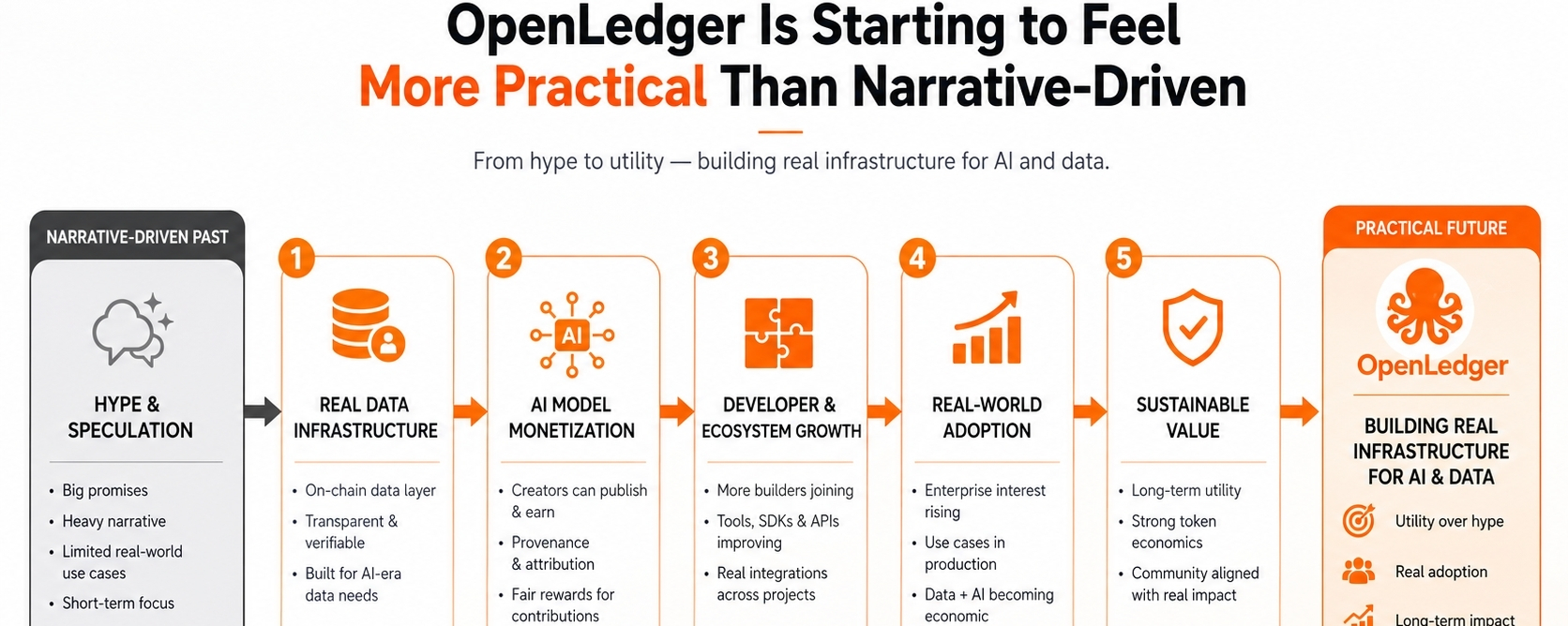
I’ve been checking back in on OpenLedger over the past few weeks, and honestly, my view on it has changed a bit. Not because of hype, token chatter, or another flashy AI announcement — mostly because the project is starting to feel more focused on solving actual infrastructure problems instead of just selling a futuristic narrative.
A few months ago, I still couldn’t tell whether OpenLedger was building something durable or simply riding the “AI + blockchain” wave like everyone else. A lot of projects in this space sound impressive when they talk about agents, attribution, and decentralized intelligence, but the real question is always the same: does any of this still work when real pressure hits the system?
That’s why some of the recent progress caught my attention. The shift toward monetizing data, models, and AI agents in a more structured way feels more practical than before. It changes the conversation from pure speculation to actual participation. If contributors can genuinely track and capture value from what they create, that’s a meaningful step forward.
But I still think the hardest part hasn’t been proven yet. Attribution sounds clean in theory until multiple models interact, outputs overlap, and incentives start colliding. That’s where most systems get messy. OpenLedger looks more mature now, but maturity and resilience are not the same thing.
I do think the project feels less focused on chasing attention cycles lately. The infrastructure side seems stronger, and the direction feels more intentional. For builders, that matters more than marketing. If developers can integrate easily and the coordination layer stays reliable, adoption becomes much more realistic.
Still, I’m treating the recent updates as signals, not victories. Metrics, launches, and ecosystem growth only matter if the system can handle scale, bad actors, and long-term economic pressure without breaking trust.
Right now, I’d say my confidence in OpenLedger is definitely higher than it was before, but I’m not fully convinced yet. The next thing I need to see is proof that the network can stay transparent and reliable when usage becomes messy, competitive, and financially meaningful.
That’s the point where an AI blockchain stops feeling experimental and starts feeling like real infrastructure.
And maybe that’s the most interesting part right now.
OpenLedger no longer feels like a project trying to sound important. It feels like a system slowly walking toward its real test.
The hype phase is easy. Surviving complexity is not.
Because eventually, the market stops rewarding ideas and starts rewarding systems that can survive pressure, conflict, scale, and uncertainty at the same time.
If OpenLedger can reach that stage without losing transparency or breaking incentives, the conversation around it changes completely.
Not another AI narrative. Not another temporary cycle.
Something people actually depend on.
