
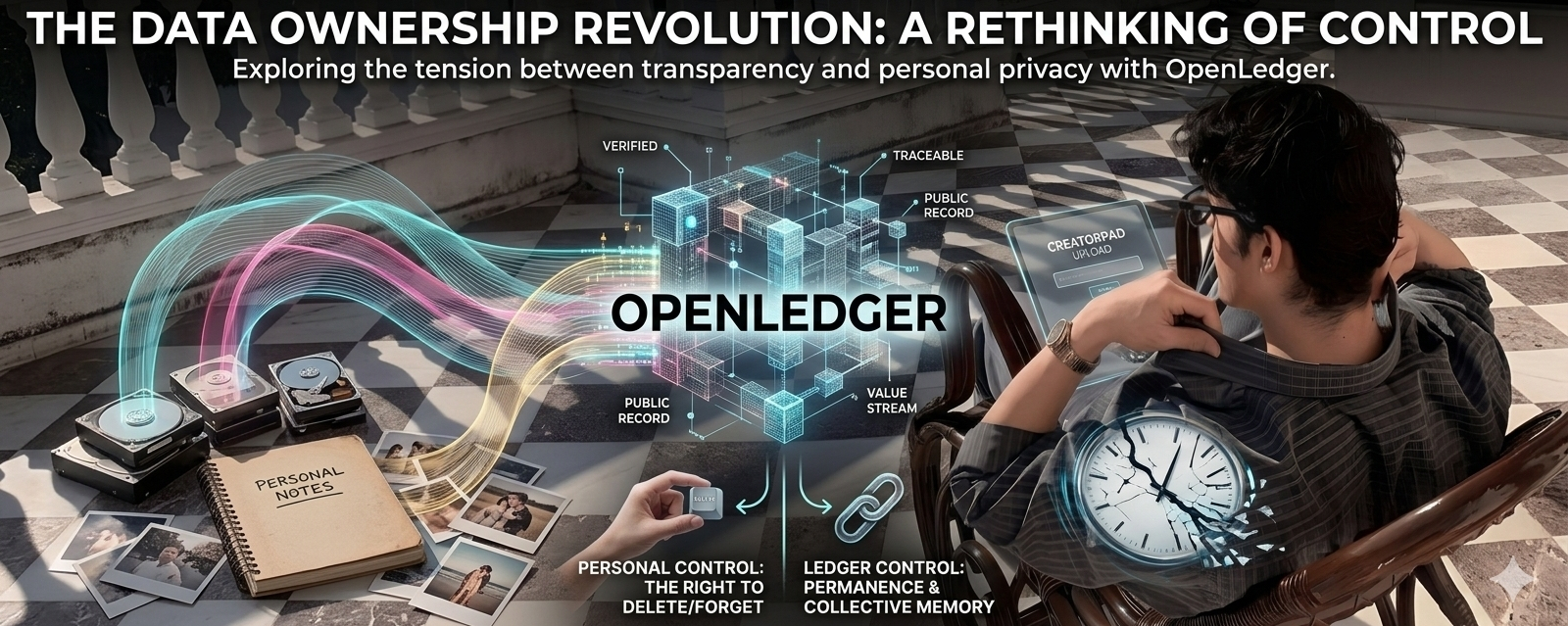

I’ve noticed that “data ownership” always sounds powerful when people talk about it in crypto, but it feels very different when you are the person actually giving something away. Last week I was standing in my kitchen with an old hard drive I found in a drawer, one of those forgotten things we keep for years without knowing what is even inside anymore. When I plugged it in, it was full of old notes, random photos, screenshots, unfinished ideas, and small pieces of a life I had already moved past. Some files made me laugh, some felt useless, and some reminded me of a version of myself I no longer really recognize. But the strange part was not the memories. The strange part was the control. I could open anything, delete anything, keep anything, or wipe the whole thing if I wanted. No one had to approve it. No system had to verify it. No ledger had to remember that it ever existed. For a few minutes, deleting old files felt like something rare now, almost like a small private freedom.
Later that day, I opened Binance Square and went through the CreatorPad campaign for OpenLedger. It was supposed to be a simple task. I checked the contribution screen, looked at the upload fields, reviewed the data snippets and metadata, and prepared to submit. Nothing about it was dramatic. It was just another crypto campaign step, the kind of thing people complete quickly and move on from. But maybe because I had just been sorting through that hard drive earlier, the moment felt heavier than it should have. I looked at those fields and thought about what it means when a contribution becomes part of a ledger. It is not just uploaded and forgotten. It is recorded, verified, and placed into a structure that exists because people keep feeding it pieces of themselves. That is when the word “ownership” started to feel less simple. I was not just sharing data. I was helping create a record that may outlive the reason I submitted it.
That is the uncomfortable side of the data ownership story that crypto does not always explain clearly. We like to say blockchain gives power back to individuals, and in some ways, maybe it does. It can make contributors visible. It can show where value comes from. It can challenge the old internet model where platforms collected everything quietly and users were left with almost nothing. OpenLedger is interesting because it tries to make data contribution more open and more accountable. It gives people a role instead of treating them like invisible fuel. That part matters. But there is another side too. When data becomes part of a verifiable network, ownership is no longer just about having your name attached to something. It is also about accepting that your contribution may become permanent, traceable, and useful to others in ways you cannot fully control later.
This is where the whole idea starts to get complicated for me. Real ownership should include the right to change your mind. It should include the ability to remove, correct, forget, or walk away. In the normal digital world, even with all its problems, some things can still fade. Old posts get buried. Files get deleted. Accounts are abandoned. Hard drives stop working. People move on, and sometimes that impermanence is a kind of mercy. But ledger systems are built on a different instinct. They want proof. They want history. They want records that stay consistent. That is useful for trust, but it also changes the emotional weight of contributing. Once something is added, it is not just a file anymore. It becomes part of a larger story, and that story does not fully belong to you alone.
I do not see OpenLedger as something to dismiss. Actually, the reason it made me think this much is because it touches a real problem. For years, big platforms took user data, trained systems on it, monetized it, and rarely gave people any meaningful ownership or reward. Users created value every day without being treated like participants in that value. So when OpenLedger talks about empowering contributors, there is a real point there. It is trying to shift the relationship between people and data. It is saying contributors should not be invisible. They should have some stake, some record, some recognition. That is better than the old model in many ways. But better does not mean free from risk. Recognition can become exposure. A stake can become attachment. A record can become a chain you did not fully understand when you agreed to it.
That upload screen made me realize that blockchain ownership often comes with a hidden trade. You get transparency, but you give up some quietness. You get verification, but you lose some softness. You get proof, but maybe less room to disappear. In crypto, we often celebrate permanence like it is always a good thing, but people are not permanent in the same way records are. People change. Their ideas change. Their comfort changes. What someone is willing to contribute today may not feel the same two years from now. The ledger may still remember it clearly, but the person behind it may not want to be tied to that moment anymore. That gap between human change and machine memory is where the discomfort begins.
I have seen this pattern in many parts of Web3. Projects talk about freedom, but the user has to become more visible to receive it. Wallets turn into identities. Activity turns into reputation. Contributions turn into proof. Proof turns into value. And once value is built around your history, leaving becomes harder than joining. This does not always mean the system is bad. Sometimes it is simply the cost of building trust without middlemen. But it still needs to be said honestly. OpenLedger’s model asks contributors to believe that their data matters, and then it asks them to place that data inside a structure designed to remember. That can be empowering, but it is also a serious commitment. You are not only claiming your contribution. You are allowing it to live inside a network that may keep using its existence long after your original reason for sharing has passed.
Maybe this is what makes the data ownership revolution feel so strange. The old internet took from us quietly. The new crypto version asks us to participate openly. That is progress, but it is not the same as complete control. At least now the contributor can be seen. At least now the flow of value can be questioned. At least now the system admits that user data has power. But I still wonder if we are moving toward a world where everything has to be recorded before it counts, where every contribution needs a timestamp, and where every piece of value becomes tied to a permanent trail. That may create trust, but it may also make digital life heavier. Not every part of a person should need to become evidence.
When I think back to that old hard drive, I keep coming back to the same feeling. The power was not in proving that the files belonged to me. The power was in deciding what they meant now. I could keep the pieces that still mattered and delete the ones that did not. There was no audience, no network, no permanent record. Just me, a drawer, an old device, and the freedom to let some things disappear. That kind of control feels almost outdated now, especially in crypto spaces where permanence is treated like a feature instead of a question. OpenLedger made me pause because it shows both sides of the future we are building. It offers a better deal than traditional platforms, but it also asks for a deeper kind of participation.
So yes, OpenLedger may empower contributors, but not in the simple way people like to repeat. It empowers them by making their role visible, by giving their data a place in the value chain, and by challenging the idea that platforms should quietly profit from everyone else’s input. But it also reminds us that ownership on a ledger is not the same as ownership in your own hands. It is shared with the network. It is tied to memory. It is strengthened by permanence. And maybe that is the real question behind this whole revolution. Are we truly taking control of our data, or are we just learning to give it away in a more transparent, more permanent, and more acceptable form?
