
Recently, I spent some time exploring Quack AI's Q402 dashboard and payment infrastructure.
I wasn't looking for announcements.
I was looking for how the system actually works underneath.
A few things immediately caught my attention.
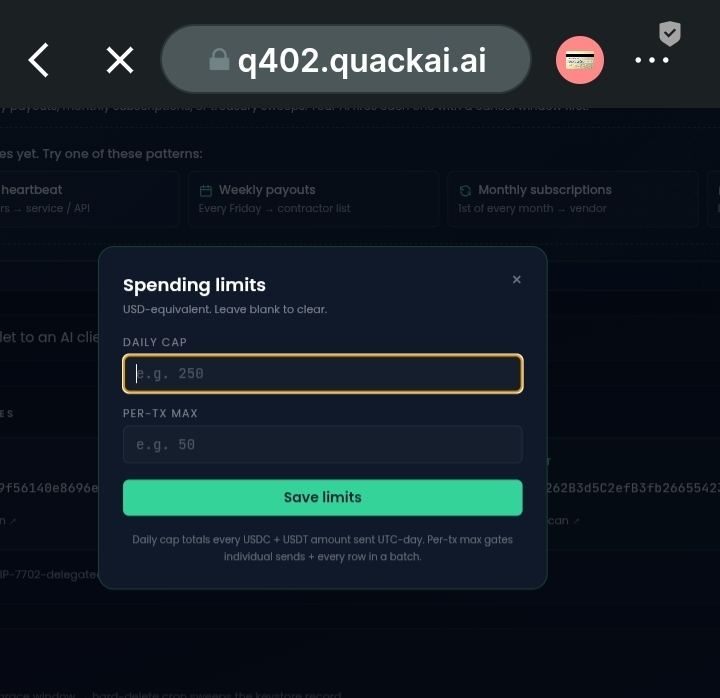
1. Spending limits are built into the experience
Instead of giving agents unrestricted access to capital, Q402 allows execution boundaries to be defined upfront.
Caps, limits, and permissions aren't treated as optional features.
They're part of the workflow itself.
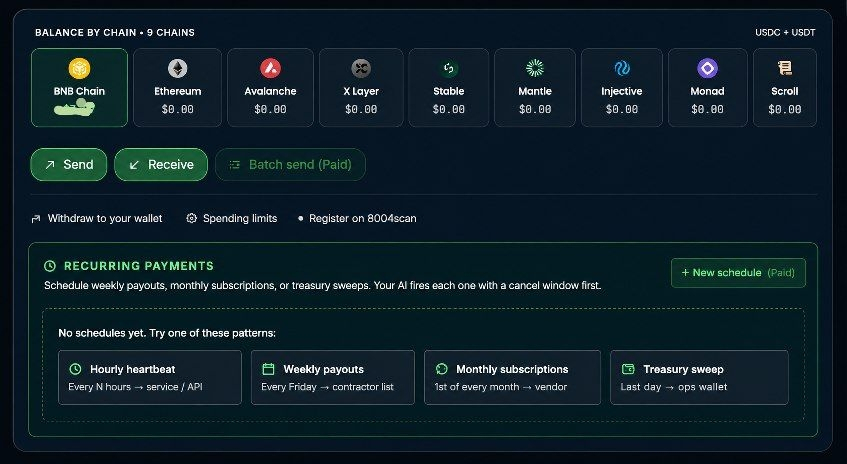
2. Recurring payments are treated as infrastructure
Hourly services.
Weekly payouts.
Monthly subscriptions.
Treasury sweeps.
The interesting part isn't automation.
It's that automation operates within predefined rules that can be monitored, paused, or adjusted when needed.
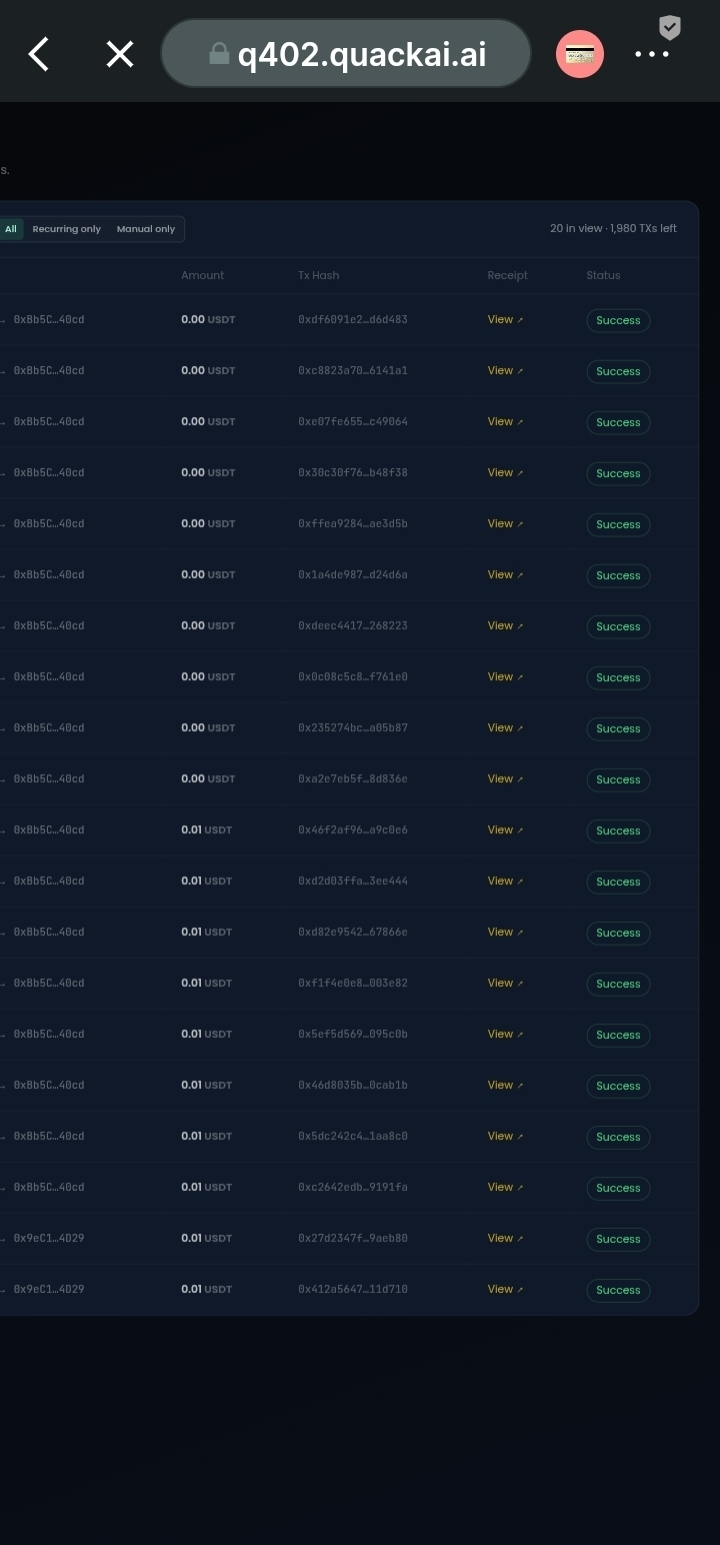
3. Transaction history is fully visible
Every relayed transaction can be tracked through the dashboard.
That may sound simple, but transparency becomes increasingly important once agents begin executing actions on behalf of users.
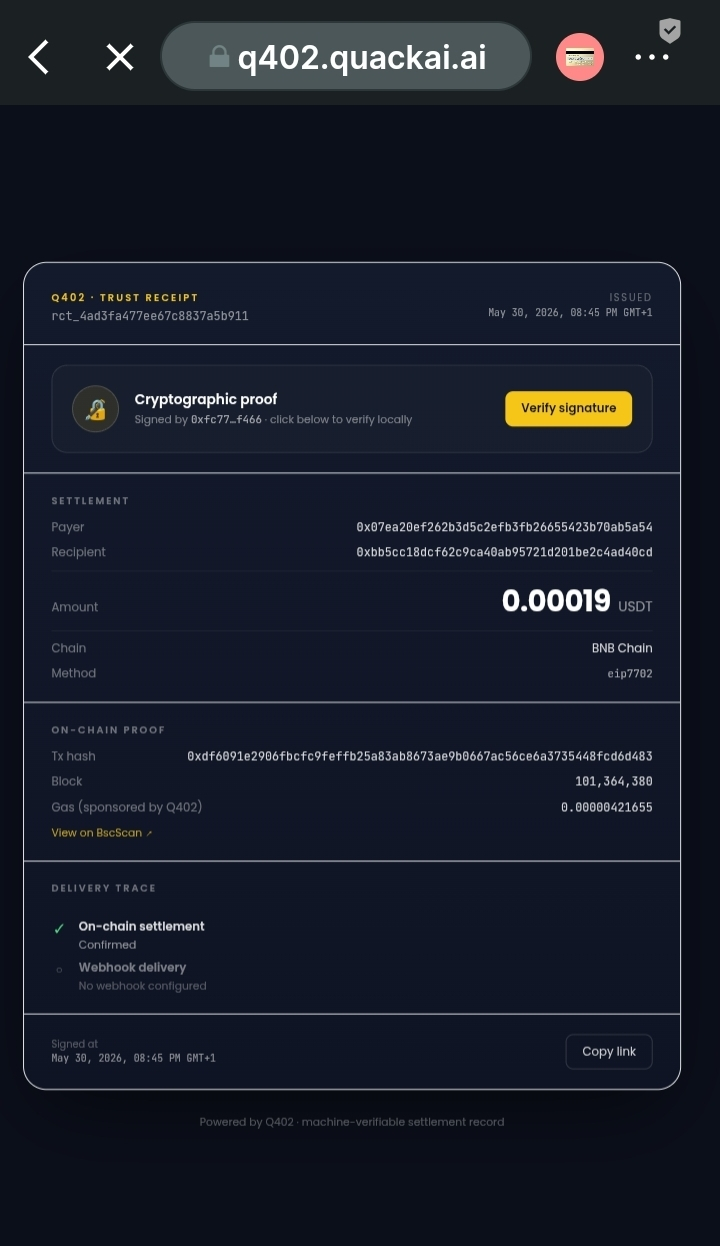
4. Trust Receipts may be one of the most underrated features
Every settlement produces a machine-verifiable receipt containing:
settlement details
cryptographic proof
on-chain references
verification records
Instead of asking users to trust a UI, the system provides proof that can be independently verified.
The more I explored Q402, the more it felt like Quack AI is approaching agent payments from a different direction.
Most discussions focus on making agents more autonomous.
Q402 seems focused on making autonomous execution more accountable.
And as AI agents begin handling larger amounts of economic activity, that distinction may become far more important than most people realize.