

My gas was $14.
Paid it last Thursday around 9:43am checking Binance, trying to tip a data contributor on-chain. Transaction failed, lol. Made me realize something stupid.
We built AI that can write poetry but can't pay the poet.
That’s broken.
Last Tuesday around 11:49pm I was digging through Proof of Attribution docs. Everyone talks about bigger models, faster inference, more parameters. Cool. But who gets paid when your model uses my data?
OpenLedger’s answer isn’t “trust us”. It’s coordination.
Contributors upload datasets. Validators check if it’s garbage or gold. Proof of Attribution tracks exactly who added value, even 3 years later. $OPEN moves between them without a middleman eating 40%.
That’s not AI infra. That’s payroll.
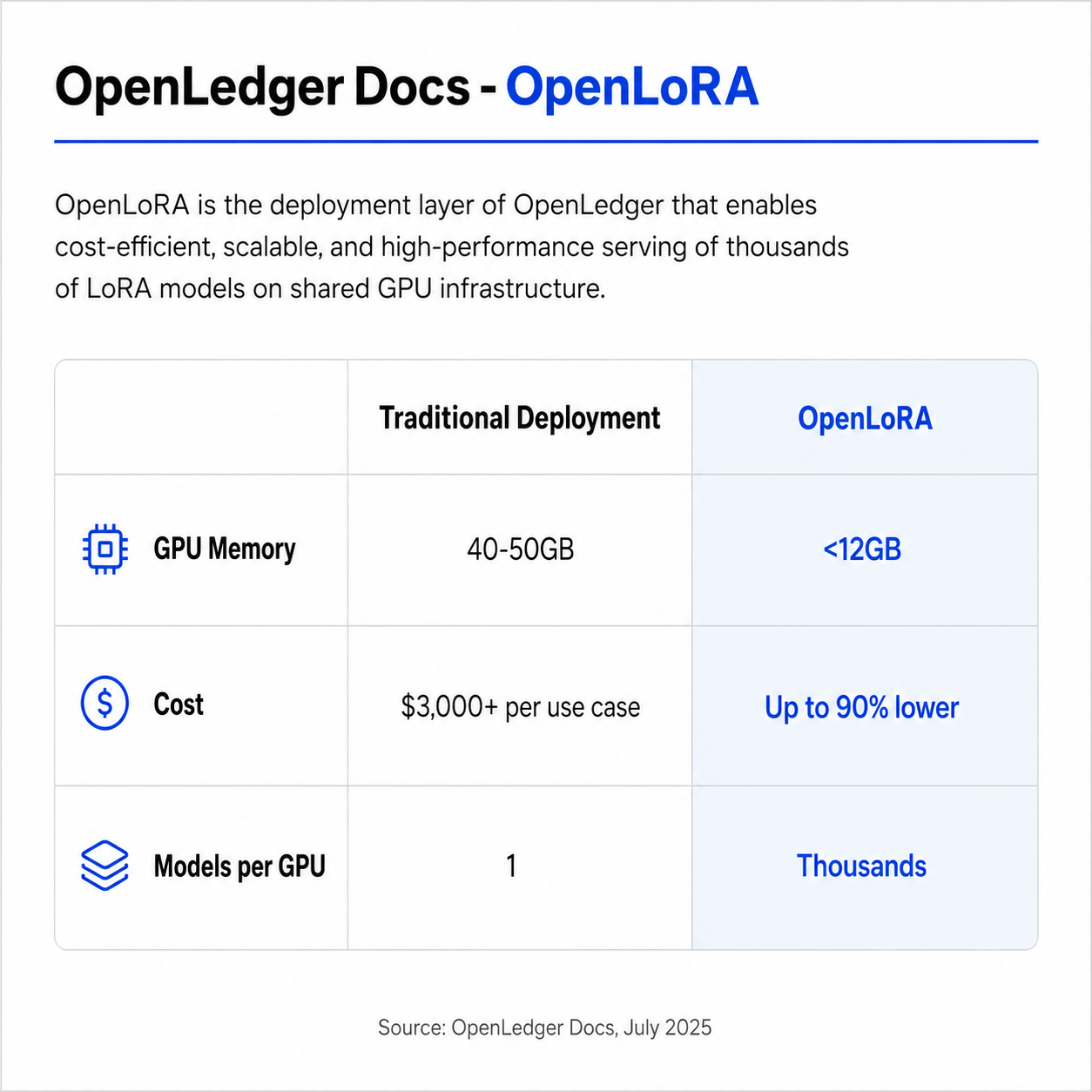
OpenLoRA sealed it for me. Docs say it runs thousands of LoRA models on one GPU and cuts deployment costs up to 90%. Traditional setup? One LLaMA use case = $3,000+ for its own instance, 40-50GB memory. OpenLoRA does it in <12GB. Why does cheap matter? Because low cost means 10,000 hobby devs can join, not just 3 VCs.
My hot take?
Scale AI won’t win because they label faster.
They’ll lose because they can’t pay 14,000 random people globally, instantly, on-chain.
Maybe I’m wrong.
But the more I study OpenLedger, the less it looks like an AI company.
It looks like the HR department for machine intelligence.
Model quality isn’t the moat.
Paying people is.
Source: OpenLedger Docs, OpenLoRA & Proof of Attribution sections, July 2025. Not financial advice. DYOR. @OpenLedger #OpenLedger