
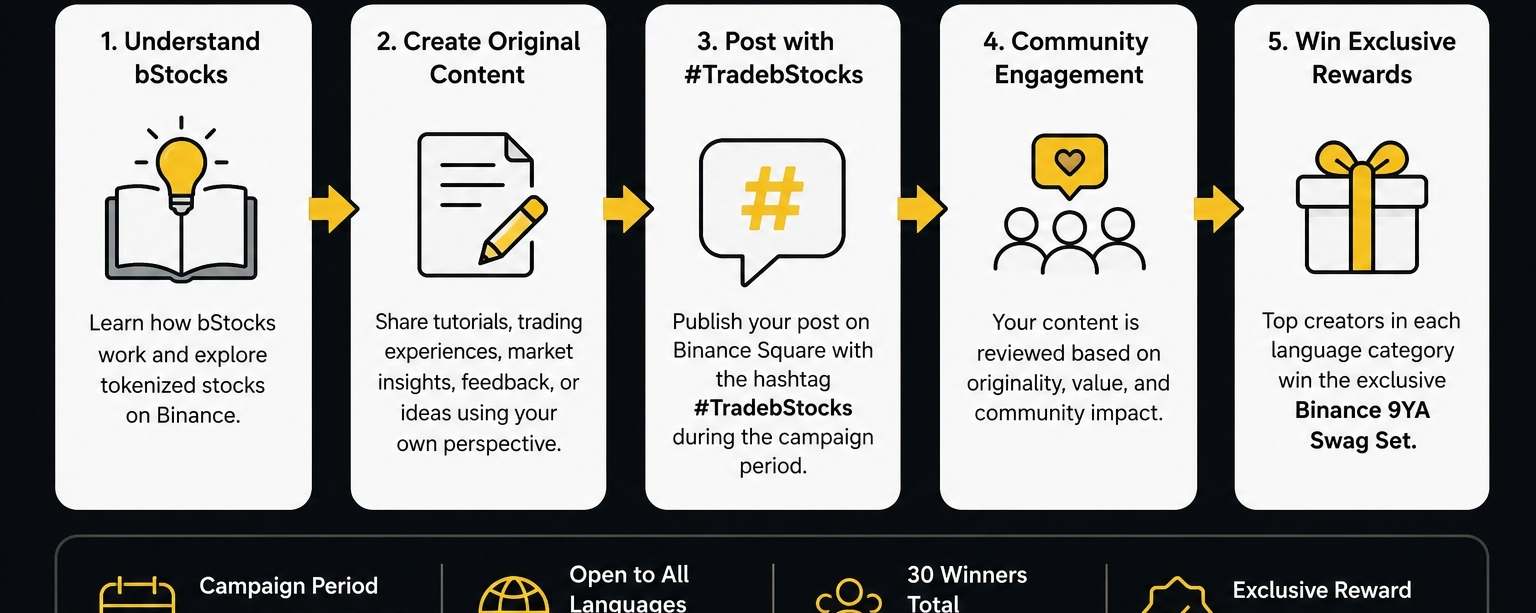


Look, I’ve been covering tech long enough to know that every few years someone walks into the room claiming they’ve finally fixed investing. It was online brokerages. Then robo-advisors. Then DeFi. Now it’s tokenized stocks wrapped in blockchain language and packaged into campaigns like #TradebStocks . The pitch sounds clean enough: bring traditional equities onto crypto rails, make them easier to access, and let users participate in a more flexible market. Nice story. But stories are cheap.
The core problem Binance says it's addressing isn't imaginary. Traditional investing can be slow, fragmented, and inaccessible depending on where you live. Opening brokerage accounts isn't always straightforward, cross-border restrictions exist, and fractional investing isn't universally available. Fair enough. Those are legitimate pain points.
But here's where I start raising an eyebrow.
Does putting stocks on a blockchain actually remove those barriers, or does it simply build another system that sits on top of the old one? Because the stock itself hasn't magically escaped regulation. Somewhere, someone still holds the underlying asset. Somewhere, someone still decides who can trade it, who can't, and under what conditions. That sounds less like removing middlemen and more like swapping one middleman for another.
I've seen this movie before.
Crypto has a habit of taking a problem that already exists, wrapping it in new terminology, adding a token, and calling the result innovation. Sometimes it works. Sometimes it creates an entirely new category of headaches. When things function perfectly, nobody notices the extra layers. When they don't, users suddenly discover just how many moving parts were hidden beneath the interface.
And let's talk about incentives for a second.
Who actually benefits when tokenized products become popular? Is it the average investor getting slightly easier access to markets, or is it the platform collecting fees, attracting liquidity, and expanding its ecosystem? Those goals aren't mutually exclusive, but pretending they carry equal weight feels naïve. Companies rarely build products out of charity. They build them because the numbers make sense.
Then there's the decentralization question, which marketing departments tend to dance around. Tokenized stocks sound wonderfully crypto-native until you ask who controls issuance, custody, compliance, and redemption. If a central operator can freeze activity or modify access, how decentralized is the experience really? The blockchain may be distributed, but the decision-making often isn't.
Human behavior complicates everything even further.
People don't read documentation. They click buttons. They assume everything works exactly as advertised until something breaks. What happens if regulations shift overnight? What if redemption mechanisms change? What if liquidity dries up during market stress? Those scenarios rarely make it into promotional campaigns because uncertainty doesn't sell merchandise.
Even the educational angle deserves scrutiny. Encouraging users to create tutorials and share experiences sounds positive on paper, but incentives matter. If participants are competing for prizes, how many balanced analyses will emerge compared with optimistic success stories? Nobody intentionally writes propaganda, yet reward structures quietly shape narratives all the time.
Don't misunderstand me. Tokenized assets may have a place in modern markets. They could reduce friction for certain users and expand access in meaningful ways. But "could" carries a lot of weight. Between technical infrastructure, legal oversight, custodians, and platform operators, the promise often arrives bundled with fresh dependencies that weren't obvious at first glance.
So when someone says blockchain has finally simplified investing, I pause. Simpler for whom? The trader? The issuer? The platform? Or the marketing team writing the campaign copy?
Because once you scrape away the polished graphics and anniversary swag, you're still left trusting institutions, software, regulations, and people. And if twenty years of covering technology has taught me anything, it's that complexity never disappears. It just changes clothes and waits for someone else to discover where it went.
#TradebStocks