
Omniston’s New Cross-Chain Leap: TON ↔ Base/Polygon Execution Layer
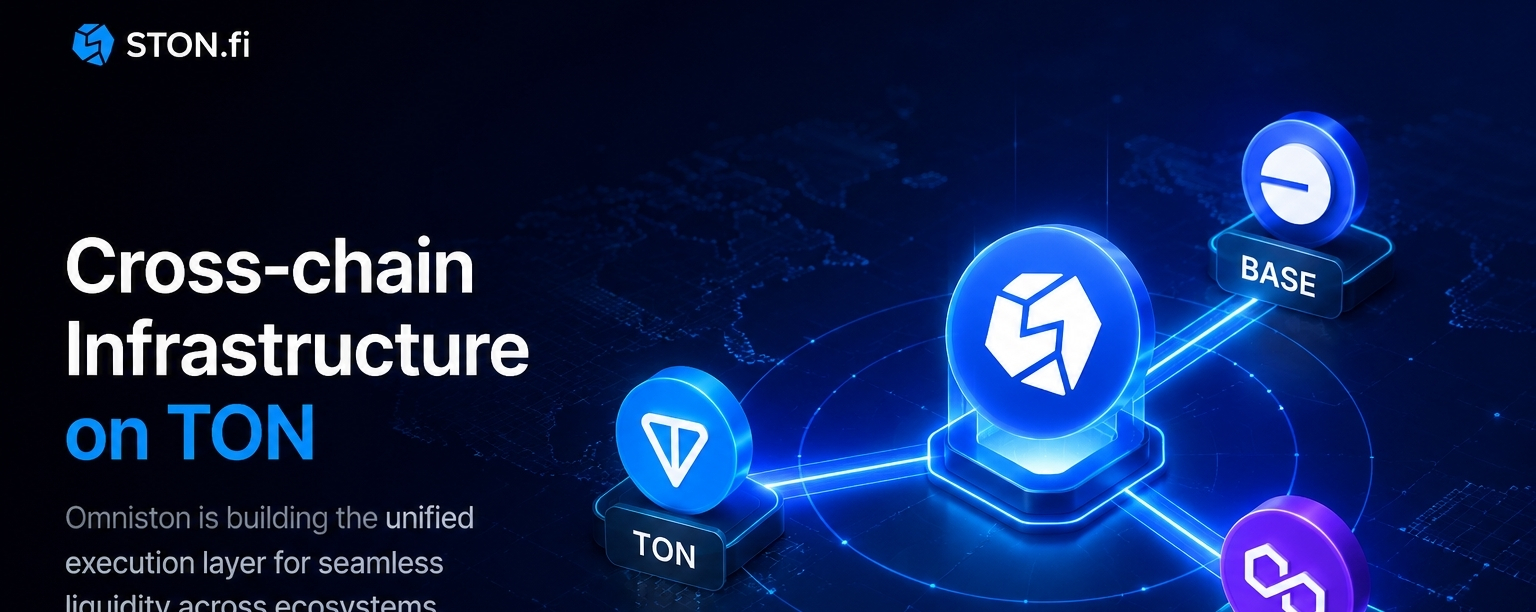
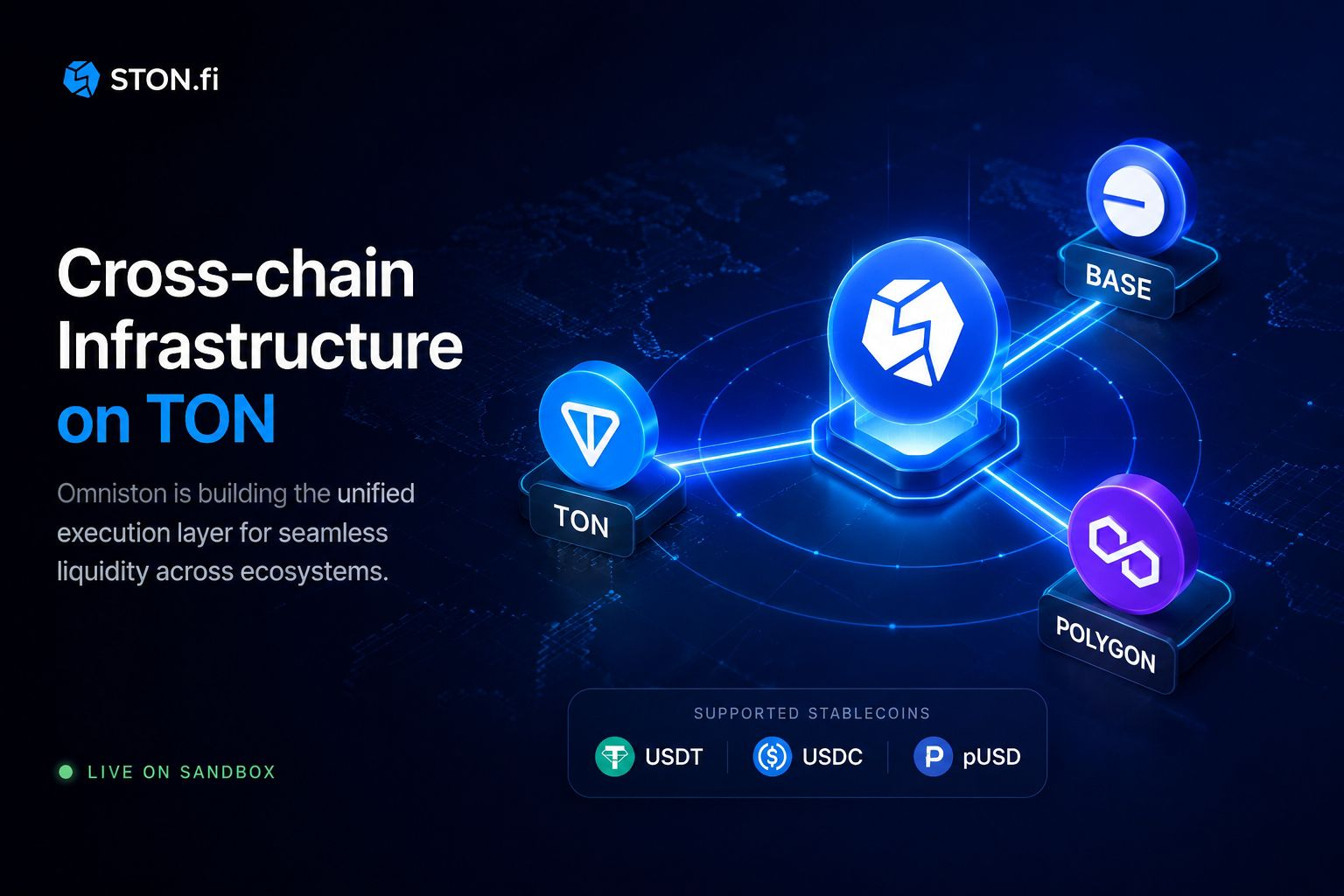
Cross-chain infrastructure on TON (The Open Network) is entering a new, more visible phase. In May 2026, STON.fi announced Omniston v1beta8, which transforms the protocol from a TON-only swap aggregator into a unified cross-chain execution layer. Builders can now test live TON ↔ Base and TON ↔ Polygon flows in a public sandbox, initially focusing on stablecoins (e.g. USDT, USDC, and Polymarket’s pUSD on Polygon). This update is architectural: Omniston has decoupled its core quote, routing, settlement, and tracking components into a single scalable pipeline. In practice, this means developers can rely on one execution framework instead of integrating many fragmented bridges or liquidity sources. The result is a more controlled, transparent cross-chain swap experience that abstracts away the usual complexity.
From Bridges to Atomic Swaps: Background
Before diving into Omniston’s details, it helps to contrast common cross-chain models. Traditional bridges lock or burn a token on one chain and mint a wrapped version on another. This often introduces custodial risk (a “pile” of assets in one contract) and requires liquidity and redemption for the wrapped tokens. In contrast, Omniston uses a resolver-based atomic swap model secured by linked Hashed Timelock Contracts (HTLCs). In this design, native assets remain native on both chains and funds only change hands when both sides of the swap can be settled simultaneously. For example, a user’s TON token is locked in an HTLC on TON, while a resolver (liquidity provider) locks the desired token (say USDC on Base) in a paired HTLC on Base. Only when a cryptographic secret is revealed do both sides claim their assets; otherwise all funds refund automatically. This “all-or-nothing” guarantee avoids scenarios where one side completes and the other does not. In short, Omniston does not mint wrapped tokens or rely on a single vault. Instead, it creates a competitive marketplace of resolvers, each supplying liquidity on the destination chain and vying to fill swap requests.
Compared to bridges or pools, Omniston’s approach enhances security: there is no single contract holding the user’s funds (avoiding the “pile” that attracts bridge hacks). It also means native stablecoins can flow directly. For example, USDC, USDT, and Polymarket’s pUSD (an ERC-20 on Polygon backed 1:1 by USDC) can move between TON and EVM chains without intermediate wrapping. This focus on native, stable assets is deliberate: using stablecoins (with minimal price volatility) makes it easier to evaluate the swap logic and liquidity routing in early testing.
For context: TON is not an EVM chain. Its smart contracts use different languages (FunC/Tact/Tolk) and its message model is asynchronous. Connecting TON to EVM-based networks (like Base or Polygon) therefore requires specialized handling. Omniston’s HTLC+resolver model neatly sidesteps TON’s asynchrony by enforcing atomicity cryptographically, not via a single transaction. This means TON’s native behavior (independent success/fail of steps) does not undermine the swap’s all-or-nothing guarantee.
Omniston v1beta8: A Unified Execution Pipeline
The core of Omniston v1beta8 is its modular execution framework. Rather than treating cross-chain swaps as an ad-hoc extension of TON routing, the protocol now splits the workflow into distinct stages – all coordinated within Omniston itself. In brief, the flow is:
RFQ (Request for Quote) – A user (or integrator) submits swap parameters (source asset on TON, target asset on Base/Polygon, amount, etc.) and asks for executable quotes.
Quotation – A network of resolvers (liquidity providers) compete by responding with quotes that include routes, prices, expected output, and any execution conditions. This is a real-time auction via the RFQ mechanism.
Selection – Omniston’s protocol selects the best quote (by output amount, price, and execution requirements). Multiple strategies can compete, making the process more transparent than single-route approaches.
Execution – Once a quote is chosen, the swap is executed through one of two models: swap settlement (intrachain, immediate execution) or order settlement (cross-chain, asynchronous execution with HTLCs).
Tracking – Throughout execution, the protocol continuously streams status updates and trade progress back to the user/app until completion.
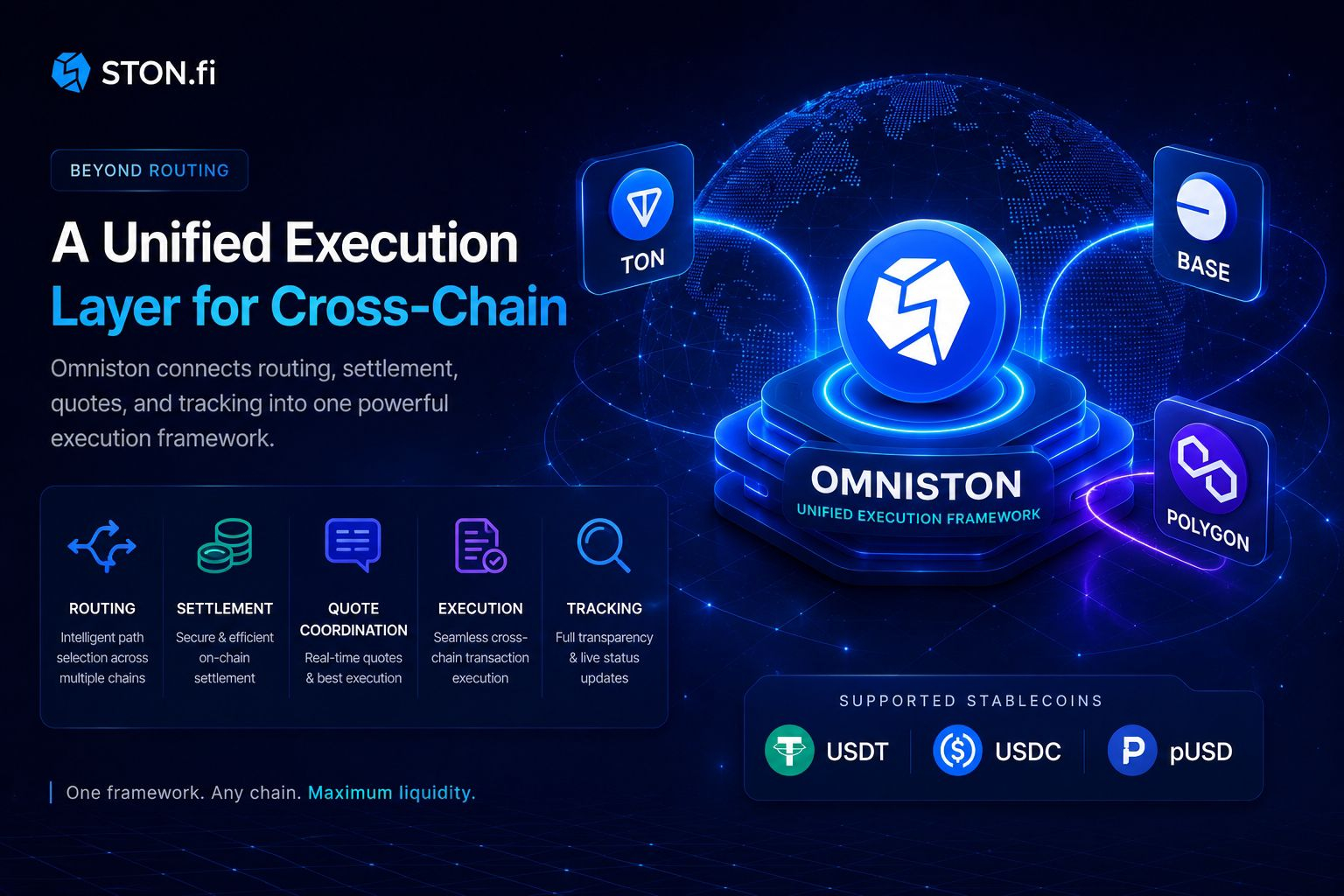
This staged pipeline ensures each part of the swap – quote discovery, fulfillment coordination, settlement, and post-trade tracking – is handled systematically. In practice, it makes the flow transparent and controllable, which is crucial for multi-chain swaps.
Two settlement modes deserve emphasis. Swap settlement is the familiar TON-only route: Omniston finds the best single-chain swap (e.g. TON→STON) and executes immediately, optimizing output and price. This is exactly how on-chain TON swaps worked before. Order settlement is the new cross-chain model: here Omniston creates an executable order that resolvers fulfill asynchronously across chains. It does not execute immediately; instead, the user’s funds lock in a TON HTLC and the resolver locks assets on Base/Polygon. When the secret is revealed, both sides claim their assets. This mode supports partial fills, “gasless” experiences (since the resolver may sponsor chain fees), and escrow-based flows. It lays the groundwork for far more complex cross-chain interactions in future versions.
Public Sandbox: Testing Cross-Chain Flows
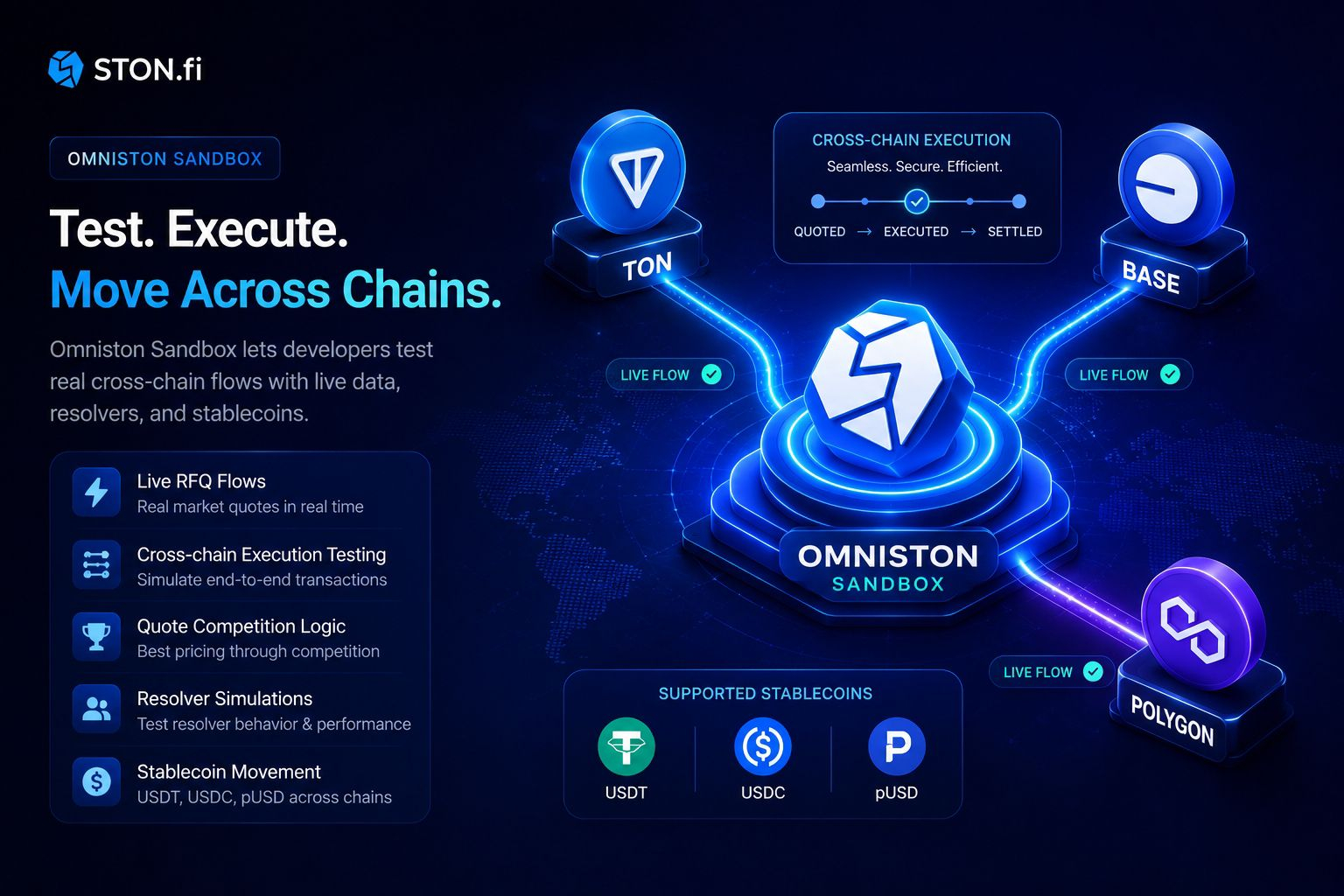
Crucially, Omniston v1beta8 is testable today in a public sandbox. STON.fi has spun up a dedicated testing environment where integrators can experiment without risking mainnet funds. The sandbox exposes the new API endpoints (via WebSocket/JSON-RPC and gRPC) and simulates the protocol’s behavior with mock components. In practical terms, developers can issue real RFQs and see quote competition, have mock resolvers respond, and step through cross-chain execution flows on test networks or simulated infrastructure. The key sandbox capabilities include:
New Omniston API – access the expanded RFQ and order APIs.
Quote competition – send quotes and see multiple resolver responses, selecting the best price path.
Mock resolvers – simulate on-chain liquidity providers locking stablecoins across chains.
Cross-chain execution simulation – lock and unlock tokens (via HTLCs) between TON and EVM testnets.
Stablecoin transfers – move assets like USDC, USDT, and pUSD between TON, Base, and Polygon in a controlled setting.
Each of these operates as part of a single sandbox pipeline. As one industry observer noted, this sandbox “allows real testing of RFQ flows and execution behavior without exposing production risk”. In effect, it is a preview environment for how Omniston’s cross-chain liquidity routing will work on mainnet. By building these features into the protocol layer, Omniston lets builders focus on their own UX and logic, rather than orchestrating multiple external bridges or trackers.
At launch, the sandbox specifically supports stablecoin moves. For example, integrators can initiate a TON→Base swap of TON coins for Base-USDC, or TON→Polygon for TON→pUSD, using the atomic HTLC sequence. Because stablecoins have predictable value, developers can validate the routing and settle logic clearly. (In the real-world, stablecoins would only settle 1:1 if all steps succeed; if any side fails, each side reclaims its original asset as promised by the HTLC structure.)
Focus on Stablecoins: USDT, USDC, pUSD
Omniston’s cross-chain debut is stablecoin-centric, and for good reason. The STON.fi team intentionally “focus[ed] on stablecoin pairs like USDT, USDC, and pUSD” for the first cross-chain flows. Using stable assets reduces price-volatility noise during testing, making it easier to observe and debug the swap logic. For context, pUSD (Polymarket USD) is a Polygon ERC-20 backed 1:1 by USDC. USDC and USDT are ubiquitous ERC-20 stablecoins (USDC is native on Base and Polygon, and USDT is on both EVMs and available via OFT on TON through LayerZero). By starting with these assets, Omniston can validate cross-chain transfer flows for commonly used tokens.
Circle’s recent Cross-Chain Transfer Protocol (CCTP) similarly highlights the industry trend: it lets USDC “flow natively 1:1 between blockchains” to unify liquidity. Omniston takes a different route (resolver-mediated swaps instead of burn/mint), but the end goal is aligned – seamless stablecoin movement across chains. Over time, once the pipeline is proven, Omniston can support more token pairs and even non-stable assets.
Benefits for Builders and the TON Ecosystem
The Omniston v1beta8 update has implications for multiple audiences. For developers, it means they get a built-in cross-chain infrastructure. Instead of weaving together separate bridge contracts, DEX adapters, and transaction tracking, apps can plug into Omniston’s single workflow. As STON.fi emphasizes, “Omniston v1beta8 quote competition, execution coordination and tracking become part of the protocol layer itself”. That lets builders “focus on UX instead of maintaining fragmented cross-chain infrastructure.” Developers can simply issue an Omniston order and let the protocol handle multi-chain settlement.
For users, the promise is simpler cross-chain swaps. Current bridge solutions can be slow and cumbersome. Omniston’s model aims to make cross-chain swaps feel as smooth as a single-chain swap, by abstracting away the fragmentation. In theory, a user would only see a native confirmation on each side or one combined status, without worrying about intermediate steps. And because Omniston’s model never custodially holds user funds, users need not trust a third party with their assets beyond the conditional smart contracts on chain.
For the TON ecosystem, cross-chain liquidity is a major growth lever. As Omniston “expands beyond TON-native aggregation, TON assets become easier to access externally, liquidity routing becomes deeper, and TON apps gain access to broader execution surfaces”. In plain terms, TON projects and tokens become part of the larger DeFi landscape. TON holders can more easily tap into liquidity on Base, Polygon, or other EVMs; and likewise, assets from EVM chains flow into TON. This bidirectional interoperability could significantly boost TON DeFi activity. The press release behind Omniston’s launch already hinted at this vision: the project’s goal is “unifying the liquidity of the TON DeFi ecosystem” and eventually becoming a cross-chain operator connecting TON to major blockchain networks. Omniston v1beta8 is the first visible step in that journey.
A Structured Execution Layer (Beyond Just Bridges)
Importantly, Omniston’s v1beta8 is not merely a new bridge. It is better characterized as a structured execution layer for cross-chain swaps. Unlike singular bridges or single liquidity pools, it encompasses routing, competitive quoting, multi-strategy execution, and end-to-end tracking. As one analyst noted, “What is emerging is not just better bridging, but a more structured execution layer for cross-chain finance”. In Omniston’s world, the protocol itself organizes each trade: from soliciting multiple quotes, to locking funds on both sides, to coordinating the final settlement. This horizontal approach contrasts with, say, Thorchain (an independent chain with its own pools) or hop protocols with fixed routes. It is akin in spirit to protocols like Meson Finance, which also uses HTLC for atomic stablecoin swaps, but Omniston is specifically tailored to link TON with EVM chains.
In summary, Omniston v1beta8 is much more than route optimization. It is an integrated system that blurs the line between routing logic and settlement mechanics. With the sandbox live and cross-chain flows testable, TON’s DeFi developers can begin to experiment with these new capabilities. As the protocol matures past beta, it may add more asset types, more resolver partners, and (eventually) mainnet deployment of cross-chain swaps. For now, builders and enthusiasts have a front-row seat to a “controlled preview” of next-generation interoperability.
Looking Forward
The Omniston update sets the stage for deeper interoperability on TON. By treating a multi-chain swap as a single coordinated transaction (via HTLCs and on-chain messaging), Omniston aims to overcome many pain points of existing bridges. While still in testing, it has already reduced fragmentation for early adopters: instead of integrating multiple bridge SDKs, one can integrate Omniston’s APIs or widget and gain cross-chain swap functionality.
In the broader context, cross-chain tech is rapidly evolving. Many protocols pursue unified liquidity (LayerZero/Stargate, bridges like Synapse, aggregators like LI.FI, etc.). Omniston joins this wave with its TON-focused, HTLC-based method. Its emphasis on native swaps and atomic safety resonates with industry trends (see Meson’s stablecoin HTLC swaps or Circle’s native USDC rail).
As adoption grows, future Omniston versions might support more chains or more complex routes (for example multi-hop via an intermediate chain to minimize fees). The ultimate vision, as STON.fi notes, is “one execution layer capable of abstracting away fragmented liquidity, fragmented chains, and fragmented UX”. If successful, this could turn Omniston into a key link connecting TON to the wider DeFi multiverse, making cross-chain swaps as seamless as single-chain ones.
Sources: Official STON.fi blog.ston.fi