$BTC Bitcoin is the world’s first and most valuable cryptocurrency, often seen as a digital store of value and an alternative to traditional financial systems. Its price is mainly driven by supply and demand, market sentiment, macroeconomic conditions, and institutional adoption. With a fixed supply of 21 million coins, Bitcoin is considered scarce, which attracts investors during times of inflation or economic uncertainty.
In recent market cycles, Bitcoin has shown strong volatility. Short-term price movements are influenced by factors such as interest rate decisions, ETF inflows, regulatory news, and whale activity. When positive news enters the market, Bitcoin often experiences sharp rallies, while negative sentiment can trigger rapid corrections. This volatility makes Bitcoin attractive for traders but risky for inexperienced investors.
From a long-term perspective, Bitcoin’s fundamentals remain strong. The network is highly secure, decentralized, and increasingly adopted by institutions, payment platforms, and even governments. Halving events, which reduce the block reward roughly every four years, historically create supply shocks that support long-term price growth.
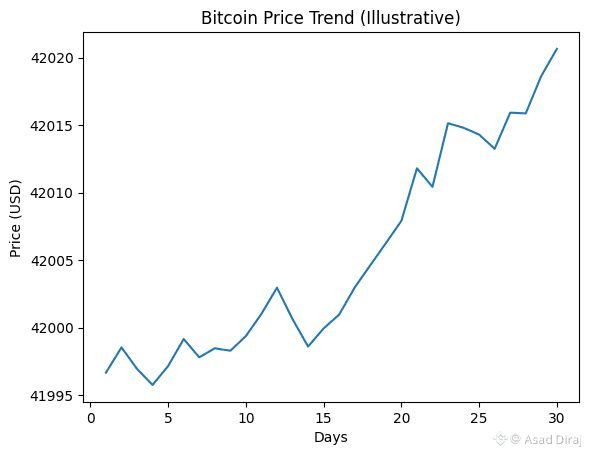
Technical analysis often focuses on trend lines, moving averages, and support–resistance zones to understand market direction. As shown in the illustrative price trend image, Bitcoin generally moves in waves, combining periods of consolidation with strong upward or downward momentum.
Overall, Bitcoin remains a high-risk, high-reward asset. Investors should manage risk carefully, stay updated with market news, and focus on long-term strategy rather than short-term noise. #BTC100kNext? #MarketRebound #StrategyBTCPurchase #BinanceHODLerBREV #BTCVSGOLD