From Experiments to Expectations
Most blockchains are born into experimentation. Early users expect instability, incomplete tooling, and occasional failures. That tolerance is a temporary luxury. As networks mature, expectations change. Users stop forgiving outages. Institutions stop tolerating ambiguity. Systems that once survived on innovation alone are suddenly judged by reliability, predictability, and operational clarity.
Plasma feels designed with this transition in mind. Its identity as a stablecoin settlement chain reflects an understanding that Web3 is no longer just an experiment. Stablecoins are already embedded in global financial flows. They are used daily by individuals and businesses that care less about ideology and more about outcomes. Plasma appears to have started from this reality rather than from abstract blockchain ideals.
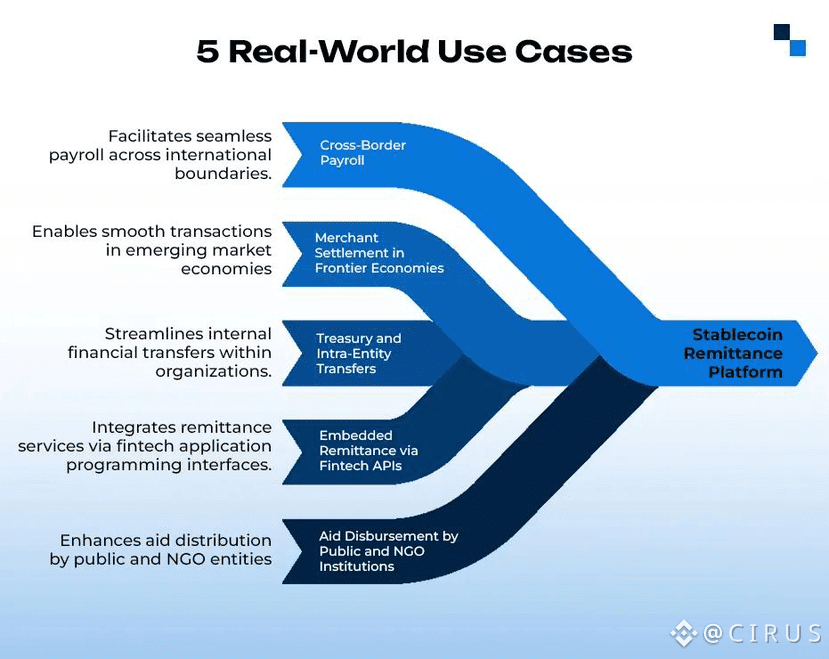
To understand why this matters, it helps to look at how stablecoins are actually used. They are moved frequently, often in large volumes, and usually under time pressure. Delays create risk. Fee volatility creates friction. Unclear finality creates operational problems. Many general-purpose chains struggle here because they were not designed with these constraints as priorities. Their architectures reflect a desire to be flexible rather than dependable.
Plasma inverts this priority order. Settlement is treated as the primary function, not a byproduct. This is why finality is emphasized over raw throughput. In financial systems, the difference between probabilistic and near-instant finality is not academic. It affects counterparty risk, reconciliation processes, and trust. Sub-second finality allows participants to treat onchain actions as completed events rather than pending states. That psychological shift is crucial for real adoption.
The same logic applies to fee design. When fees fluctuate unpredictably or are denominated in volatile assets, users must manage an additional layer of risk. Plasma’s approach to stablecoin-first gas simplifies this. Fees become an extension of the transaction itself rather than a separate concern. This may appear like a small UX detail, but small frictions compound quickly at scale.
Liquidity plays an equally important role. A settlement chain without active lending and borrowing markets cannot support real financial activity. The presence of large, highly utilized stablecoin lending markets suggests that Plasma is being used as a place to manage balance sheets, not just to move assets temporarily. High utilization rates imply demand, not just incentive chasing. They also imply that capital trusts the network enough to remain deployed.
This trust is not built overnight. It emerges when systems behave consistently across different conditions. Plasma’s design choices suggest an awareness that financial usage exposes infrastructure to stress. Spikes in activity, sudden shifts in sentiment, and asymmetric flows are not edge cases. They are normal conditions. Designing for settlement means designing for these stresses rather than assuming ideal behavior.
Another important aspect is how Plasma fits into existing developer ecosystems. Full EVM compatibility reduces the friction of migration. Builders do not need to learn new paradigms or rewrite large portions of code. This lowers the cost of experimentation and encourages serious teams to deploy production-grade applications rather than prototypes. Over time, this leads to a more robust ecosystem with fewer abandoned projects.
What differentiates Plasma further is its apparent comfort with being boring. Financial infrastructure that works is rarely exciting. It is trusted precisely because it does not surprise users. By focusing on settlement, Plasma aligns itself with this reality. It does not promise to reinvent every aspect of Web3. It promises to make a specific kind of activity work reliably.
This focus also has implications for institutional adoption. Institutions care about predictability, auditability, and operational continuity. They are less interested in innovation for its own sake. Plasma’s architecture, particularly its emphasis on finality and neutrality, speaks to these concerns. It suggests a willingness to meet higher standards rather than to optimize for rapid narrative cycles.
From my perspective, this is what makes Plasma interesting. It does not feel like a chain built to impress the first wave of users. It feels like a chain built to survive the second wave, when expectations harden and tolerance for failure disappears. That long-term orientation is rare in an ecosystem that often rewards short-term visibility.
In closing, describing Plasma as a stablecoin settlement chain is not a simplification. It is a statement of intent. It signals that the network is designed for how stablecoins are already used today and how they will likely be used tomorrow. In a world where money is increasingly digital and global, infrastructure that understands settlement deeply may end up being more important than infrastructure that tries to do everything at once.