I have been covering crypto long enough to remember when every new Layer 1 claimed it would fix payments banking identity governance and probably your personal relationships too all before the next halving. Plasma at least does not bother with that fantasy. It says it is a Layer 1 for stablecoin settlement. Dollars in token form. That is it. No grand civilizational pitch. No breathless talk about changing everything. Just moving money. Boring money. The kind people actually use.
That alone makes me pause. Not celebrate. Pause.
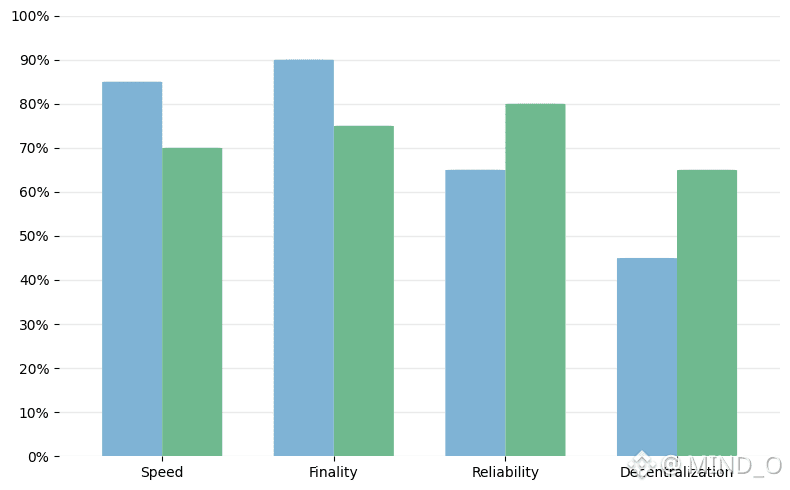
Plasma architecture is straightforward in a way that feels almost confrontational in todays crypto market combining a full EVM stack via Reth with a custom BFT consensus called PlasmaBFT that promises fast finality so stablecoin transfers do not feel like waiting for a fax machine in 1998. Speed matters. Reliability matters more.
I have seen fast chains before. Too many.
Sub second finality sounds great on a slide. It always does. In practice BFT systems get their speed by narrowing the validator set and tightening coordination which works beautifully right up until it does not when a few nodes go offline when geography starts to matter when incentives drift or when real money starts flowing and stress replaces optimism. Payments are not forgiving. They do not care about your roadmap or your Discord apologies.
And Plasma is very clearly betting that payments are the point.
The headline feature everyone latches onto is gasless USDT transfers which I understand because anyone who has ever tried to onboard a normal human to stablecoins knows the native token for fees requirement is one of cryptos dumbest self inflicted wounds. Plasma wants you to send USDT without holding anything else. Clean. Simple. Sensible.
Also not free.
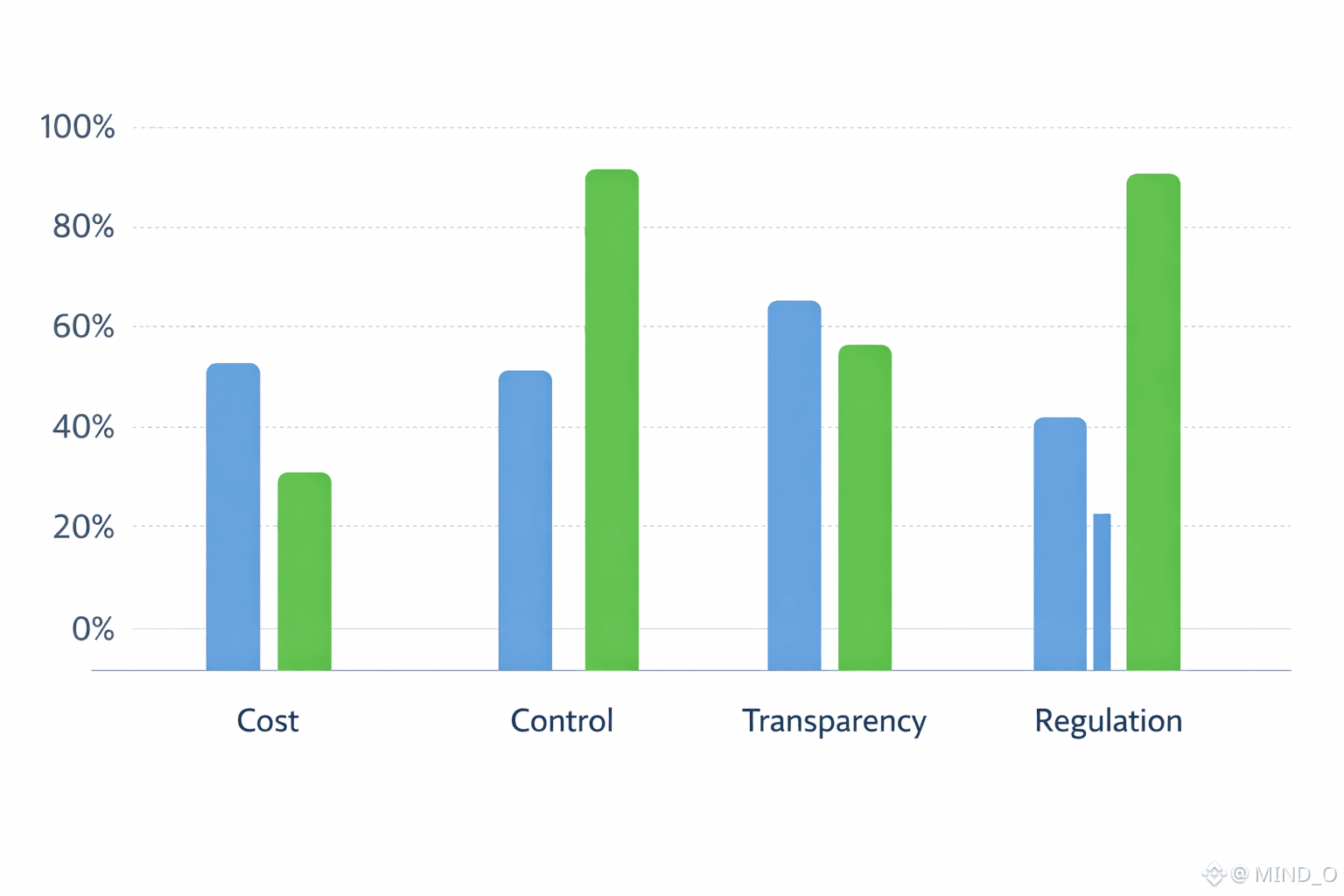
Gasless does not mean magic. It means subsidized routed sponsored pick your euphemism. Somewhere in the system there is a relayer an API a policy engine deciding which transfers qualify and which ones do not. And the moment you introduce discretion you introduce power. Who controls that power. How is abuse handled. What happens when regulators come knocking which they always do once retail payments reach any meaningful scale.
Who are we kidding. This is where things get political.
Plasma tries to counter the inevitable this feels centralized critique with Bitcoin anchored security periodically committing state to Bitcoin to make history harder to rewrite and to borrow credibility from the only chain everyone still treats like bedrock. I get the impulse. I really do. Bitcoin anchoring can raise the cost of certain kinds of bad behavior and make quiet ledger edits harder to sweep under the rug.
But anchoring is not absolution.
It does not stop censorship in real time. It does not stop a transaction from being excluded. It mostly helps you prove later that something went wrong. That is useful for auditors and lawsuits. Less useful when someone needs to move payroll before Friday.
Then there is the bridge story. Trust minimized verifier networks MPC signing. I have heard all of this before usually right before a post mortem. Bridges fail because humans fail because governance gets sloppy because incentives drift because someone decides compliance is easier than resistance. Math does not save you from that. It never has.
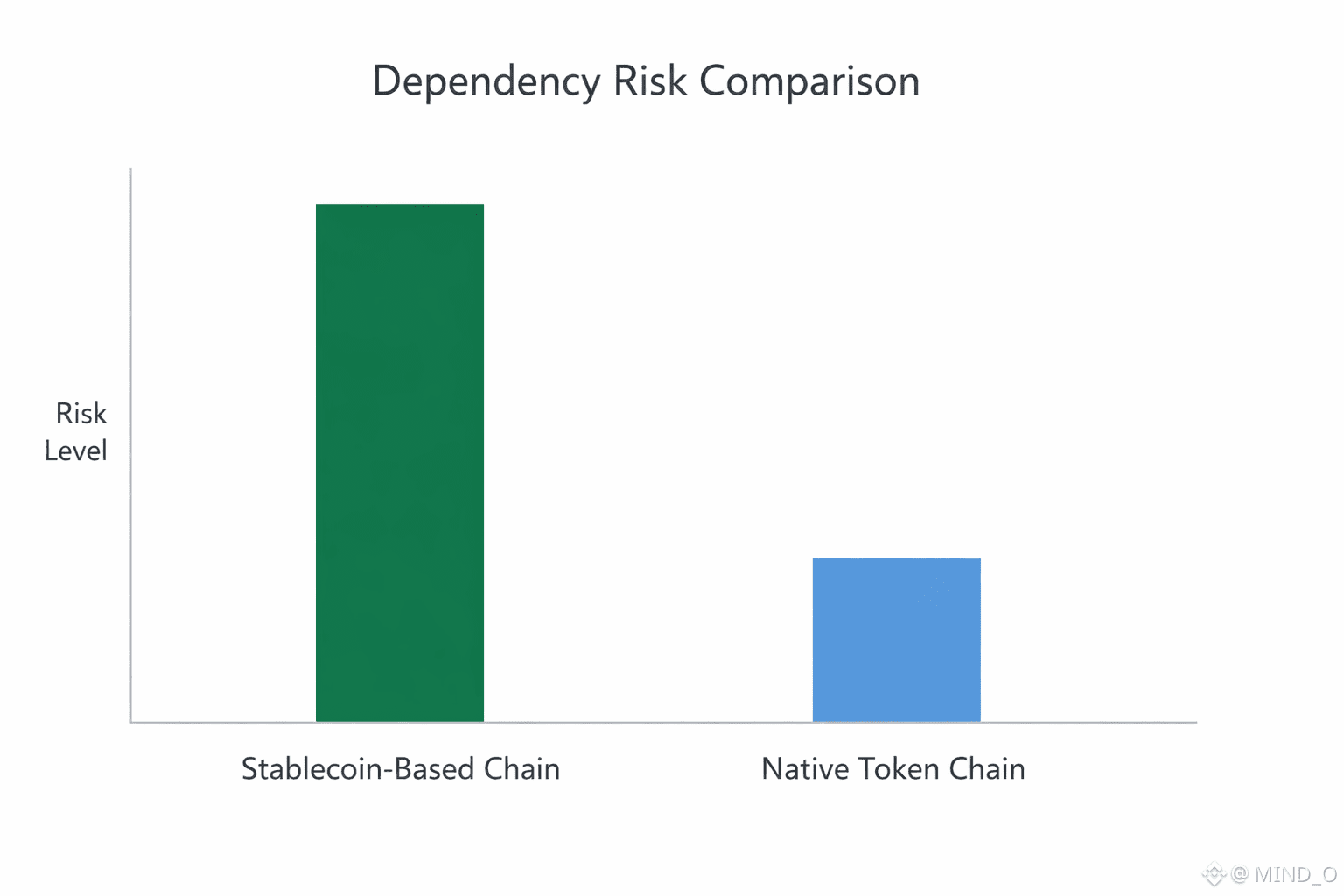
What really defines Plasma though is its open reliance on stablecoins as the core asset class especially USDT. This chain does not pretend to be neutral about money. It picks a winner and builds around it. From a usage standpoint that is honest. From a risk standpoint it is concentrated.
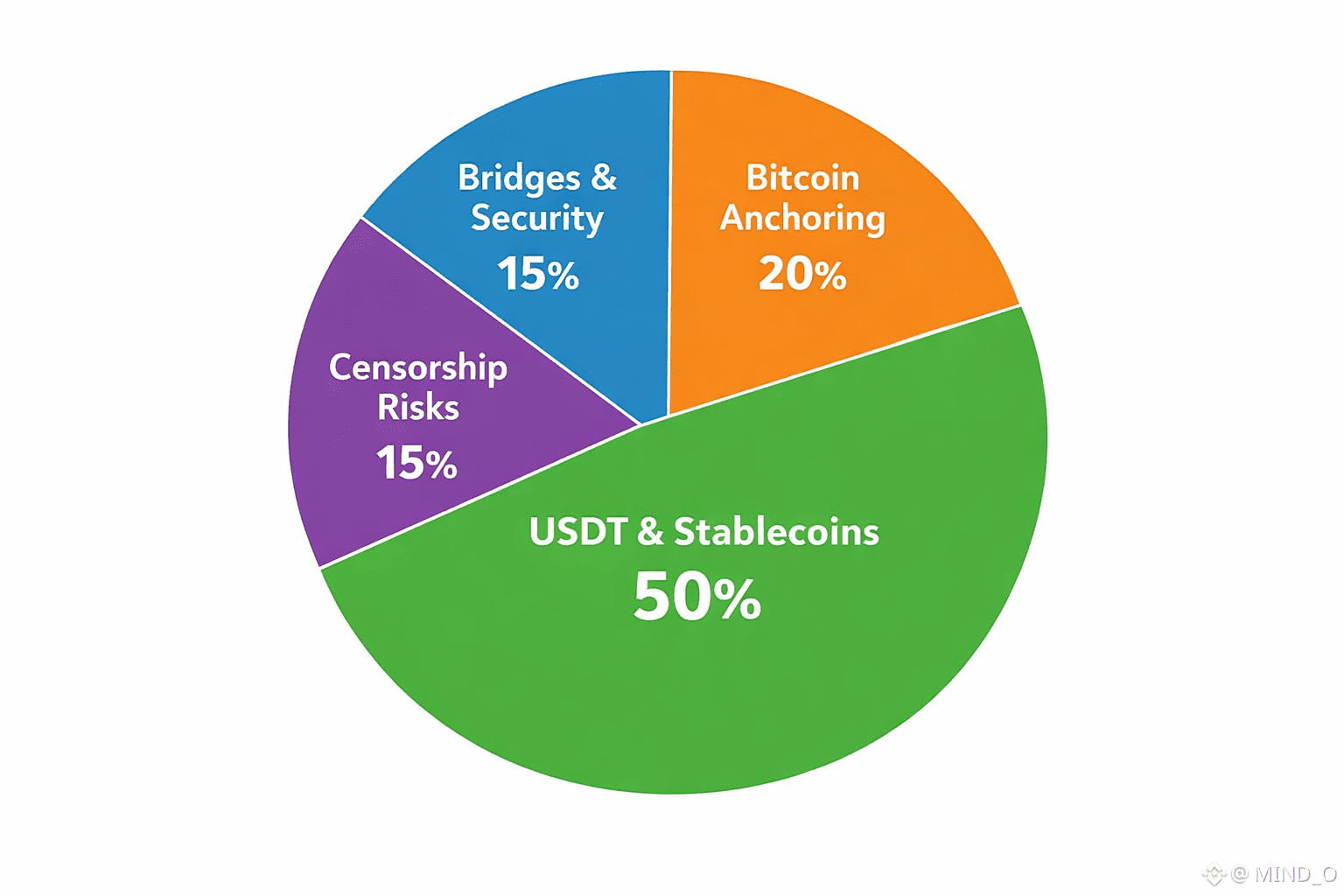
If USDT sneezes Plasma catches a cold.
Issuer policy changes freezes blacklists regulatory pressure none of that is hypothetical. It is history. And when your flagship UX feature is zero fee USDT transfers you are not just building infrastructure. You are aligning your fate with a private issuer and whatever geopolitical weather system it happens to be flying through.
The stablecoin first gas idea pushes this even further letting users pay fees in stable assets instead of a native token which sounds humane until you remember that fees still need to be converted routed priced and settled under volatile conditions. Liquidity does not appear on command. During stress it vanishes. I have watched elegant fee models collapse the moment markets stopped cooperating.
Institutions of course are part of the pitch. Fast finality deterministic settlement compliance friendly rails. On paper it makes sense. In reality institutions do not just ask how fast your chain is. They ask who controls it how upgrades happen what the emergency procedures are and who they can call when something breaks at 2 am. BFT chains answer those questions with governance. Governance answers those questions with people. People bring politics.
There is no escaping that loop.
What I find most interesting about Plasma is that it feels like it was designed by people who have already lost a few battles. It does not chase everything. It does not romanticize permissionlessness while quietly building permissioned systems. It says more or less this is a settlement rail for stablecoins take it or leave it.
That restraint might be its edge. Or its ceiling.
Because the hardest part is not launching a payments chain. It is surviving the moment when usage is no longer theoretical when subsidies start to hurt when regulators stop ignoring you and when reliability stops being a marketing term and starts being a legal obligation.
That is the moment when most infrastructure for the future of money quietly discovers what it actually built.