


It is not because they wish it is most chains that grow less decentralized with time--because they grow heavy. Additional applications, additional state, additional data, additional hardware requirements. In the long-run, the nodes can be operated by fewer people. And power becomes concentrated when there are fewer people to operate the nodes.
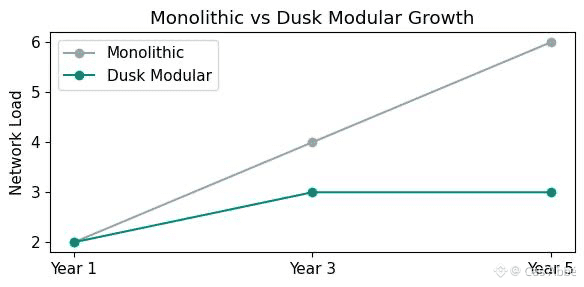
Modular architecture is the way Dusk is trying to evade that trap. The basic idea is:
DuskDS is the powerful base layer: settlement + consensus and core security and network functionality.
Execution layers are on the surface: various environments can execute apps without causing everything to be put into a single heavy monolithic chain.
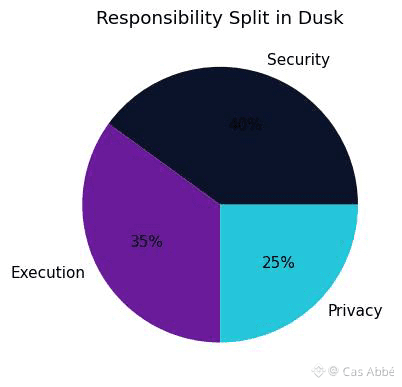
The design is important since it enables Dusk to age well. Rather than expanding to become a giant, bloated chain that is only capable of being operated by data centers, the structure of Dusk attempts to maintain the base lean and permit app layers to develop without bringing the entire network to its knees.
Why it is appropriate to the mission of Dusk: Dusk is not establishing a chain of fun experiments. It is developing financial infrastructure. Banking facilities should be durable. One of the limited methods of a chain remaining reliable and decentralized over years is modularity.
Modularity means sustainability. Dusk is planning on long term basis, not in the hype.
