


I was thinking recently about how normal financial work actually happens. A payment approval, a fund subscription, a compliance check. None of it is dramatic. Most of it is routine. What always stands out to me is how two ideas that are often treated as opposites work together without trouble. Privacy and oversight. Sensitive data stays protected by default, yet the system still allows checks when needed. When I look at many public blockchains, I see a forced choice that does not exist in real finance. Everything is either fully exposed or completely hidden. That gap is where Dusk Foundation begins to matter.
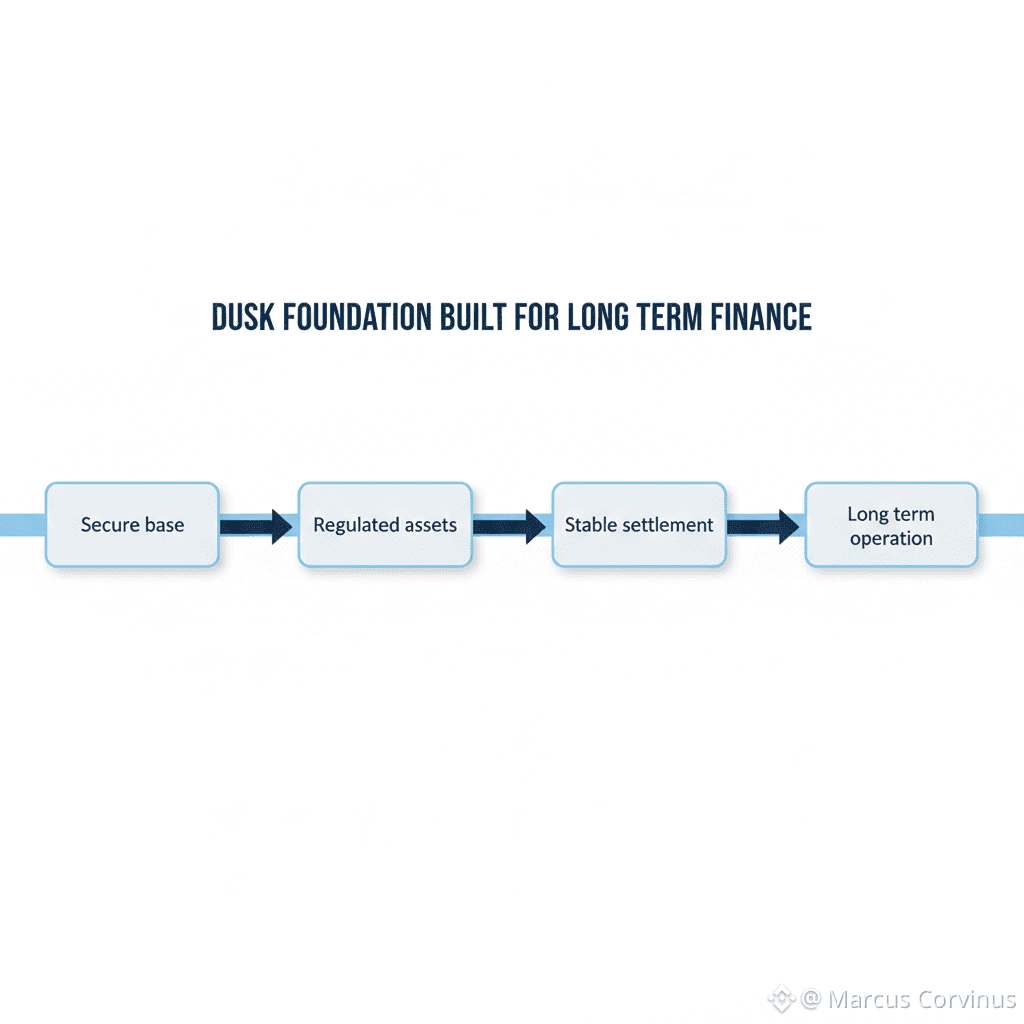
Dusk is a Layer 1 blockchain built for regulated financial systems. Not for noise, not for quick experiments, but for structures that must follow rules and still protect users. I keep coming back to one idea when I think about Dusk. They start from the assumption that privacy is normal. In traditional markets, no one expects client balances, positions, or deal terms to be public. Dusk brings that assumption on chain instead of fighting it.
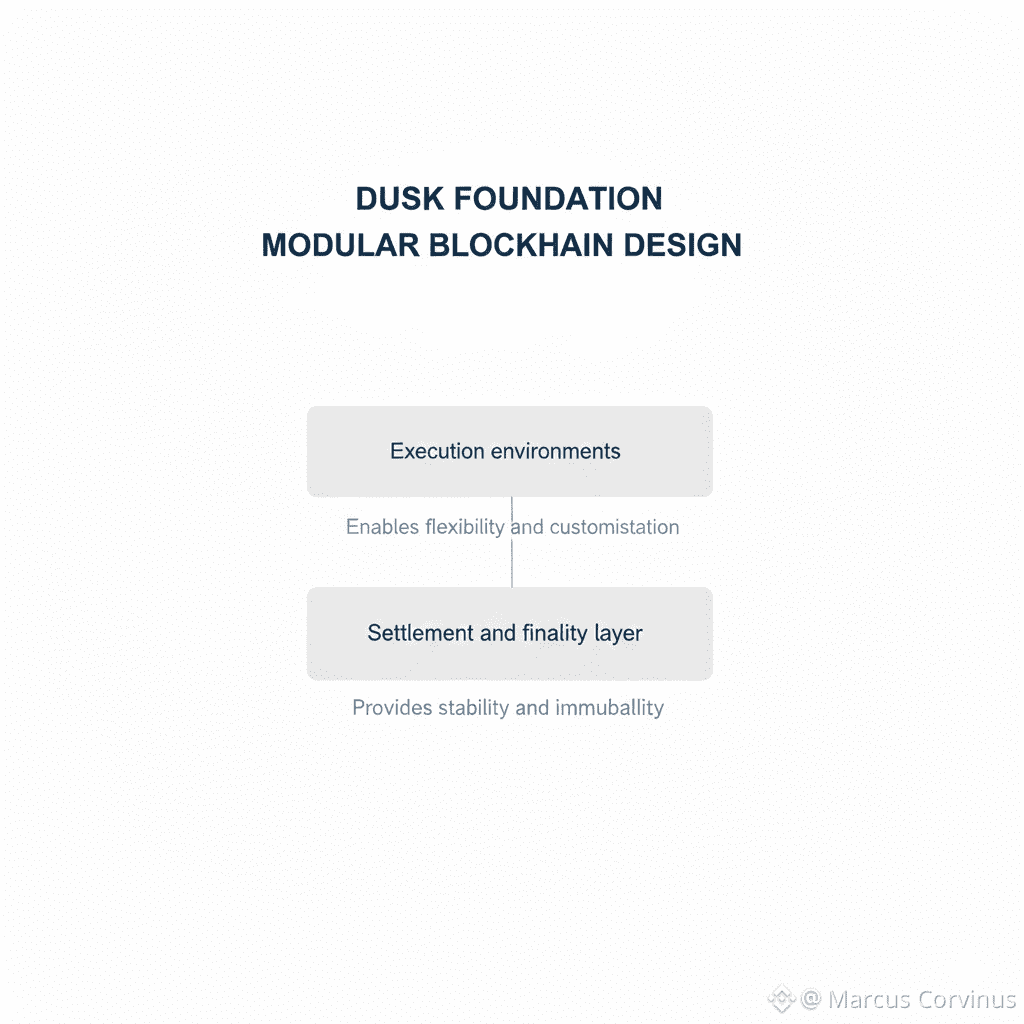
The design of Dusk reflects this from the ground up. The network is built in a modular way, separating the base settlement layer from execution environments. I see this as a sign of maturity. Settlement should be stable, predictable, and boring. It should finalize transactions cleanly and move on. Execution can evolve on top of that without putting the foundation at risk. If finance is going to live on chain, the base cannot change every year.
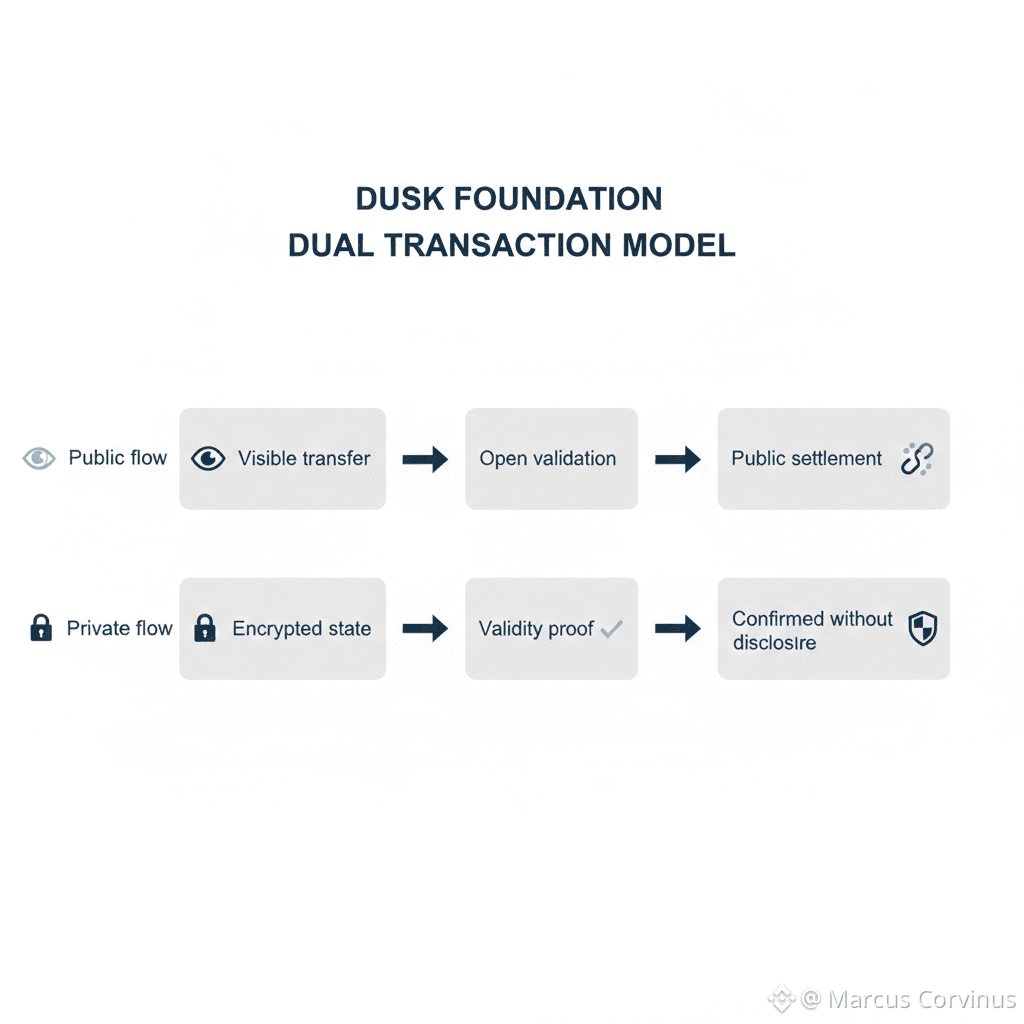
One of the most important parts of Dusk is how value moves. There are public transfers and private transfers. This is not ideology. It is practicality. Some transactions must be visible. Others must stay confidential to protect strategies and participants. Dusk allows both inside the same system. I often ask myself, "why should a blockchain force one extreme when real finance never does?" Dusk answers that question by design.
Private transfers on Dusk do not rely on open balances. Instead, value exists as protected units that can be spent only by the owner. The system proves the transfer is valid without revealing amounts or full history. I think this is critical. In finance, information leaks can be more damaging than direct loss. If timing or size becomes public, markets react instantly. Dusk treats this as a core risk, not an edge case.
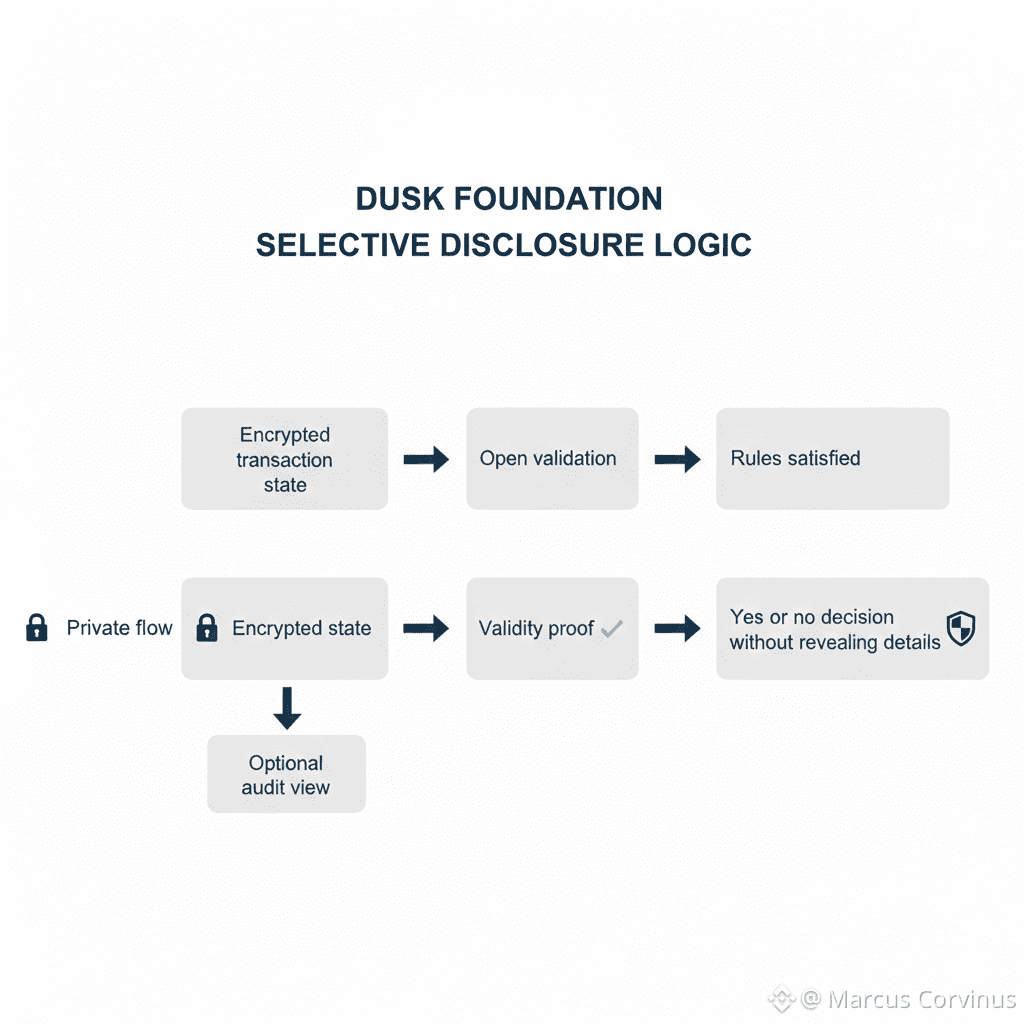
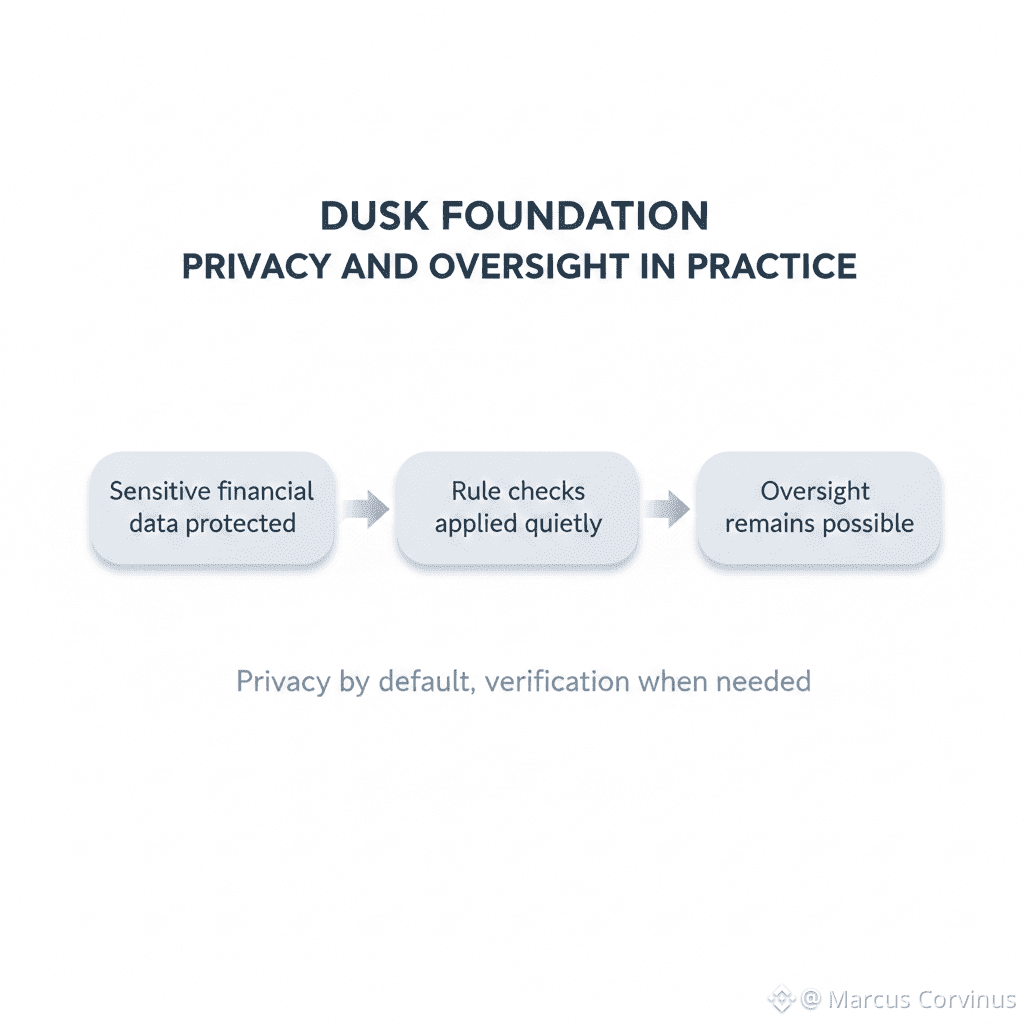
At the same time, Dusk does not pretend regulation can be ignored. I see a strong focus on controlled disclosure. Data is protected by default, but proofs and limited views can be shared when required. This allows oversight without mass exposure. I often think, "how do you prove rules were followed without showing everything?" Dusk is built around answering that question.
Identity is handled with the same care. Instead of pushing identity fully off chain or exposing it openly, Dusk focuses on proving facts. A user can prove they meet a requirement without sharing raw personal data. This reduces risk for users and simplifies compliance for institutions. Less shared data means fewer points of failure.
Finality is another area where Dusk feels aligned with real markets. Once a transaction settles, it should not come back. Dusk uses a proof of stake system designed for strong and fast finality. I see this as essential for tokenized assets and settlement flows. If settlement is uncertain, trust disappears. Dusk clearly prioritizes certainty over speed for its own sake.
For developers, Dusk offers flexibility without chaos. There is a native environment designed to work smoothly with privacy systems. There is also an environment compatible with familiar smart contract tooling. This lowers the barrier to entry while still offering features that most chains cannot support. I often think, "if developers must choose between familiarity and correctness, adoption slows." Dusk tries to avoid that trap.
Smart contract privacy is one of the hardest problems in this space. Dusk does not rely on a single method. They combine different techniques to protect data while contracts execute correctly. This approach feels realistic. Performance, privacy, and verification rarely coexist without trade offs. Dusk accepts that complexity instead of hiding it.
The types of applications Dusk is built for make its purpose very clear. Tokenized real world assets sit at the center. Equity, debt, and funds come with rules, access limits, and reporting needs. Dusk is built to support those requirements rather than pretending they do not exist. I often ask, "why put assets on chain if the chain cannot respect their rules?" Dusk is one of the few projects that takes this question seriously.
Institutional style decentralized finance also fits naturally into this design. This is not open chaos. It is controlled liquidity, private positions, and clear boundaries. Large participants will not operate if their data is exposed. Dusk is designed to remove that barrier by default.
Payments and settlement flows are another natural fit. Fast finality, privacy, and audit paths are exactly what serious payment systems need. I can imagine asset delivery and payment happening together without either side being exposed unnecessarily.
The DUSK token supports the network quietly. It secures the chain through staking and pays for activity. Emissions are structured over a long period and reduce over time. This signals long term planning. They are not trying to extract value quickly. They are building incentives meant to last.
Staking itself reflects the same mindset. Validators are expected to act responsibly and remain available. If they fail, penalties apply. That level of accountability matters when real value is involved. I often think, "if infrastructure carries weight, responsibility cannot be optional."
What stays with me most about Dusk is its calm approach. There is no rush to impress. No need to shout. They are building systems meant to work under pressure, not systems meant to attract attention. Progress may look slower from the outside, but careful work usually does.
When I look at where regulated finance and blockchain are heading, I see a slow convergence. Privacy, rules, and tokenization are moving closer together. I often ask myself, "which chains are ready when that convergence finally happens?" Dusk feels prepared. It is not chasing trends. It is building foundations designed to carry real financial activity for a long time.
Important ideas that define this project include "privacy by default", "selective disclosure", "final settlement", "regulated assets", and "long term incentives". These are not slogans. They are design choices that shape how the network behaves every day.
