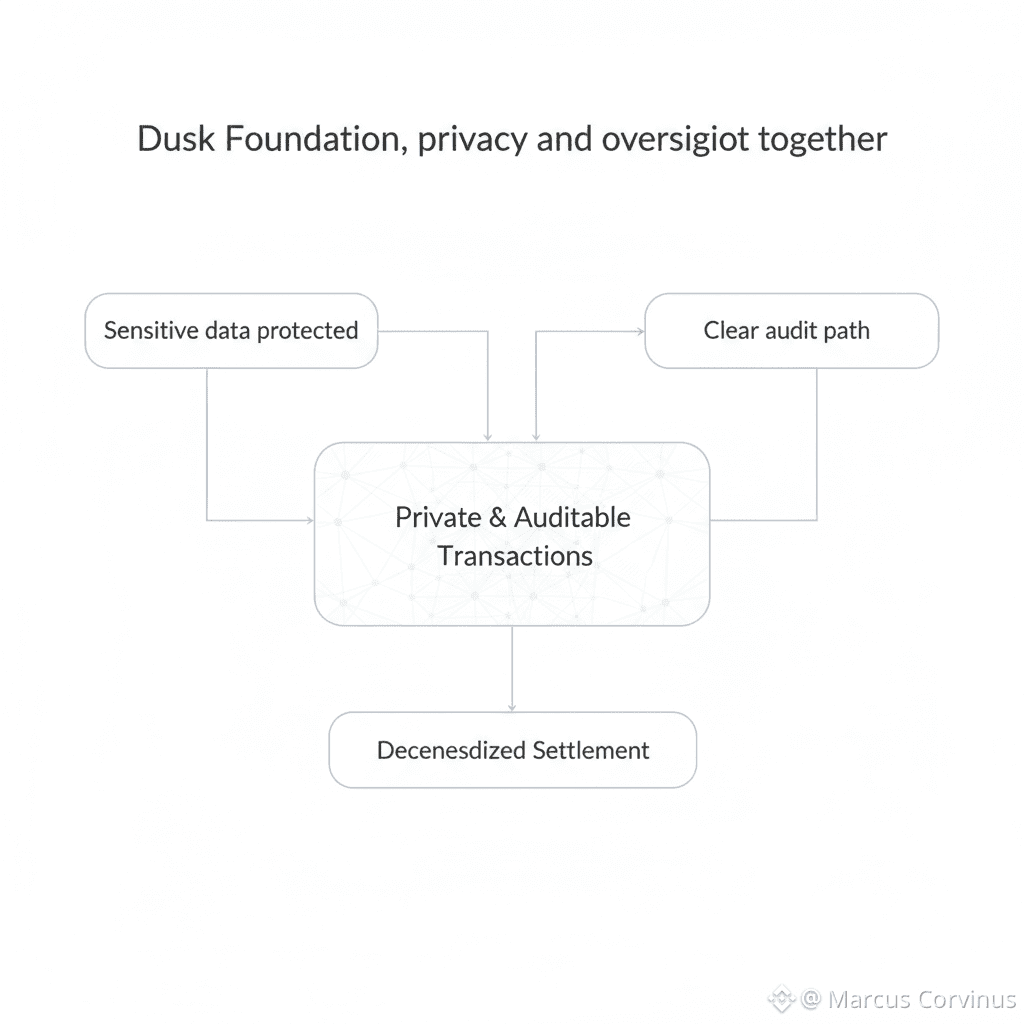
I remember filling out routine financial paperwork, nothing complex, just forms, identity checks, signatures, and quiet confirmations moving through the system. My personal details were protected, yet the process was fully compliant. No one questioned this balance. It worked because sensitive information was guarded by default while oversight stayed possible. When I compare that to many public blockchains, I see a forced choice that feels unnatural. Either everything is exposed to everyone, or everything is hidden with no clear path for accountability. I keep asking myself, "why does blockchain struggle with something finance already does every day". That question sits at the heart of Dusk.
Dusk Foundation was founded in 2018 with a goal that feels almost unfashionable in crypto. Build a Layer 1 blockchain that regulated finance can actually use without bending reality. They did not start by rejecting laws or pretending institutions do not exist. They started by accepting that finance already has working systems, and those systems rely on privacy, structure, and clear responsibility. Dusk is designed to bring that reality on chain instead of fighting it.
What stands out to me is how Dusk treats "privacy" as normal. On many chains, privacy feels like an extra feature or a risk factor. On Dusk, privacy is the starting point. Balances, transactions, and positions are not meant to be broadcast by default. That mirrors real financial life. People and institutions do not expose sensitive data unless there is a reason. At the same time, Dusk does not confuse privacy with hiding everything. There is room for oversight, audits, and lawful access. I often catch myself thinking, "why should financial activity be fully public just because it is on chain".
Dusk also takes "compliance" seriously, not as a slogan, but as a design constraint. Instead of pushing compliance to the edges, they aim to build it into the foundation. That means rules can be enforced consistently across applications. If eligibility matters, it can be checked. If reporting is required, it can be done without turning the entire system into a glass box. This approach feels closer to how real markets operate and far from the idea that regulation can be ignored.
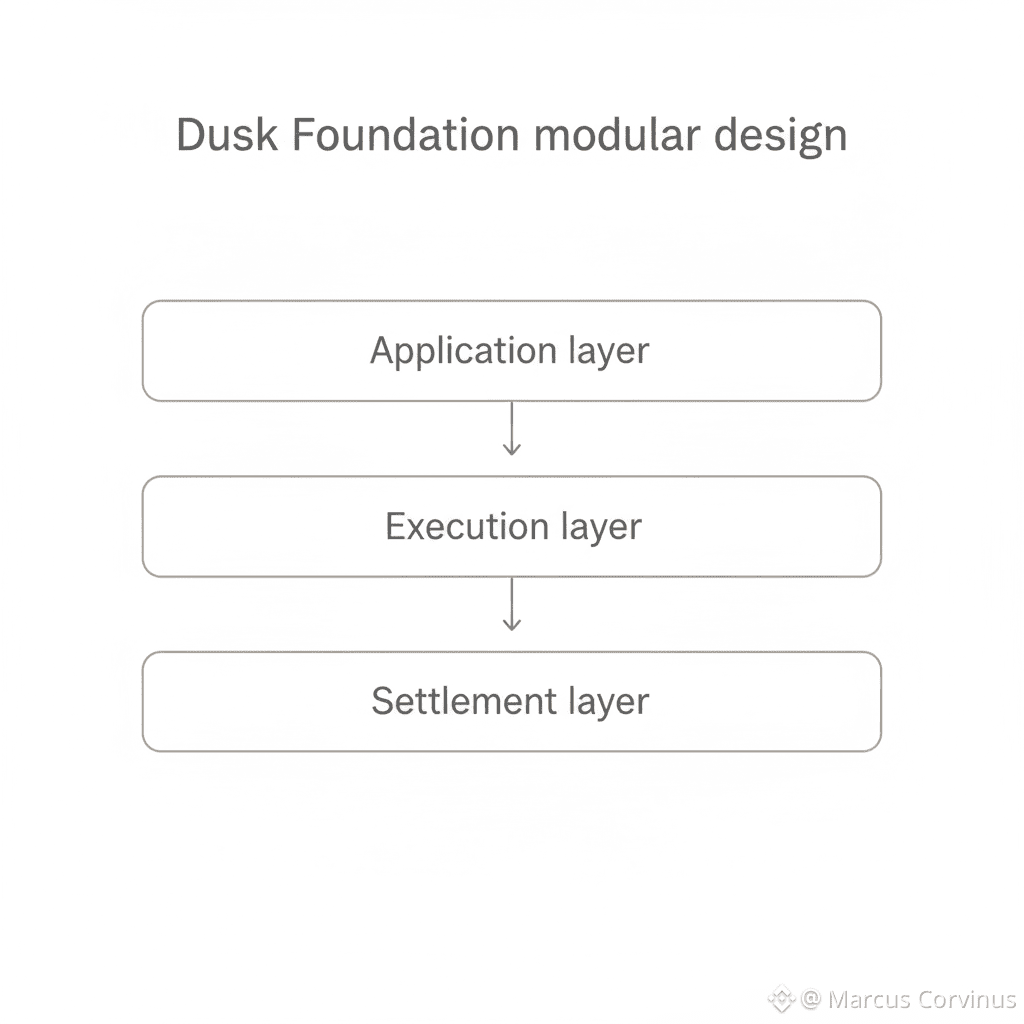
The structure of the network reflects this thinking. Dusk follows a modular design. The base layer focuses on settlement, security, and finality. Other layers handle smart contracts and execution. This separation is quiet but important. Financial systems need stability at the core. If every upgrade risks breaking settlement, trust disappears. By keeping layers separate, Dusk allows evolution without constant risk.
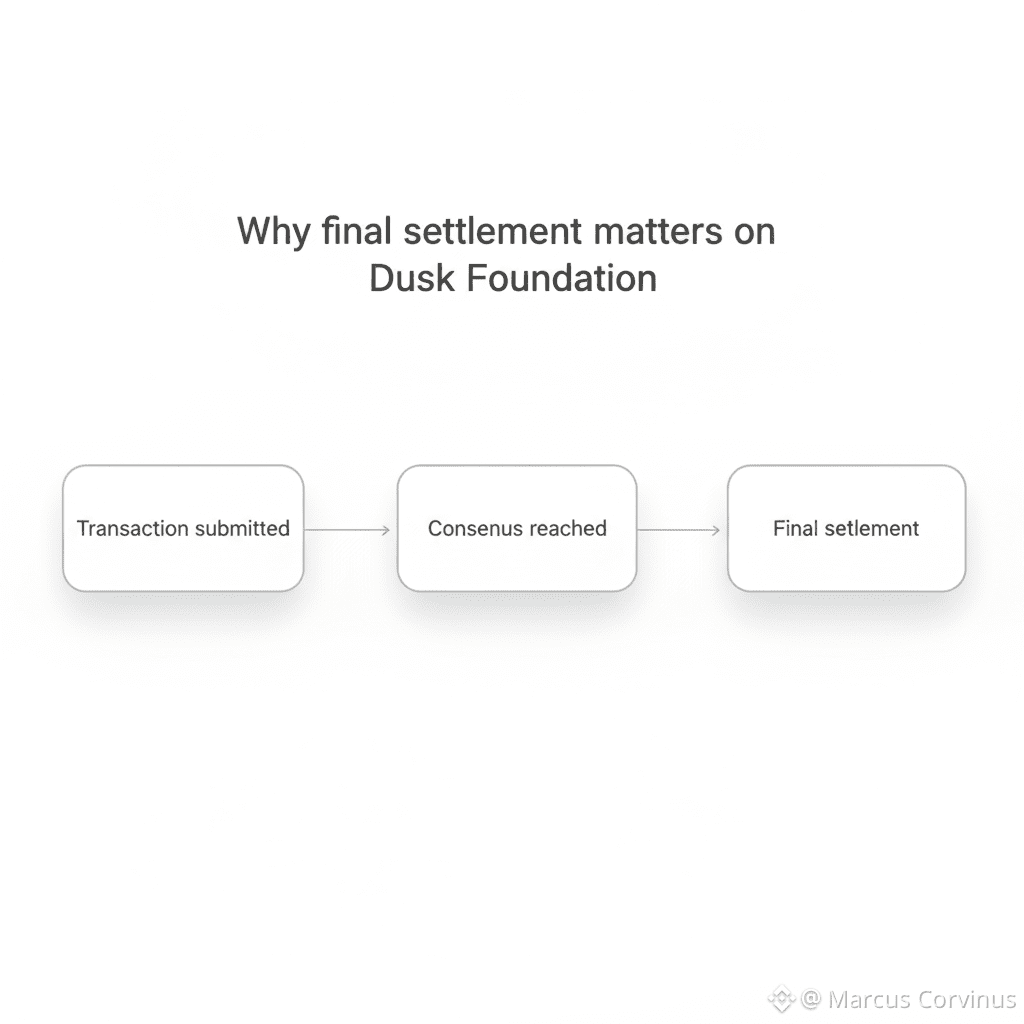
Final settlement is something I see misunderstood often. In real markets, once a transaction settles, it is finished. There is no waiting to see if history changes. Dusk is built with this expectation. It aims to provide clear finality so financial activity can rely on the network without uncertainty. I find myself asking, "how can serious markets exist without predictable settlement".
Developers are not forgotten in this design. Dusk supports an environment that feels familiar to build on. Smart contracts can be created using tools developers already understand, while the underlying system handles privacy and settlement correctly. This matters because adoption does not happen when builders are forced into uncomfortable choices. It happens when systems respect existing knowledge and improve the foundation beneath it.
Privacy within applications is handled with care. Markets do not work well when every move is visible. Large trades reveal intent. Strategies become signals. Manipulation becomes easier. Dusk supports confidential activity so participants can act without exposing themselves unnecessarily. This protects market fairness rather than undermining it. I often think, "is transparency always fair, or does it sometimes create new risks".
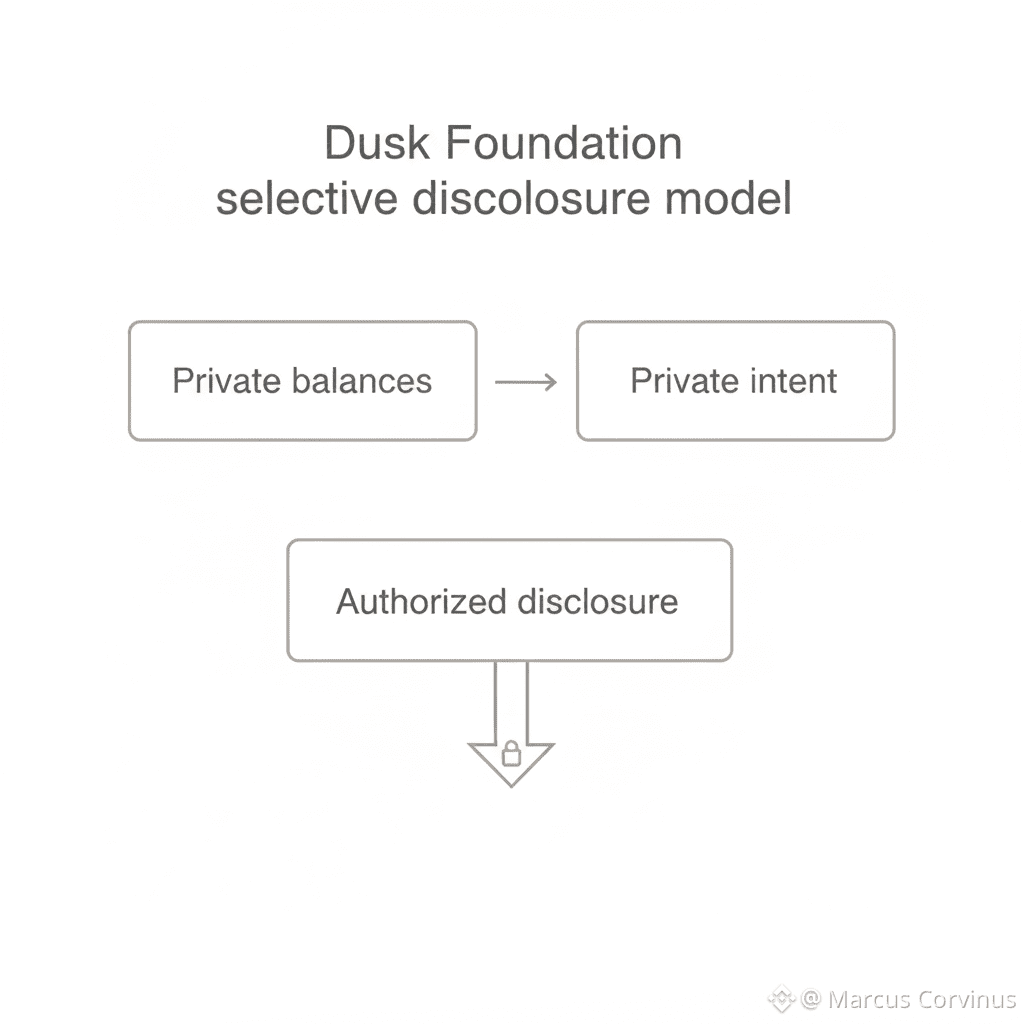
Identity is another area where Dusk stays grounded. Financial systems require identity checks and permissions. Dusk does not deny that reality. Instead, it supports selective proof. Users can show they meet requirements without revealing more than needed. If authorities need information, there are structured ways to provide it. This approach reflects how identity works in everyday finance, where access is controlled without public labeling.
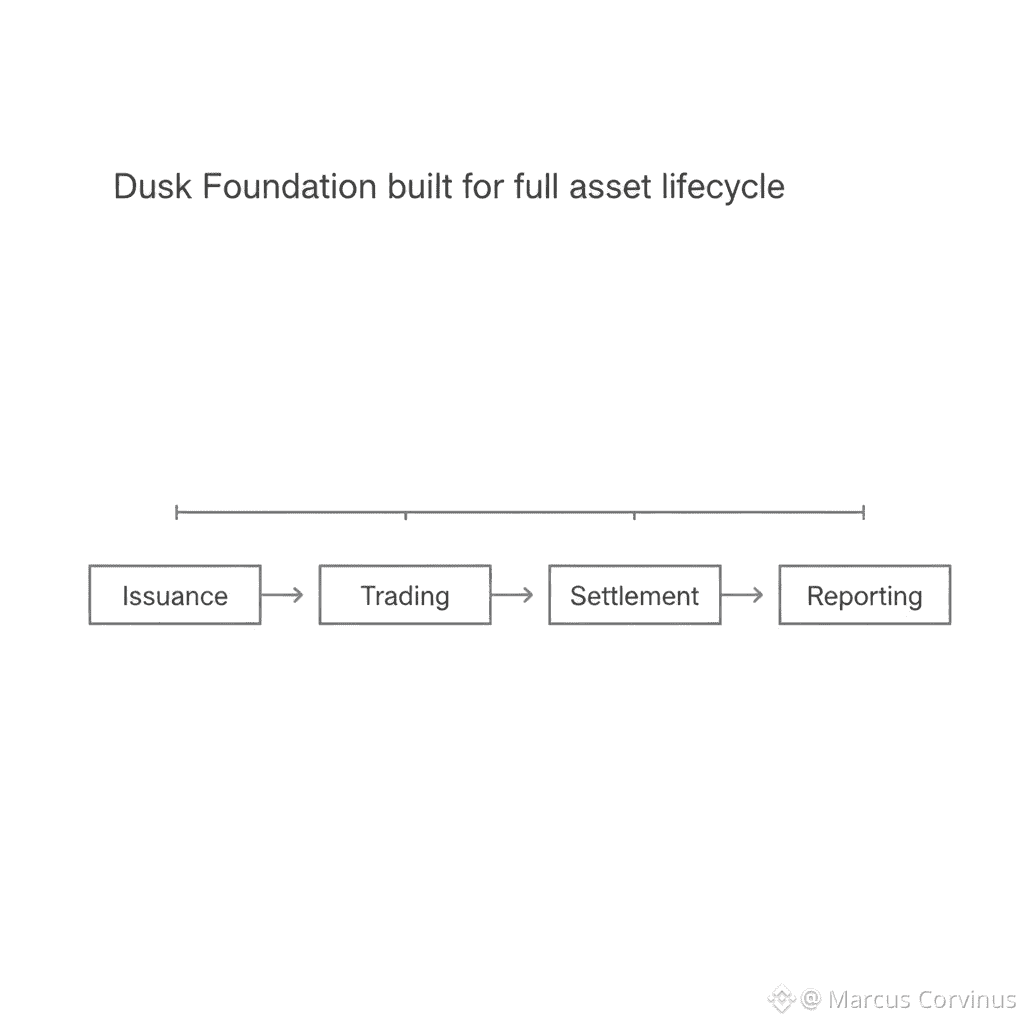
When it comes to tokenized real world assets, Dusk looks beyond the surface. Creating a token is easy. Managing the asset through its entire life is hard. Who can buy it. Who can sell it. What rules apply. How reporting works. Dusk is built to support this full process. That is why it emphasizes shared compliance foundations and native support for regulated assets. I often ask, "what is the value of tokenization if the rules fall apart after issuance".
Interoperability is treated with caution. Moving assets between networks is not just a technical choice. It has legal and structural consequences. Dusk approaches this carefully, allowing movement while maintaining control and clarity. This may slow things down, but it reduces risk and preserves trust. In regulated finance, speed without structure often leads to failure.
The DUSK token itself serves clear purposes. It secures the network, supports staking, and pays for usage. The design favors long term stability instead of short cycles. That aligns with Dusk’s broader vision. Financial infrastructure is not built for quick excitement. It is built to last, to be predictable, and to be trusted.
What I notice most about Dusk is how quiet it feels. There is no constant noise. The focus is on building systems that can stand up to scrutiny. Documentation, structure, and alignment with real requirements take priority. This kind of work rarely attracts attention quickly, but it is how trust grows over time.
I keep coming back to the same thought. If blockchain finance is going to mature, it cannot keep forcing a false choice between exposure and secrecy. It needs systems where "privacy" and "oversight" coexist naturally. Dusk is not promising shortcuts. It is attempting the slower, harder path of building finance on chain in a way that respects how finance already works. That approach may not be flashy, but it feels real, and it feels necessary.