


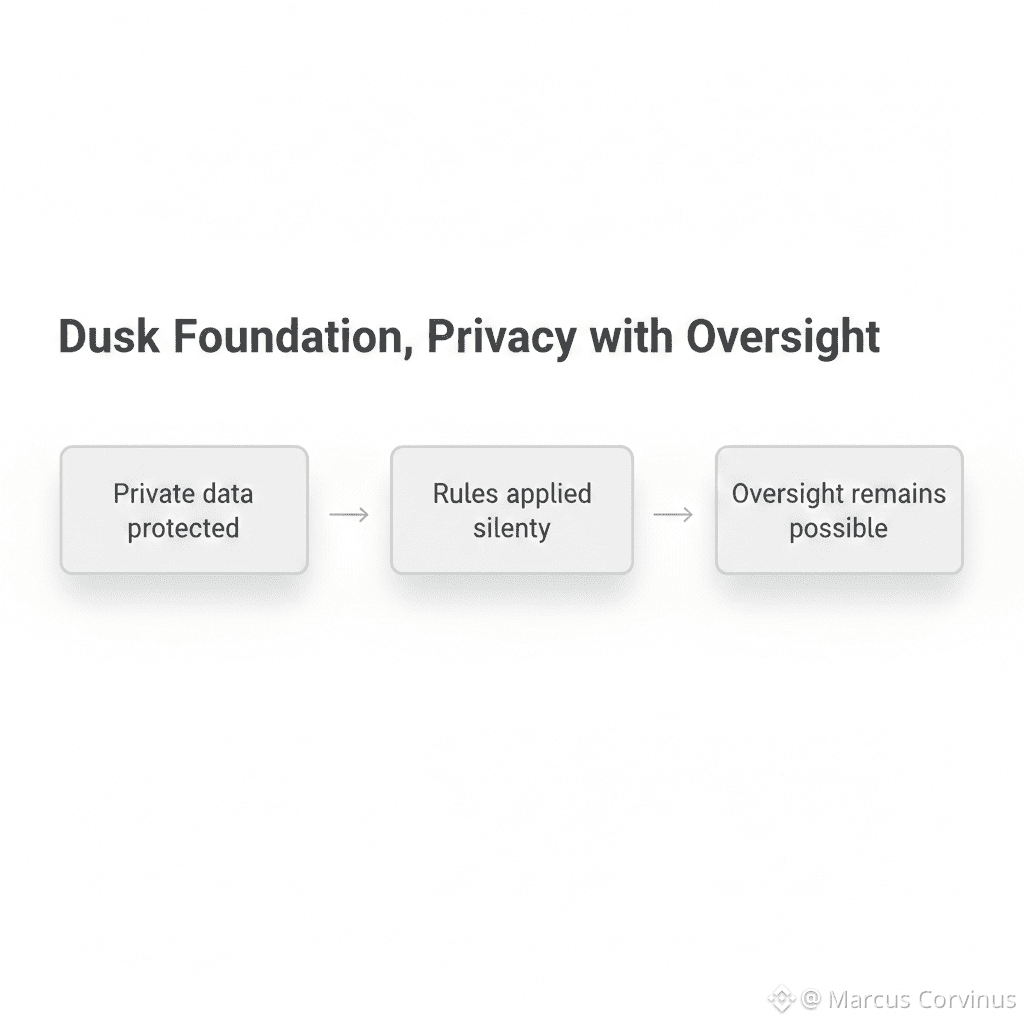
I was standing in line at a bank one morning, watching a simple process unfold. A clerk verified documents, checked a system, and approved a routine request. No screens were public. No sensitive details were shared with people nearby. Still, the process was controlled, logged, and reviewable if needed. Privacy and oversight were not fighting each other. They were working together in a way that felt normal. When I later think about public blockchains, I notice how often they force a strange choice. Either everything is visible to everyone, or privacy becomes so strong that rules stop working. That everyday moment helped me understand why financial systems protect sensitive information by default while still allowing supervision, and why this balance matters so much.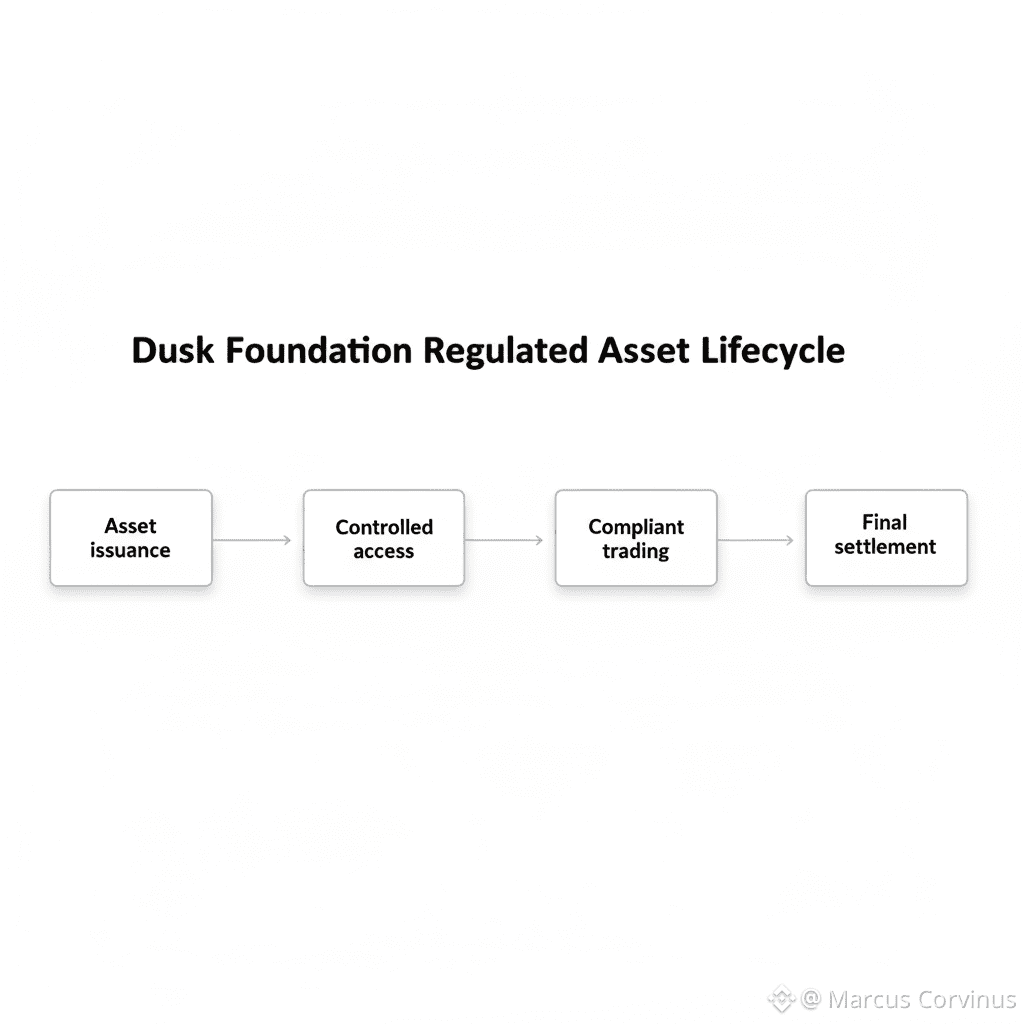
This is where Dusk Foundation fits. The project exists because finance does not work in extremes. It needs structure. It needs rules. It also needs discretion. Dusk was founded in 2018 with a focus that many blockchain projects avoided at the time. They were not trying to build a chain for every possible use. They focused on regulated finance, real assets, and systems that must operate under legal frameworks. I see Dusk as a blockchain that accepts reality instead of trying to escape it.
From the start, Dusk treated privacy as a core requirement, not a bonus feature. At the same time, they treated compliance as something to design for, not something to bypass. This combination shapes the entire network. It influences how transactions are structured, how identity is handled, and how assets are created and moved. Many blockchains start open and try to add controls later. Dusk started with controls and built openness where it makes sense.
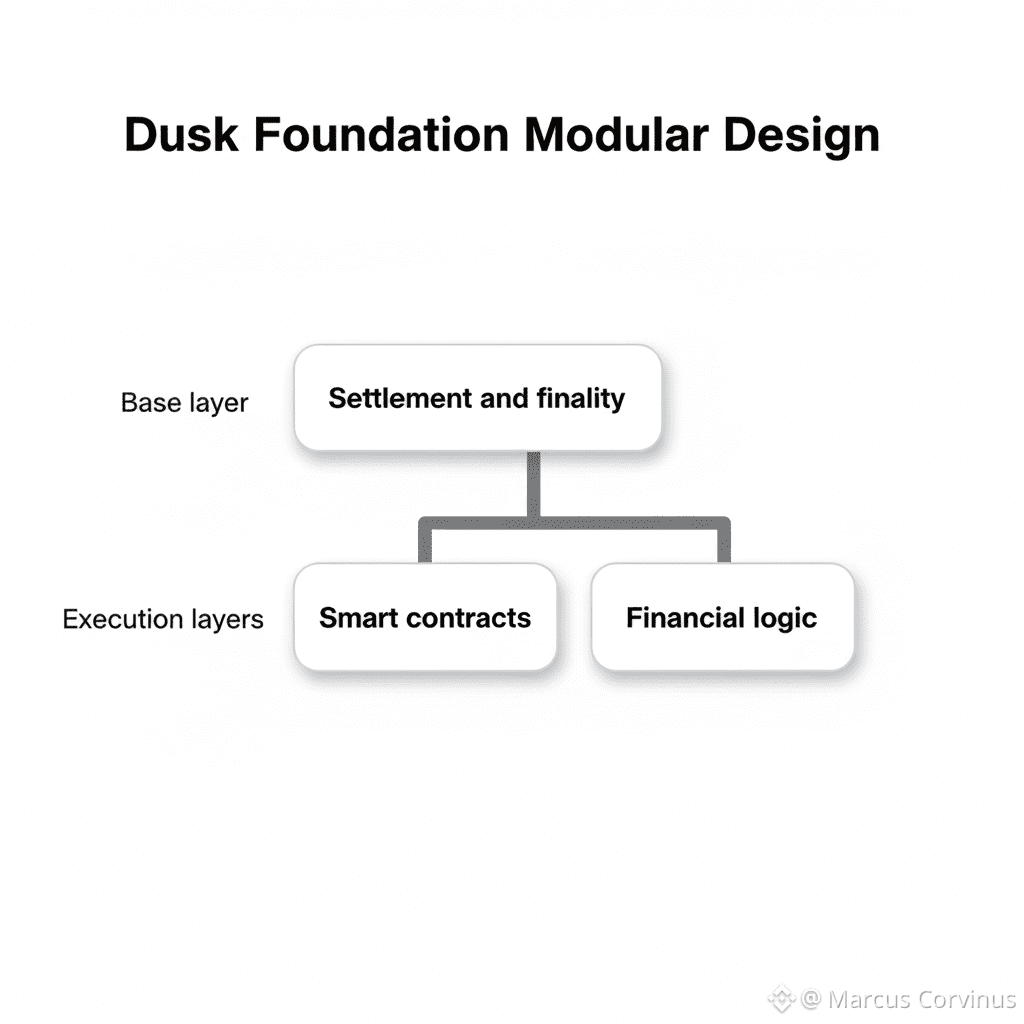
Dusk is a Layer 1 blockchain, but it is not built as a single rigid system. It follows a modular approach. I think of it as a strong settlement layer that supports different execution environments on top. The base layer focuses on security, data integrity, and final settlement. Other layers can handle smart contracts and financial logic. This matters because finance is complex. Payments, securities, and investment products all behave differently. A modular design allows the system to support these differences without becoming fragile.
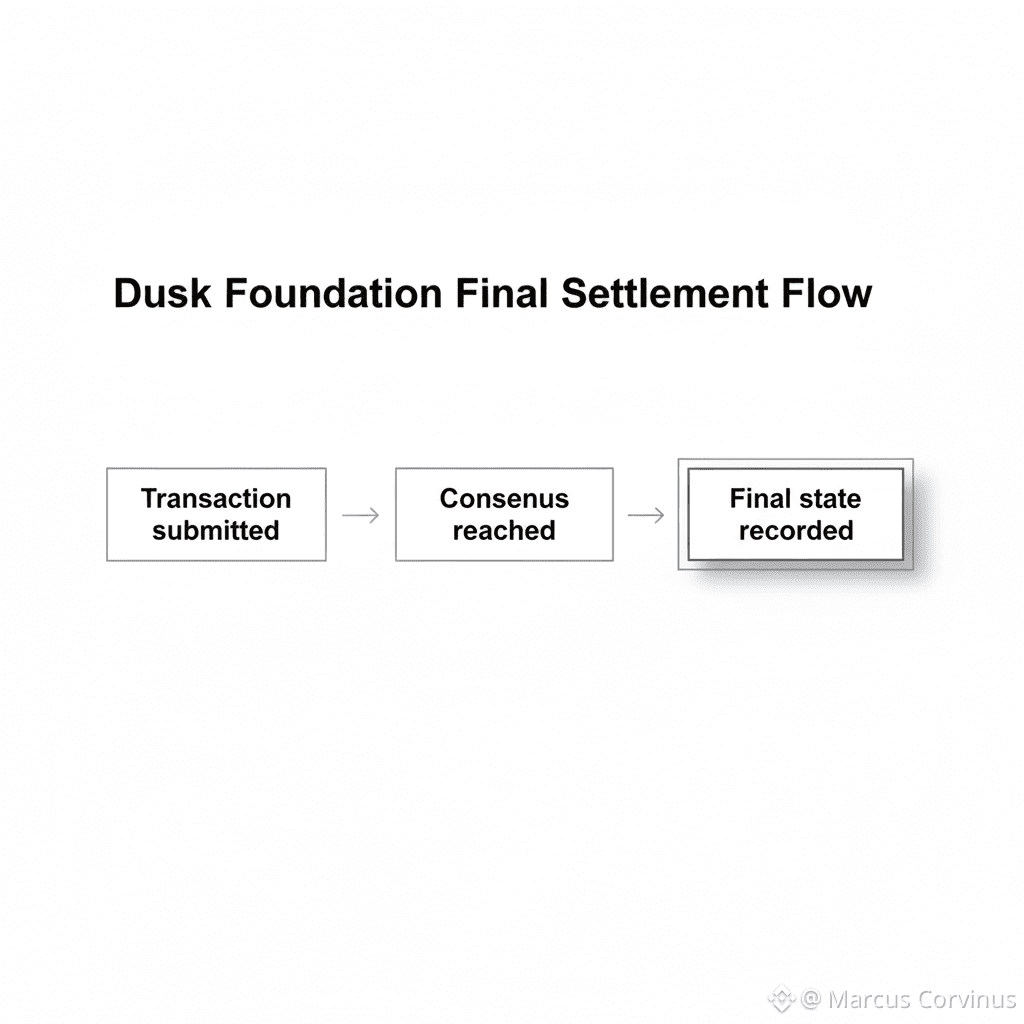
Finality is one of the most important ideas inside Dusk. In real markets, once something settles, it is done. Ownership changes are clear. Records do not roll back later. Many blockchains struggle here. Transactions can appear final but still change. For regulated finance, that uncertainty is unacceptable. Dusk treats finality as a requirement, not a feature. When a transaction is confirmed, it is meant to stay confirmed. This gives institutions confidence that the system behaves like real financial infrastructure.
Security on Dusk is maintained through staking. But staking here is not presented as a shortcut to quick returns. It feels more like a responsibility. Validators are expected to act correctly, stay online, and follow protocol rules. If they fail, the system responds in a measured way. Instead of destroying funds instantly, penalties reduce participation and rewards for a period of time. This approach focuses on stability and correction rather than punishment. It reflects how serious systems usually manage risk.
The DUSK token plays a central role in the network. It is used to secure the chain, pay transaction fees, and support consensus. Over time, the project has focused on moving fully into its native environment. This matters because a financial base layer needs its own native asset. Relying on external representations increases complexity and risk. Keeping the core economy inside the network makes settlement cleaner and more reliable.
One of the most thoughtful parts of Dusk is how it handles transactions. Instead of forcing one model on every use case, the network supports different transaction structures. Some financial actions require strong privacy but still need the receiver to know who sent the transaction. Other actions need account based behavior that fits regulated trading and custody systems. Dusk supports both. This flexibility allows real financial workflows to exist onchain without awkward compromises.
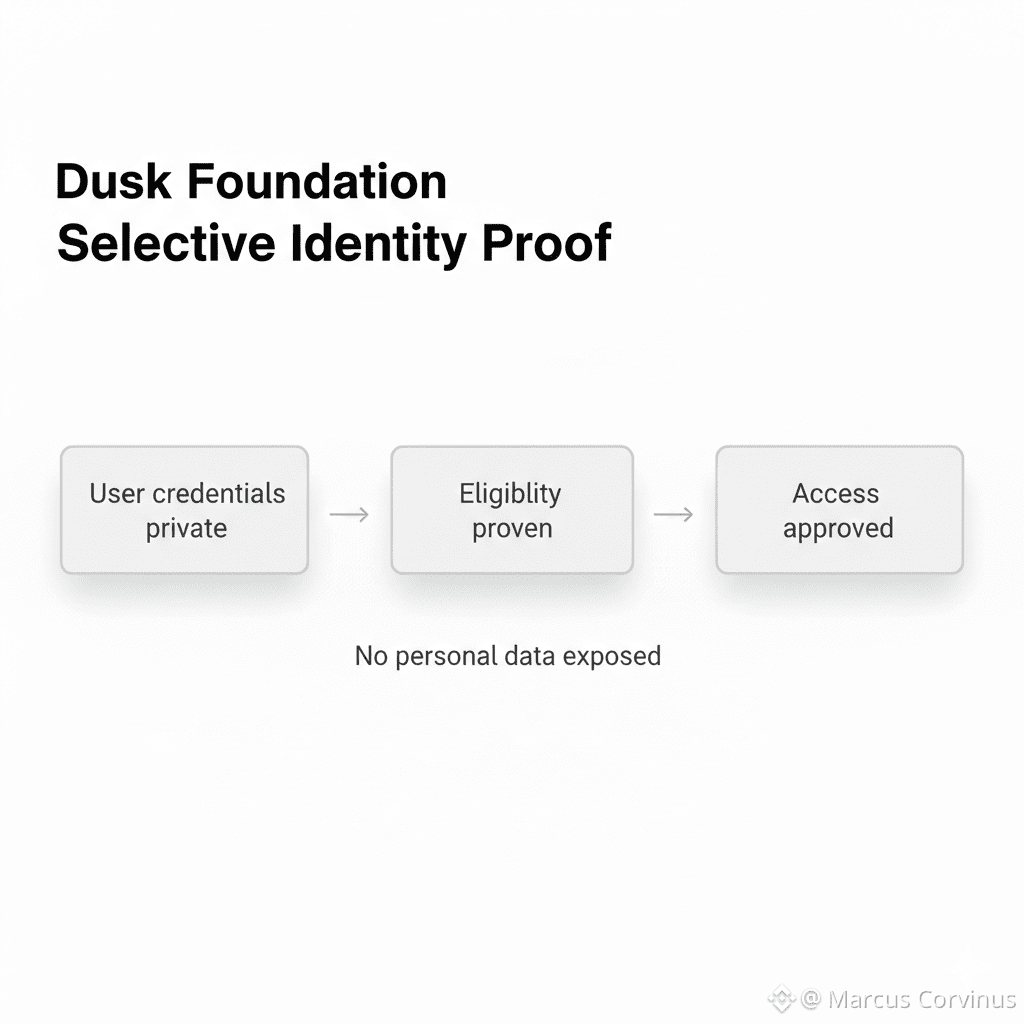
Identity is handled with the same care. Regulated finance requires identity checks, but exposing personal data on a public ledger is dangerous. Dusk allows users to prove what they are allowed to do without revealing who they are to everyone. If someone needs to show eligibility, they can do so using cryptographic proof. This protects sensitive information while still allowing proper checks. It reflects the idea that systems should verify rights, not expose identities.
Smart contracts are another important part of the ecosystem. Many developers already know how to build financial logic using familiar tools. Dusk does not force them to abandon that knowledge. It provides an execution environment that supports these tools while adding privacy at a deeper level. This is critical for finance. Many contracts cannot operate with fully public balances and strategies. Dusk allows confidential execution while keeping the system auditable when required.
Tokenization is where all these ideas come together. Tokenizing real world assets is not just about creating a digital version of something. It is about the full lifecycle. Assets must be issued correctly. Access must be controlled. Trading must follow rules. Settlement must be final. Records must be reviewable. Dusk is built to support this entire process. It treats tokenization as infrastructure, not as a shortcut.
Payments also matter. Real markets do not function without regulated money. Assets and payments need to move together under clear rules. Dusk has been working toward payment systems that fit legal frameworks and can operate alongside tokenized assets. This creates a more complete environment where value can move in a controlled and predictable way.
As I follow Dusk, I notice how quiet the project is. There is no rush. There is no noise. They are focused on building something that works. In finance, this kind of work often looks slow from the outside. But it is usually the kind that lasts.
Important ideas inside the project often come back to the same words, like "privacy by default", "regulated finance", "final settlement", and "selective disclosure". These are not slogans. They are design choices.
I often ask myself, "why do most blockchains struggle to support real financial markets". The answer usually comes back to structure. Another question I keep returning to is "can a public blockchain respect privacy without losing trust". Dusk is an attempt to answer that question in practice. And maybe the most important question is "what does onchain finance look like when it starts to feel normal".
Dusk Foundation is not trying to replace the world overnight. It is building a blockchain that fits into existing financial reality. A system where privacy and oversight coexist quietly, the way they already do in everyday finance. If this approach succeeds, it will not feel revolutionary. It will feel stable, predictable, and worth relying on.