
In the rapidly evolving blockchain industry, most networks attempt to do everything at once smart contracts, NFTs, DeFi, gaming, governance often at the cost of speed, efficiency, and reliability. Plasma (XPL) takes a fundamentally different approach. Instead of becoming a general-purpose blockchain, Plasma focuses on one of the most important real-world use cases in crypto today: stablecoin payments at global scale. By designing a Layer-1 blockchain specifically for this purpose, Plasma positions itself as infrastructure rather than speculation an invisible but essential layer powering digital finance.
At its core, Plasma aims to make stablecoin transfers near-instant, cost-free, and institution-ready, while preserving the security guarantees demanded by global markets. In an ecosystem where high fees, congestion, and slow confirmations remain persistent problems, Plasma introduces a model that prioritizes performance without sacrificing trust.

Why Stablecoin Infrastructure Needs a Dedicated Blockchain
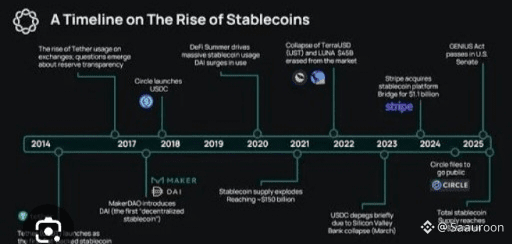
Stablecoins have quietly become one of the most widely used financial instruments in crypto. From cross-border payments and on-chain settlements to DeFi liquidity and institutional transfers, stablecoins move billions of dollars daily. Yet most of this activity still relies on blockchains such as Ethereum or Tron networks that were not originally designed solely for payments.
As usage increases, these chains face predictable issues. Transaction fees spike during congestion, confirmation times slow, and reliability becomes inconsistent. For enterprises, payment processors, and financial institutions, these limitations create friction that prevents broader adoption. Plasma was created to solve this exact problem by serving as dedicated infrastructure for stablecoin movement, rather than forcing payment traffic onto general-purpose chains.
By narrowing its focus, Plasma optimizes every layer of its design around speed, cost efficiency, and settlement certainty.
PlasmaBFT and Sub-Second Finality
One of Plasma’s defining technical innovations is its PlasmaBFT consensus mechanism. This system enables sub-second transaction finality, allowing stablecoin transfers to settle almost instantly. In practical terms, this means users and institutions can move funds without waiting through long confirmation times or worrying about transaction reversals.
Unlike proof-of-work systems that rely on energy-intensive mining or congested mempools, PlasmaBFT ensures fast agreement among validators while maintaining network security. This performance makes Plasma particularly well-suited for high-frequency payment environments where delays are unacceptable.
Just as importantly, Plasma allows transaction fees to be paid directly in stablecoins or Bitcoin, removing the friction of acquiring native gas tokens for simple transfers. This design choice reflects Plasma’s payment-first philosophy and aligns with real-world financial workflows.
Anchored to Bitcoin: Security Without Compromise
Speed alone is not enough for institutional adoption. Settlement assurance remains one of the most critical requirements for large-scale financial activity. Plasma addresses this by anchoring its ledger to the Bitcoin blockchain, combining Bitcoin’s unmatched security with Plasma’s high-performance execution layer.
By leveraging Bitcoin as a settlement anchor, Plasma benefits from the strongest and most battle-tested blockchain in existence. This hybrid model ensures that while transactions execute quickly on Plasma, their final settlement inherits Bitcoin’s long-term security guarantees. For institutions managing large volumes of capital, this design offers a level of trust that few networks can match.
Full EVM Compatibility and Developer Accessibility
Plasma is fully EVM compatible, allowing developers to deploy smart contracts using familiar Ethereum tooling without modification. This compatibility dramatically lowers the barrier to entry for builders, enabling existing DeFi protocols, payment applications, and financial products to migrate or expand onto Plasma with minimal friction.
Rather than forcing developers to learn new programming paradigms, Plasma integrates seamlessly into the existing Ethereum ecosystem. This approach accelerates adoption and encourages experimentation, while still benefiting from Plasma’s superior performance characteristics.
Beyond smart contracts, Plasma supports programmable Bitcoin (pBTC) and omnichain token standards. These features allow Bitcoin and stablecoins to move securely across ecosystems, unlocking new use cases for cross-chain liquidity, settlements, and asset interoperability.
Founders With Institutional and Market Experience
Plasma’s vision is backed by leadership with deep experience in both crypto markets and traditional finance. The project was founded in 2024 by Paul Faecks and Christian Angermayer, whose combined backgrounds shape Plasma’s institutional focus.
Paul Faecks, Plasma’s CEO, previously co-founded Alloy, a platform specializing in institutional digital asset operations. His experience as a derivatives specialist at Deribit provided direct exposure to high-performance trading infrastructure and market mechanics. This background is evident in Plasma’s emphasis on speed, reliability, and settlement integrity.
Christian Angermayer brings extensive venture capital and financial network experience. His role has been instrumental in securing funding and forging strategic relationships, including partnerships with Tether and Bitfinex. These connections reinforce Plasma’s positioning within the stablecoin and institutional ecosystem rather than purely retail speculation.
The Role of XPL in the Plasma Ecosystem
At the center of the network lies XPL, Plasma’s native utility and governance token. XPL secures the blockchain through Proof-of-Stake validation, where validators and delegators stake tokens to maintain network performance and integrity. This mechanism aligns incentives across participants and ensures that network security scales with usage.
Beyond validation, XPL plays a crucial role in governance. Token holders can vote on protocol upgrades, parameter adjustments, and treasury allocations, giving the community a direct voice in Plasma’s long-term evolution. This governance model balances decentralization with structured decision-making, a critical requirement for infrastructure-level blockchains.
XPL is also designed to support ecosystem growth. Allocations for liquidity programs, DeFi integrations, and community incentives help bootstrap adoption and encourage developers to build payment-focused applications on Plasma.
Token Supply and Market Presence
The circulating supply of XPL currently stands at 1.8 billion tokens, with a maximum supply of 10 billion. This structure allows for gradual ecosystem expansion while preserving long-term sustainability. The token is listed on Binance, providing liquidity, accessibility, and real-time price discovery for global users.
Rather than positioning XPL as a speculative asset alone, Plasma emphasizes its functional role within the network. As stablecoin adoption continues to grow, the demand for secure, efficient settlement infrastructure may increasingly drive attention toward networks like Plasma.
Use Cases Beyond Simple Transfers
While stablecoin payments are Plasma’s primary focus, the network’s capabilities extend far beyond basic transfers. Cross-border remittances, institutional settlements, treasury management, and on-chain liquidity operations all benefit from Plasma’s low latency and cost-free model.
In regions where traditional banking infrastructure is slow or expensive, Plasma offers a compelling alternative. Near-instant settlement combined with stablecoin pricing creates opportunities for businesses and individuals to transact globally without exposure to volatility or excessive fees.
For enterprises, Plasma’s design enables automated settlements, programmable payment flows, and compliance-friendly architecture features that are increasingly demanded by financial institutions exploring blockchain integration.
Plasma’s Position in the Broader Crypto Landscape
As the crypto industry matures, infrastructure projects are beginning to separate themselves from speculative narratives. Plasma represents this shift. By focusing on performance, reliability, and real-world utility, it positions itself as a foundational layer rather than a trend-driven platform.
The decision to anchor security to Bitcoin, embrace EVM compatibility, and specialize in stablecoin payments reflects a long-term vision. Plasma is not competing for attention through hype cycles but through technical relevance and institutional alignment.
Looking Ahead
The future of blockchain adoption will likely be shaped by networks that solve concrete problems rather than chasing short-term trends. Stablecoins are already one of crypto’s most widely adopted tools, and the demand for reliable settlement infrastructure continues to grow.
Plasma’s architecture suggests a future where stablecoin payments feel as seamless as traditional digital transfers—instant, predictable, and secure. As partnerships expand and on-chain activity increases, Plasma could quietly become one of the most important pieces of financial infrastructure in the digital economy.
Conclusion
Plasma (XPL) is not trying to be everything. It is designed to do one thing exceptionally well: power global stablecoin payments with speed, security, and institutional reliability. Through PlasmaBFT consensus, Bitcoin anchoring, EVM compatibility, and a carefully structured token economy, the network offers a compelling solution to some of blockchain’s most persistent challenges.
In an industry increasingly focused on real-world adoption, Plasma stands out as a project built for function, not noise. As stablecoins continue to bridge traditional finance and decentralized systems, Plasma’s role as dedicated infrastructure may prove far more valuable than it first appears.

