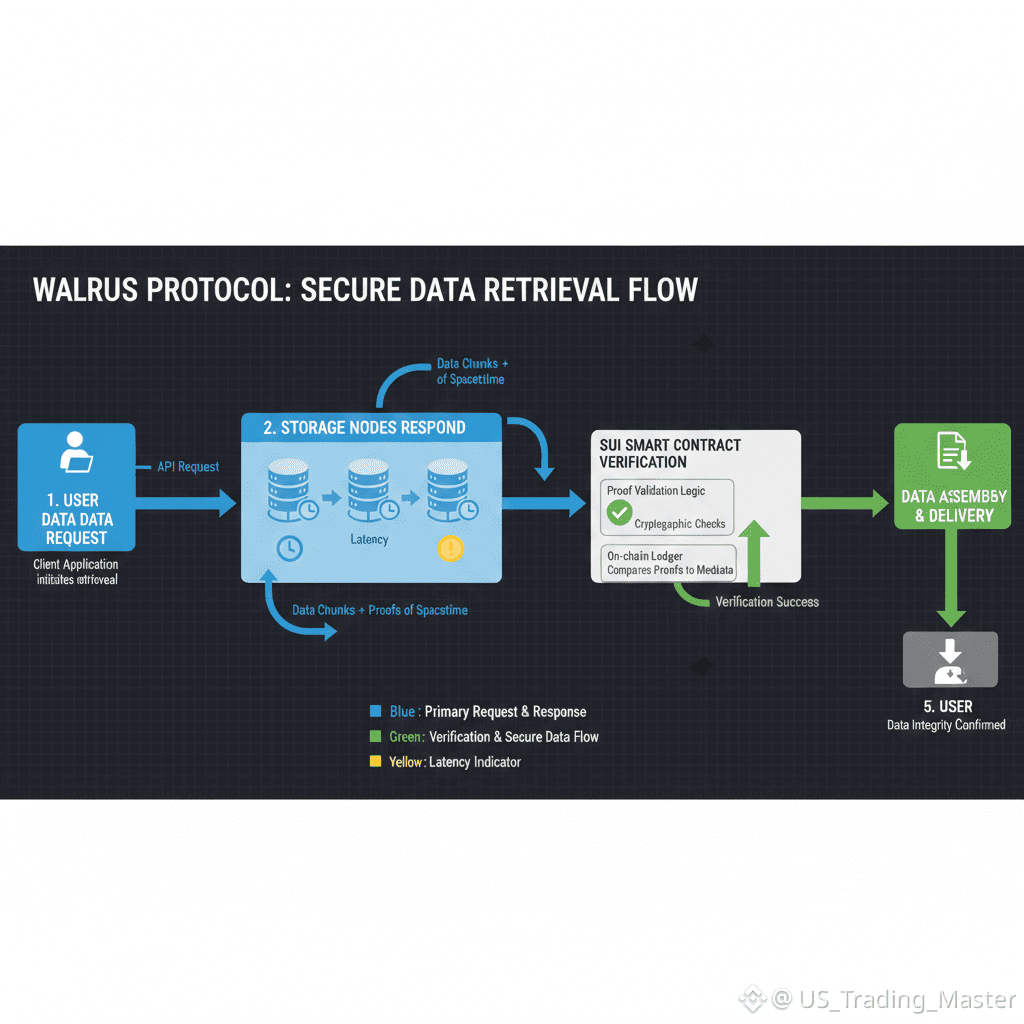
Why Data Ownership Is Becoming a Market Issue
Data has quietly become the most valuable commodity in the digital economy. Yet, paradoxically, most users and applications do not truly control their data. Centralized platforms act as custodians, creating systemic risk for Web3-native systems.
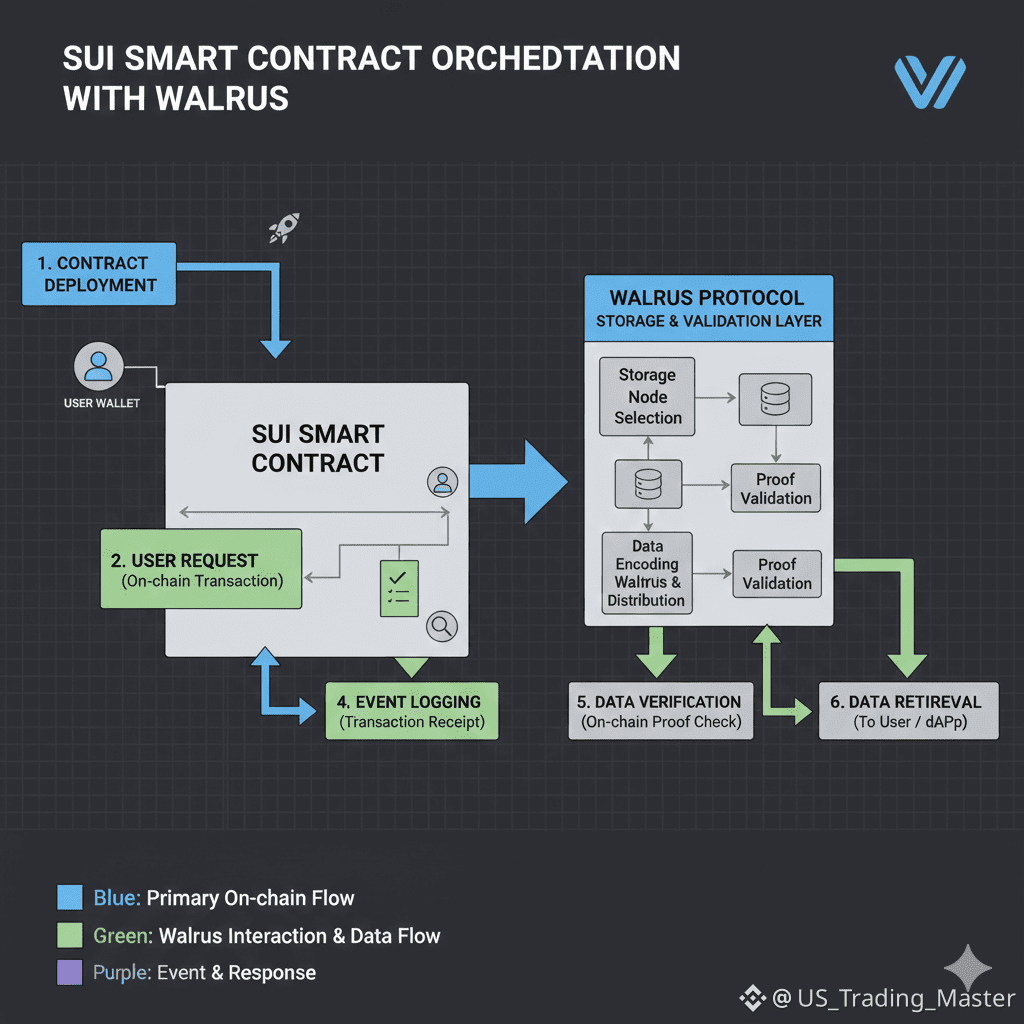
For traders and investors, this creates a structural vulnerability. Applications built on unverified data cannot scale sustainably. This is precisely where Walrus enters the conversation — not as a storage provider, but as a data sovereignty protocol.
Walrus Architecture: Designed for Markets, Not Just Files
Walrus’s use of RedStuff erasure coding allows it to scale storage while maintaining resilience. But the deeper innovation lies in how data is economically structured.
Data stored on Walrus:
Is cryptographically verifiable
Has measurable availability guarantees
Can be referenced by on-chain logic
This enables programmable data rights — a necessary condition for data markets.
Proof of Availability as an Economic Primitive
Most storage networks stop at persistence. Walrus goes further by proving availability continuously. This transforms data into something that can be:
Collateralized
Monetized
Audited
For DeFi, this means new classes of data-backed instruments. For AI, it means trustworthy datasets. For RWAs, it means long-term compliance-grade records.
Implications for AI and Machine Economies
AI systems are only as good as their data. Walrus introduces a way to verify that training data exists, hasn’t been altered, and remains accessible.
This creates a foundation for:
AI data marketplaces
Transparent model training pipelines
Verifiable inference systems
From an investor’s standpoint, this is where long-term value accrues.
Why $WAL Is More Than a Utility Token
$WAL underpins access, incentives, and verification within the Walrus ecosystem. As data usage grows, so does demand for reliable availability guarantees.
This aligns token value with real usage, not speculation.
Closing Perspective
Walrus is building the rails for a future where data is owned, verified, and traded openly. In a world moving toward AI-driven finance and automation, that is not optional infrastructure — it is essential.