
Introduction: When Transparency Becomes a Limitation
Blockchain was introduced to bring transparency and trust into digital systems. While this openness revolutionized peer-to-peer value transfer, it also revealed a critical weakness: not all financial activity can exist in full public view. Corporations, institutions, and regulated entities operate in environments where confidentiality is essential. Dusk Foundation was created to address this imbalance by designing a blockchain that respects privacy without abandoning decentralization or compliance.
Rather than modifying existing networks, Dusk chose to reimagine how blockchain infrastructure should function when real financial rules apply.
A Blockchain Designed With Regulation in Mind
Most blockchains were not built with regulation as a design priority. They evolved organically, often clashing with legal and institutional requirements. Dusk Foundation takes the opposite approach. Regulation is not treated as an obstacle, but as a parameter that shapes the network’s architecture.
This mindset allows Dusk to support use cases that traditional public chains cannot handle, such as compliant asset issuance, private settlements, and controlled financial interactions. By aligning blockchain design with real-world frameworks, Dusk positions itself as a network institutions can actually use.
Privacy as a Structural Component, Not a Feature
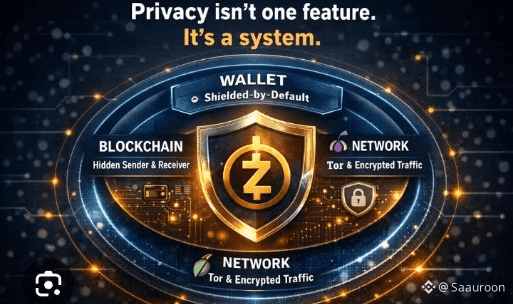
On many platforms, privacy is added later through external tools or optional layers. Dusk integrates confidentiality directly into its core logic. Transactions and smart contract interactions can remain hidden while still being cryptographically validated by the network.
This approach eliminates the need to expose balances, counterparties, or sensitive contract data. It creates an environment where financial activity mirrors traditional systems, but with the efficiency and security of blockchain technology.
Confidential Computation and Verifiable Integrity
Dusk enables smart contracts to execute without revealing internal logic or data to the public. This capability allows agreements to remain private while still producing verifiable outcomes. Participants can trust results without accessing the underlying information.
Such functionality is essential for financial instruments that rely on discretion. It enables on-chain processes that would otherwise be impossible in transparent environments, including private auctions, regulated lending, and confidential asset transfers.
Enabling Digital Securities and Tokenized Finance
One of Dusk Foundation’s strongest use cases lies in digital securities. Tokenized financial instruments must follow strict ownership rules, reporting standards, and jurisdictional requirements. Dusk’s architecture supports these needs by allowing selective access to information and controlled interaction.
This makes the network suitable for institutions exploring blockchain-based capital markets. Instead of forcing compliance onto an unsuitable system, Dusk offers infrastructure already aligned with these demands.
Independent Layer-1 With Purpose-Built Architecture
Dusk operates as its own Layer-1 blockchain, giving it full control over performance, security, and evolution. This independence allows the network to implement changes without relying on external ecosystems.
By building from the ground up, Dusk avoids compromises that come with adapting legacy systems. Scalability, confidentiality, and compliance are integrated rather than negotiated.
Decentralization Without Anonymity Risks
A common misconception is that privacy requires anonymity. Dusk Foundation challenges this belief by separating confidentiality from anonymity. Users can transact privately while remaining compliant with regulatory oversight when required.
This distinction allows decentralized systems to function responsibly. Regulators can access necessary information without exposing the entire network, preserving decentralization while supporting accountability.
The Economic Role of the $DUSK Token
The $DUSK token underpins the network’s security and governance. Validators stake tokens to participate in consensus, ensuring honest behavior through economic incentives. Token holders influence network decisions by voting on protocol changes and strategic directions.
This structure distributes responsibility across participants rather than concentrating control. It also aligns long-term network health with token utility rather than speculation.
Security Through Incentives, Not Authority
Network security on Dusk is enforced through staking and cryptographic verification. Participants are rewarded for maintaining integrity and penalized for misconduct. This incentive-based model strengthens trust without relying on centralized enforcement.
Such a framework is essential for systems intended to support high-value financial activity over long periods.
Market Relevance in a Changing Regulatory Climate
As global financial regulation evolves, blockchains that ignore compliance may face limitations. Dusk Foundation benefits from this shift by offering infrastructure already compatible with regulated environments.
Its relevance increases during periods when markets focus on substance rather than speculation. Privacy-aware, regulation-ready networks are becoming increasingly important as adoption expands beyond retail users.
Growth Driven by Use Cases, Not Noise
Dusk’s ecosystem grows through development and partnerships rather than aggressive promotion. This measured expansion results in a more resilient network supported by users who understand its purpose.
By prioritizing functionality over visibility, Dusk builds a foundation capable of sustaining long-term adoption.
The Long-Term Role of Dusk Foundation
As digital finance matures, infrastructure capable of handling regulated activity will become essential. Dusk Foundation is positioned to support this transition by offering a blockchain where privacy, compliance, and decentralization coexist.
Its design anticipates future demands rather than reacting to current trends, giving it strategic relevance in the years ahead.
Conclusion: Infrastructure Built for Financial Reality
Dusk Foundation represents a practical evolution of blockchain technology. Instead of choosing between transparency and privacy, it introduces a system where both serve their proper roles. By aligning cryptography with regulation, Dusk offers infrastructure suitable for real finance.
In an industry often driven by attention, Dusk focuses on durability. Its value lies not in short-term excitement, but in the ability to support confidential, compliant financial systems at scale.
