
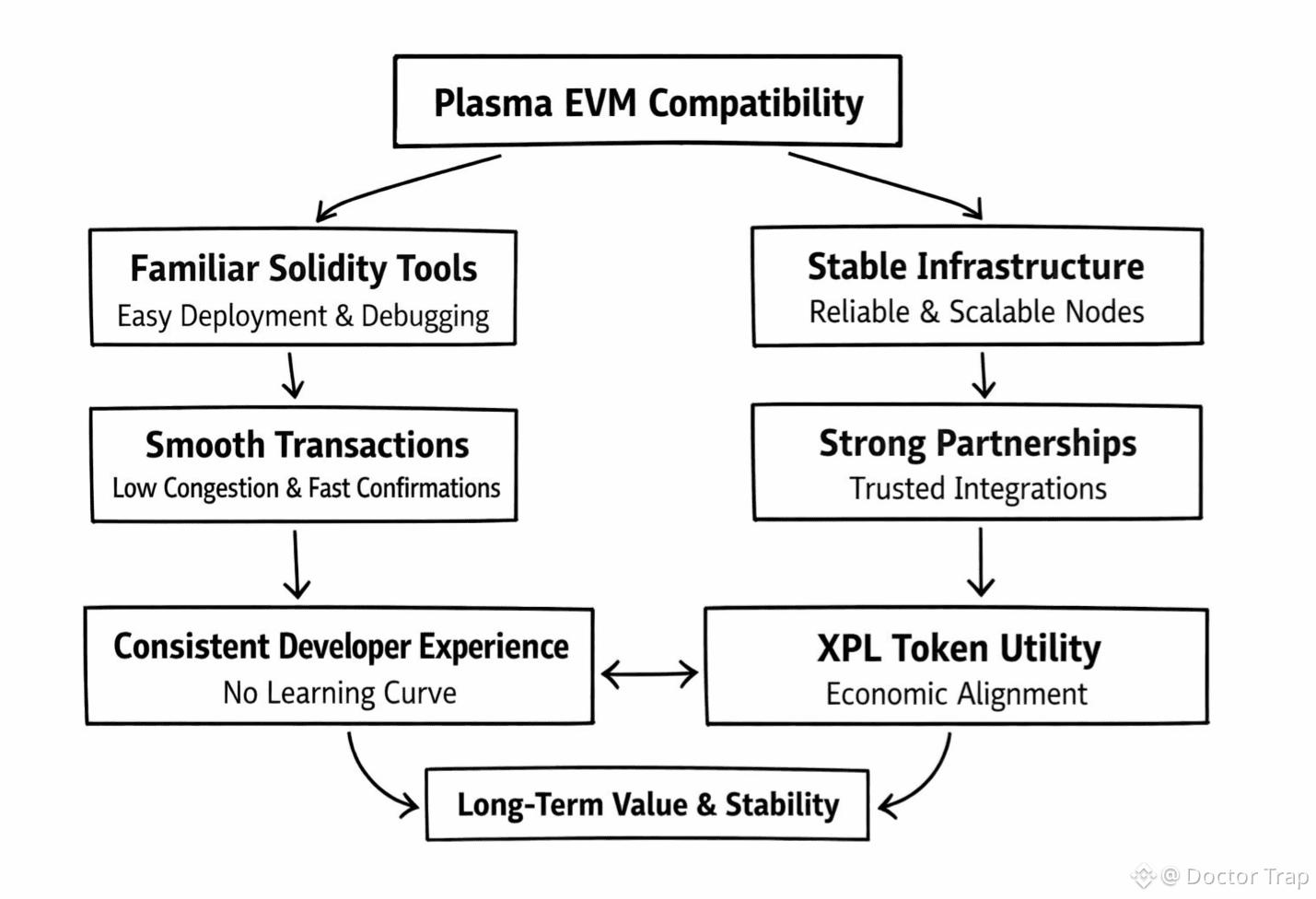
The first time I touched an EVM chain that actually felt calm. No noise, no urgency, just a clean surface that did what it promised. When I dig into Plasma and the XPL token today, that same feeling keeps returning. It is not trying to impress me. It is quietly aligning itself with how developers already think and build. After enough cycles, that restraint matters more than novelty.
Many execution environments come and go. In my experience, the EVM persists not because it is perfect, but because it is familiar muscle memory. Plasma leans into this reality. When I explore Plasma’s stack, I notice how little friction there is for an existing Solidity developer. Tooling works as expected. Contracts behave predictably.
This is not flashy work, but it respects the time of builders. XPL sits beneath this choice, quietly supporting the gas, incentives, and long-term alignment of the network.
When I dig into Plasma’s EVM compatibility, what stands out is restraint. I keep coming back to the same impression, they did not try to redesign the developer experience. They preserved it.
Plasma’s execution feels like Ethereum, but without the constant sense of congestion. Transactions confirm smoothly, and debugging feels familiar. For someone who has lost weeks to subtle VM differences on other chains, this matters. XPL becomes meaningful here, not as a narrative token, but as the economic layer that keeps this environment stable.
Plasma integrates common tooling without friction. When I tested deployments, standard libraries behaved as expected. RPC responses were consistent, logs readable, indexers reliable. These are small things, but they add up. Plasma feels built by people who have actually shipped production code. The XPL token quietly supports this ecosystem by aligning validators, infrastructure providers, and developers.
There is no sense of rushed incentives, just enough economic gravity to keep things running under the surface.
Plasma clearly prioritizes infrastructure over marketing. I see upgrades focused on throughput stability, node performance, and predictable gas behavior. This is where EVM compatibility shines. Developers do not need to relearn mental models. They can focus on application logic. XPL is woven into this design as a long-term utility, not something constantly pushed into the spotlight. I have watched networks fail by ignoring this balance. Plasma seems aware of that history.
While digging through on-chain activity, I noticed steady contract deployments rather than sudden spikes. TVL has been quietly building, not exploding, but consistently growing as applications settle in.
This pattern feels familiar to me. It usually means developers are staying. Plasma’s EVM layer supports this by making migration easy and maintenance boring in a good way. XPL flows through these transactions naturally, without forcing itself into every conversation.
Integrations that felt chosen for compatibility, not headlines. Infrastructure providers, developer tooling, and cross-chain components that already understand the EVM. Plasma’s partnerships feel practical. They reduce friction instead of adding complexity.
In my experience, this is how ecosystems survive downturns. XPL benefits indirectly here, embedded into a network that prefers reliability over reach.
EVM compatibility is emotional as much as technical. It reduces anxiety. Plasma respects that. When I deploy, I am not second-guessing opcodes or execution quirks. I can reason about behavior. That trust compounds over time. XPL becomes a quiet constant in this loop, a token tied to usage, not excitement. I have lost enough chasing excitement. This feels different.
I keep coming back to Plasma because it chooses depth over breadth. Instead of chasing every new VM idea, it refines what already works. The EVM layer is stable, predictable, and improving incrementally. XPL reflects that philosophy. It is not loud. It exists to support a system that wants to last multiple cycles. I have learned to respect that approach.
People slowly paying attention to XPL’s market behavior. I tend to glance at it, then move on. Price matters eventually, but only after the infrastructure proves itself. Plasma feels like it is still in that proving phase, quietly building usage. If value follows, it will be because developers stayed, not because anyone shouted.
As I step back, I realize Plasma’s EVM compatibility is less about technology and more about humility. It accepts what developers already know and makes it smoother. XPL sits beneath this choice, patient and understated. After many cycles, that patience feels rare and worth watching.
Quiet systems endure because they ask for trust, not attention.

