

Walrus Protocol is often evaluated through its technology stack or storage performance, but an equally important — and often overlooked — dimension is how the network governs itself. For infrastructure that is meant to store critical data over long periods, governance is not a social feature; it is a stability mechanism. Walrus’s approach reflects this understanding clearly.
Unlike application-layer protocols that can afford rapid pivots, storage infrastructure must evolve cautiously. Changes to parameters such as pricing, redundancy, staking requirements, or slashing conditions directly affect data safety. Walrus’s governance framework is therefore designed to be deliberate rather than reactive. Proposals are expected to be technically justified, economically sound, and aligned with long-term network reliability, not short-term community sentiment.
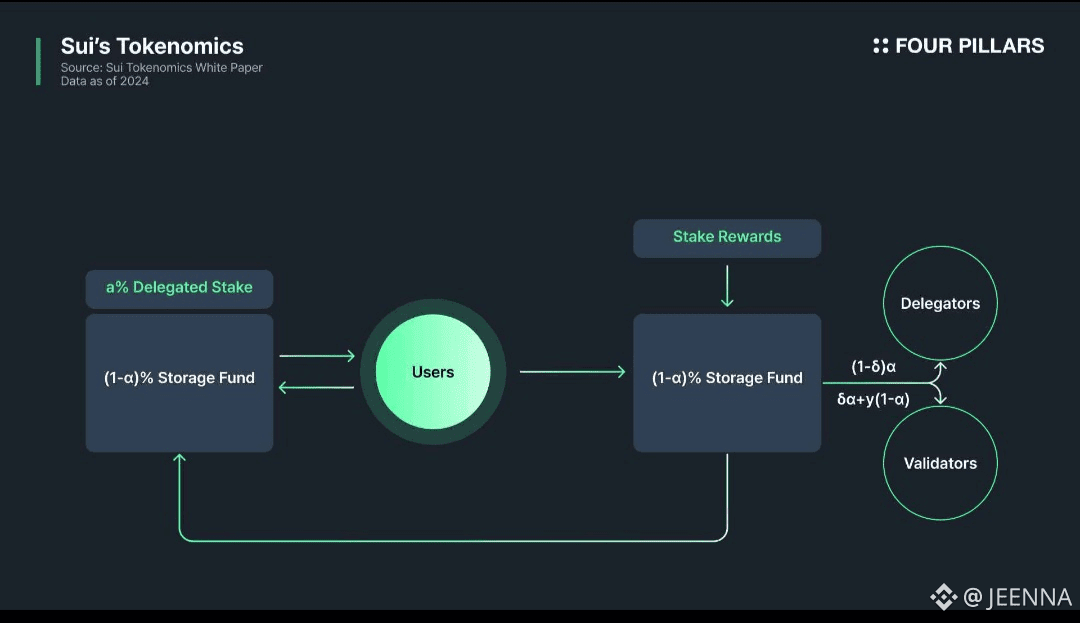
A key aspect of Walrus governance is the role of node operators. Storage providers and validators are not passive participants; they are core stakeholders whose operational costs and performance directly impact the network. By tying governance influence to staking and long-term participation, Walrus ensures that those making decisions are those bearing responsibility for uptime and data integrity. This reduces the risk of governance capture by actors who do not operate infrastructure.
Community participation still matters, but it is structured around contribution rather than noise. Builders, integrators, and long-term users gain influence by actively using and supporting the network. This creates a feedback loop where governance decisions are informed by real usage patterns — storage demand, access frequency, failure modes — instead of abstract polling. Over time, this leads to protocol evolution driven by empirical data rather than ideology.
Another important element is upgrade discipline. Walrus treats protocol upgrades as infrastructure maintenance, not feature releases. Backward compatibility, migration safety, and data continuity are prioritized. This mindset mirrors how traditional storage systems and cloud infrastructure are managed, where stability is often more valuable than innovation speed. For applications relying on Walrus for AI datasets, identity records, or archival content, this conservatism is a feature, not a limitation.
Walrus’s governance model also reflects its view on decentralization. Rather than maximizing governance participation at all costs, it focuses on meaningful decentralization — distributing control among actors who have both technical competence and economic exposure. This reduces governance attack surfaces while maintaining openness for new participants who are willing to commit resources and time to the network.
As the protocol matures, governance will increasingly shape its competitive position. Storage networks that fail often do so not because their technology breaks, but because incentives drift, operators leave, or decisions favor growth over reliability. Walrus is attempting to preempt these failure modes by embedding governance that assumes stress, disagreement, and long operational timelines.
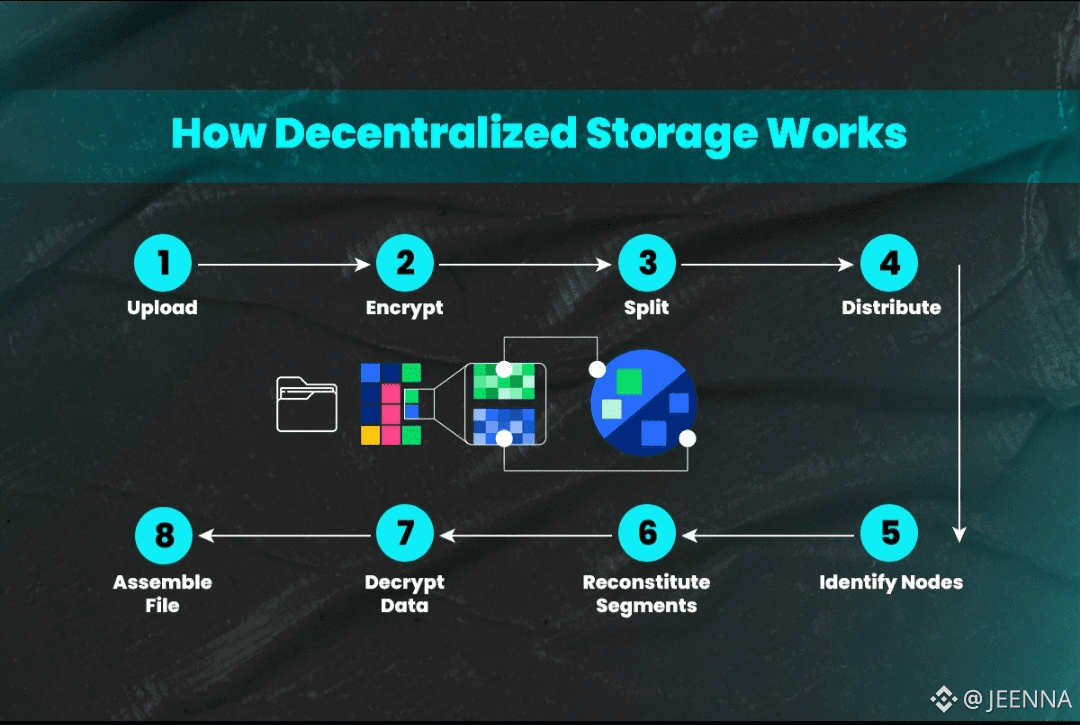
This approach may feel understated compared to protocols that emphasize community excitement or rapid iteration. But for a data availability network, credibility is built through consistency. Every decision compounds over time, affecting whether data stored today can still be accessed years from now. Walrus’s governance framework is explicitly designed with that horizon in mind.
In the broader Web3 landscape, this positions Walrus closer to infrastructure like settlement networks or utilities than consumer-facing platforms. Its success will not be measured by how often governance votes occur, but by how rarely governance failures happen. Quiet governance, when done correctly, is often the strongest signal of institutional-grade infrastructure.
By treating governance as an extension of engineering rather than marketing, Walrus Protocol is reinforcing its core thesis: decentralized data infrastructure must be boring, reliable, and durable. If Web3 is serious about owning its data stack, networks like Walrus — with disciplined governance and long-term alignment — will be the ones that endure.

