
One concept that I have taken time to explore how @Dusk Network works in processing transactions and consensus, and one of the concepts that can be mentioned is the concept of operational blindness wherein certain sections of the system cannot see the full picture of other sections but can still produce reliable results. This is part of the process of transition to finality in states in the Succinct Attestation consensus of Dusk. The provisioners (validators) operate in committees, and sometimes they have limited knowledge of the entire network condition, and they have to use the proofs and attestations of the network instead of viewing all the details.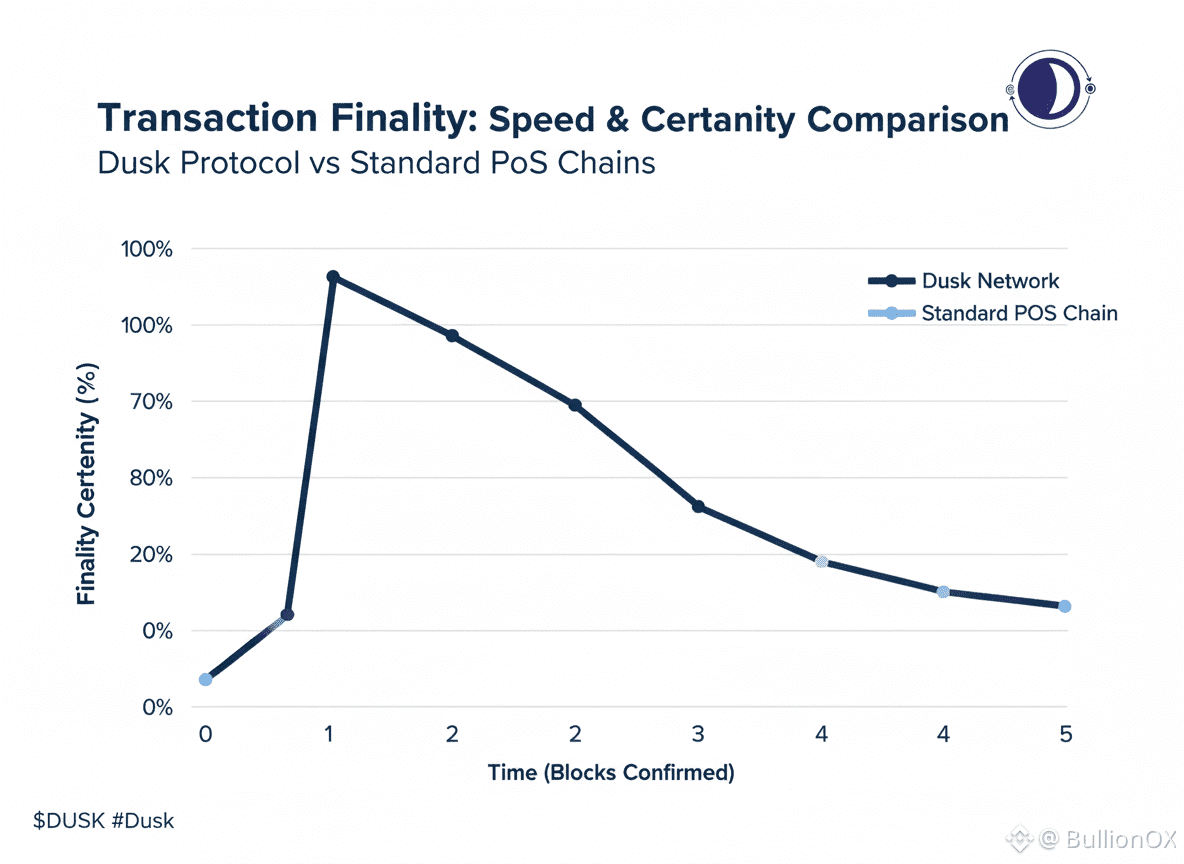
This is a deliberate blindness in the construction. The Proof of Stake mechanism of Dusk involves random selection of committees in proposing, validating and ratification of blocks. Provisioners do not see the full ledger in each step; they sign with what they get and check it using cryptographic commitments. This makes communication overheads less and privacy more important since not all nodes require knowledge of everything to ensure the correctness.
The state of being green is a known or verified block in many blockchain applications something that appears settled to a node. But on Dusk, a state may seem green (made by a committee), but it is not necessarily forever until the ratification stage is done. Succinct Attestation protocol is used to only have finality on ratification or early confirmations, in which case early confirmations can be contested or not committed in case of quorum failure or slashing conditions are met.
This is significant to financial applications. Premature finality assumptions may cause risks in regulated finance. Dusk can avoid this by having one block finality in normal operation no reorgs exposed to users. The state, once ratified, becomes permanent, and there are proofs of the agreement of the whole committee. However, operational blindness is used to ensure that individual nodes do not overcommit, which causes cascading errors before that.
Based on the records and reports made by Dusk, the configuration relates to their privacy models. Phoenix shielded transactions conceal balances and details and thus real ZK proofs cannot be perceived by the validators regardless of the verification of the state. Public transactions on the Moonlight enable visibility where compliance is essential but the consensus layer is not aware of redundant data, emphasizing on the validity of proofs.
The economic layer is the $DUSK token, which is facilitated by the following process: staking allows participating in committees, attestation operations are performed with the help of gas, and honest behavior is encouraged with the help of rewards. Penalizing misbehavior encourages the notion that blindness does not equate to accountability it is applied cryptographically.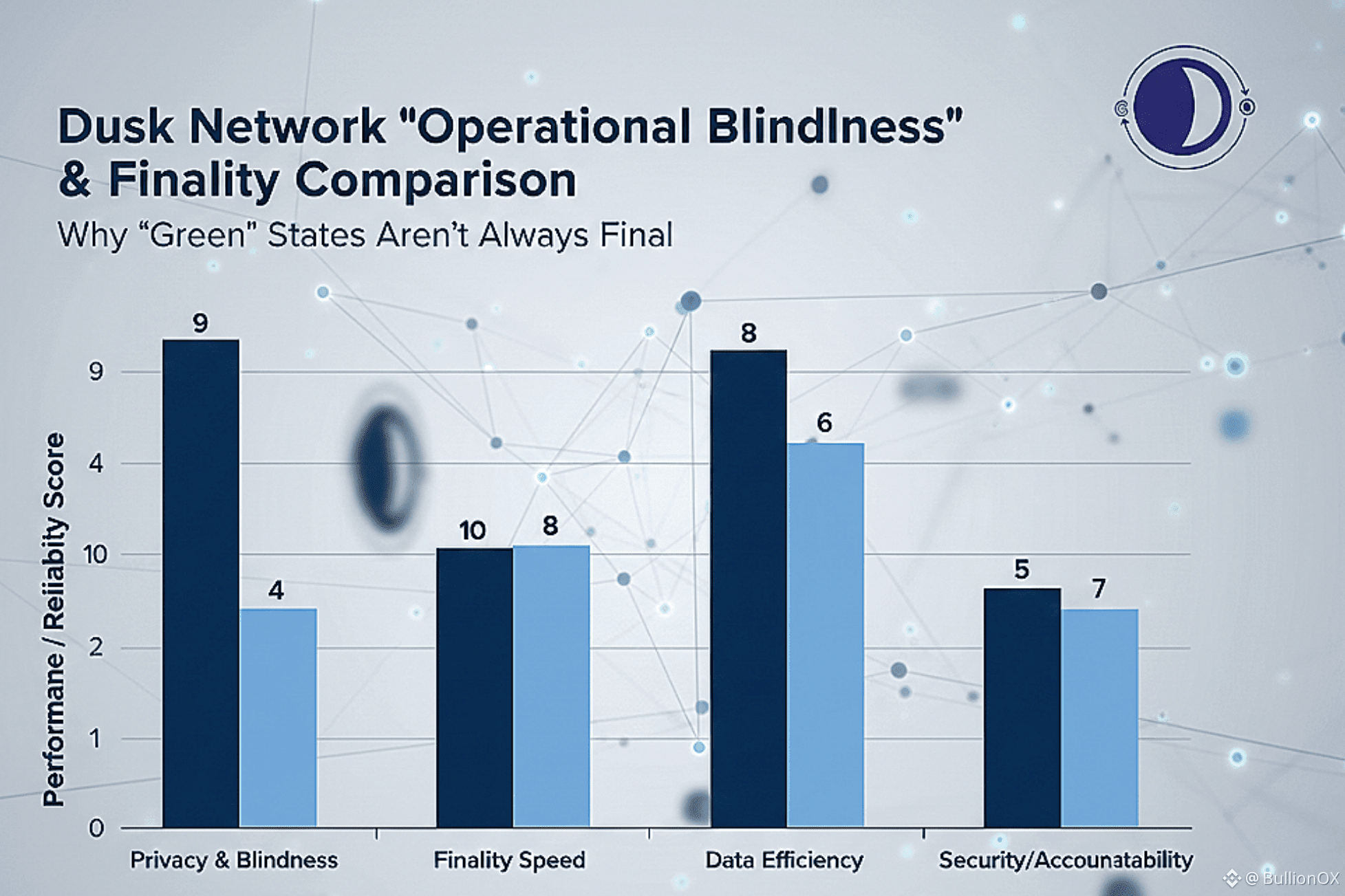
This blindness in operations, in my opinion, is an intelligent trade off. It is scalable and more private without deteriorating the powerful finality required in markets. Most chains pursue instant presence, whereas Dusk focuses on tested results over regular exposure, and thus it is more appropriate to be used in long term regulated periods.
In the case of developers using Dusk, this can be used to design robust applications from the knowledge that the view of green is not the limit as ratification provides safer contract logic.
Have you encountered finality subtleties in PoS chains?
What is the comparison of Dusk approach?
