
When I followed @Dusk development for some time, and one thing that consistently stands out is how its governance model quietly encourages responsible behavior among $DUSK holders. It is not built around flashy votes or power struggles. Instead, it is a carefully designed system that aligns incentives with the network’s long term health, especially in regulated finance. Dusk governance uses DUSK to give holders influence over protocol decisions, but with built in mechanisms that favor thoughtful participation over reckless action.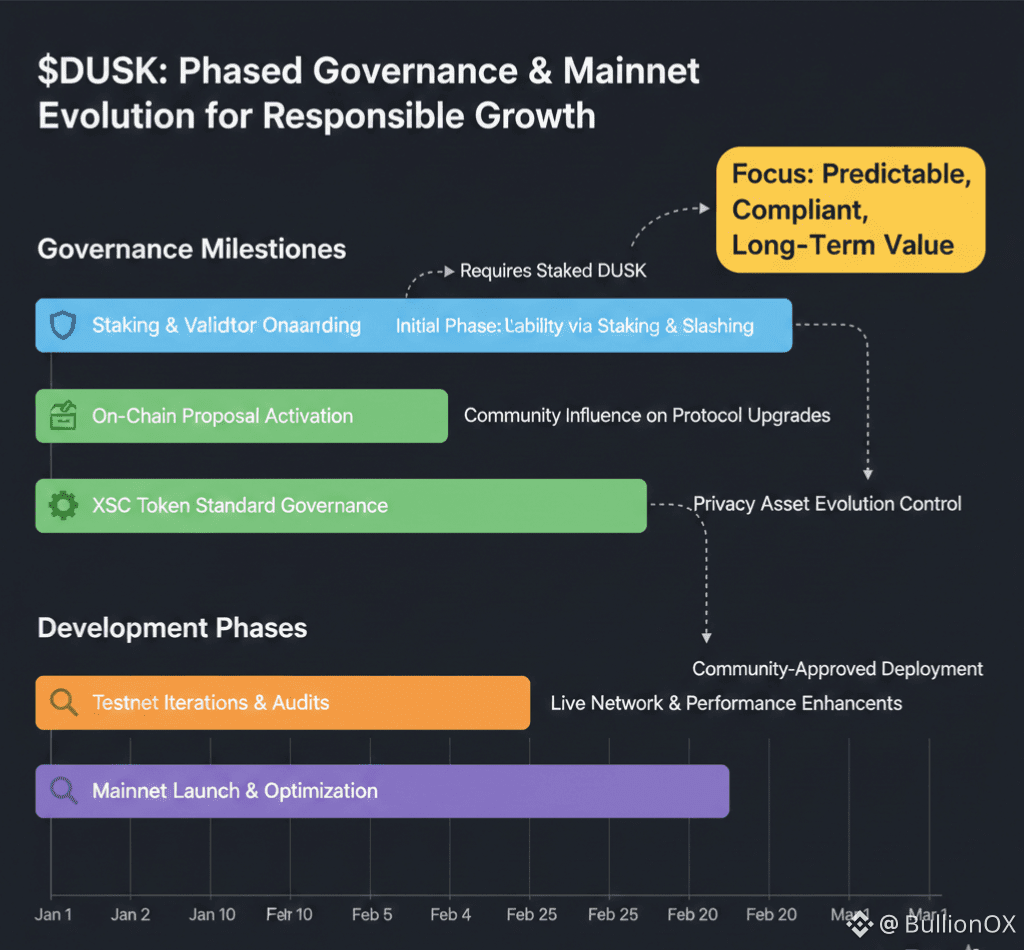
The design begins with staking as the entry point to governance. DUSK holders stake to become validators or delegators in the Proof of Stake consensus, earning rewards for helping secure the network. This role is not passive. It requires continuous uptime and honest participation, with slashing penalties applied for misconduct or negligence. This creates accountability at the base layer and ensures that influence comes with responsibility.
Governance proposals are structured to avoid disorder. Only staked DUSK holders can participate in decisions such as parameter adjustments or protocol upgrades. The system emphasizes broad agreement rather than simple majority pressure. Because participants have value locked in the network, they are discouraged from supporting short sighted changes that could harm stability or long term adoption.
Within the Dusk ecosystem, DUSK also plays a role in on chain governance for features such as XSC token standards. Holders influence how privacy focused assets evolve, but voting power is limited to those actively staking. This reduces spam and malicious participation, ensuring that decisions reflect committed network participants rather than temporary speculators.
This structure directly shapes token behavior by tying utility to responsibility. DUSK is used to pay fees for confidential transactions and application deployment, but governance adds another layer of consideration. Holders understand that their votes affect infrastructure designed for regulated financial use, which encourages more careful and informed decision making.
From my perspective, this subtle governance design is especially important as Web3 moves closer to compliance driven use cases. Many networks struggle with chaotic governance that leads to instability or fragmentation. Dusk takes a different path by promoting steady participation and long term alignment, positioning DUSK holders as stewards rather than traders of the network.
The foundation’s limited control further strengthens this approach. No single entity, including @dusk_foundation, unilaterally dictates upgrades. Instead, decentralized validators and staked holders collectively guide development. Over time, this fosters a culture where responsible behavior is rewarded through sustained network value and credibility.
In regulated environments, predictability matters. Institutions require systems that behave consistently under pressure. Dusk governance supports this need by discouraging volatility and reinforcing long term goals such as compliant real world asset infrastructure.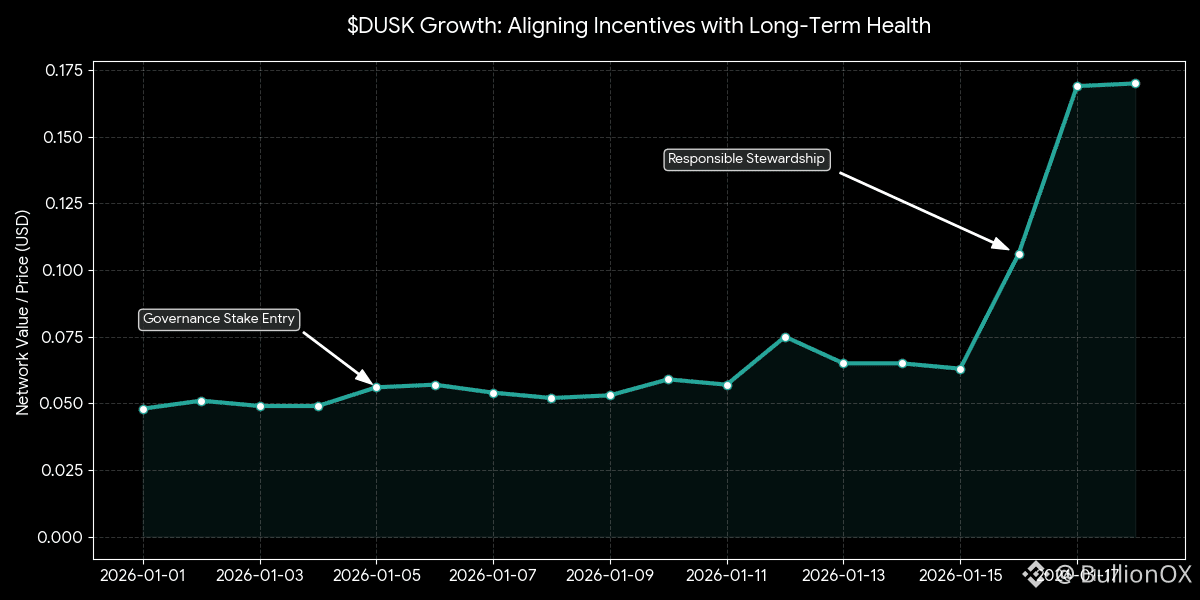
Overall, Dusk governance is not loud or attention seeking. It is nuanced and deliberate, shaping how DUSK is used to build trust in a privacy focused ecosystem. The result is a network designed for durability, where responsible participation strengthens resilience.
Have you noticed how governance design influences token holder behavior in other networks?
What subtle mechanism would you add to encourage long term responsibility?
