

Plasma, a Layer 1 blockchain, is built for settling stablecoins on a global scale. Its security is carefully designed to be both fast and neutral, and a key part of this is how it uses Bitcoin. Instead of just relying on its own group of validators for security, Plasma ties important info to Bitcoin, which is the most decentralized and hard-to-censor blockchain out there. This way, Plasma gets the benefits of Bitcoin's security while still running smoothly and independently, perfect for stablecoin payments.
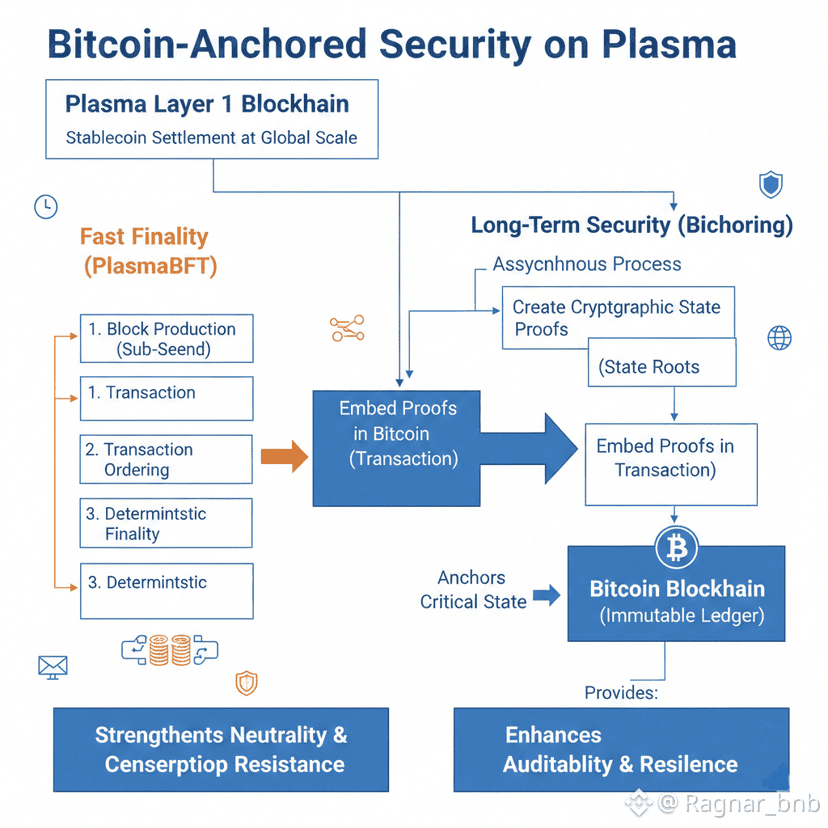
Most blockchains get their security from their own system and how validators are paid. That can work, but it also means that trust is all in one place. Plasma does things differently by using Bitcoin as a kind of outside truth. By regularly proving Plasma's state on Bitcoin, the network makes sure that its past can be checked by anyone and is super hard to change. Once something is anchored to Bitcoin, you can't mess with it without also messing with Bitcoin's blockchain, and that's pretty much impossible.
Using Bitcoin helps keep things neutral because it makes it harder for any one group to secretly change what happened. Even if most Plasma validators teamed up, they couldn't change the past without messing with what's recorded on Bitcoin. This really stops censorship, reordering, or going back on transactions. People using Plasma for stablecoins can be sure that once their transactions are finalized and anchored, they're set in stone from a global point of view.
The anchoring is meant to work with Plasma's quick consensus system, not replace it. PlasmaBFT handles making blocks fast, ordering them, and making sure they're final. Bitcoin anchoring is for the long haul. PlasmaBFT gives you quick finality for everyday stuff, but Bitcoin anchoring is like a security checkpoint that makes the chain stronger over time. With this layered approach, Plasma balances speed and without losing either.
Technically, anchoring means putting small pieces of Plasma's state onto Bitcoin. These pieces can be state roots or other proofs that sum up the chain's past. Because they're small, they fit easily into Bitcoin transactions. Once they're confirmed on Bitcoin, they become part of Bitcoin's permanent record, with all its security and global spread.
This is especially good for stablecoins, where trust is super important. Stablecoins are often used by big companies, payment services, and regular people who need to know their transactions are final and correct. Bitcoin anchoring lets Plasma show that records existed at a certain time and haven't been changed. This helps with checking, following rules, and sorting out disagreements without needing central authorities or hidden assumptions.
Bitcoin anchoring also makes it harder to censor. Bitcoin's system of miners and nodes makes it really tough for anyone to block transactions for good. By anchoring to Bitcoin, Plasma gets some of this protection. Even if Plasma is censored in one place, the anchored state on Bitcoin is still there for everyone to see and check. This makes users more that the system is neutral and can handle problems.
Another thing about Bitcoin-anchored security is how it helps with bridges. Plasma is made to with Bitcoin in a way that needs as little trust as possible, not like bridges that hold your assets. Anchoring state to Bitcoin lets Plasma's security line up with Bitcoin's when dealing with assets or money moving between chains. This is key for stablecoin systems that might need Bitcoin's help with liquidity or settlement. By basing some of its security on Bitcoin, Plasma trusts off-chain stuff less.
The anchoring also helps the network last. If something bad happened to Plasma's validators, the anchored state gives a point to rebuild the network's history. This makes it easier to recover from and lowers the risk of a total failure. For a blockchain that handles real money, this is a big plus.
The decision to anchor to Bitcoin shows a commitment to neutrality. Bitcoin is known as the most politically neutral and globally spread blockchain. By tying its long-term security to Bitcoin, Plasma doesn't depend on governance, foundations, or controls that could mess with trust. This is really important for stablecoin infrastructure, which has to work across different places and rules.
For big , Bitcoin-anchored security gives extra when using Plasma for payments or settlements. Anchored state proofs can be used as proof that transactions are final and correct. This makes risk easier and helps compliance by basing trust on well-understood rather than just promises.
So, Bitcoin-anchored security is a key part of Plasma's design. By anchoring information to Bitcoin, Plasma is better protected against censorship, rollbacks, and changes to history. This works with Plasma's fast system to give long-term security without slowing things down. For a blockchain that focuses on stablecoins and real-world payments, Bitcoin anchoring gives neutrality, and that are hard to get just from its own system. With this layered security, Plasma is a settlement network that has both modern speed and the best security in the blockchain world.

