

Web3 is often explained using big technical numbers. People talk about how fast a chain is, how many transactions it can handle, or how cheap it feels to use. These details matter, but they are not what decide whether real users stay. When you listen to builders who are creating products meant for everyday use, a different topic comes up again and again. That topic is storage.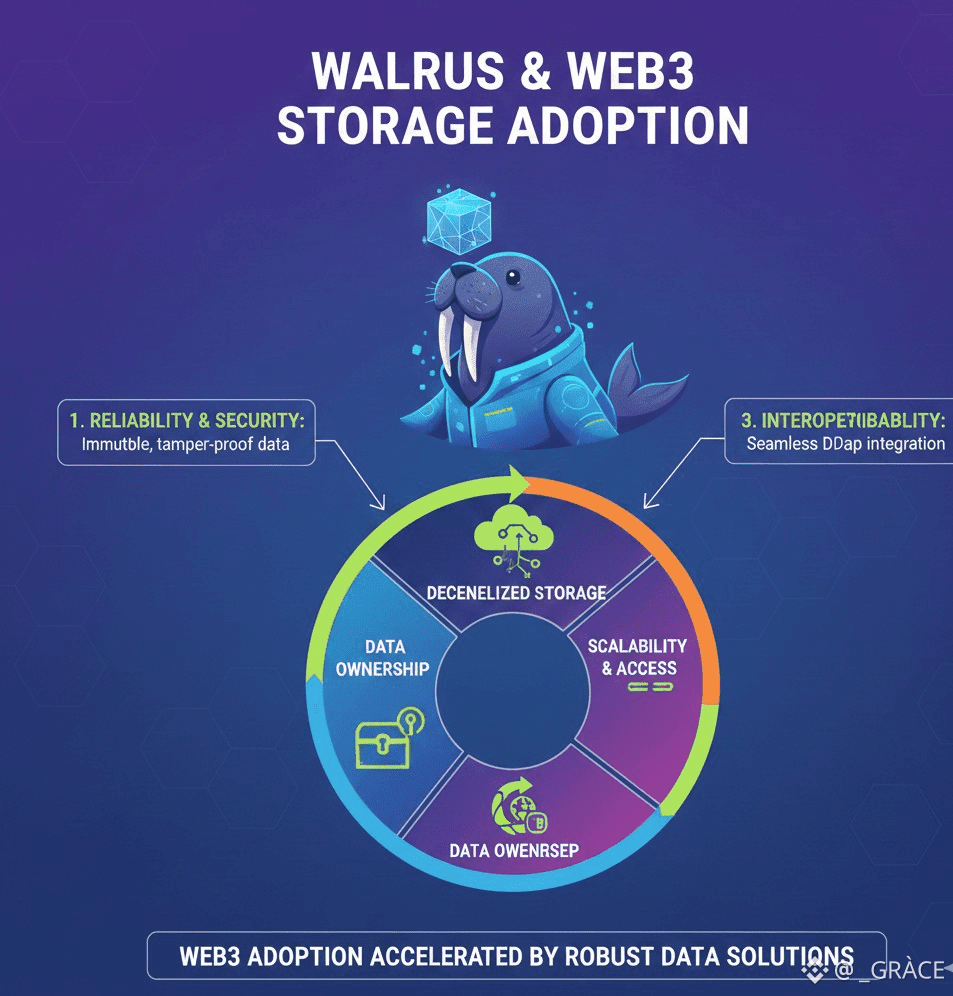
As Web3 grows, applications are no longer small experiments. They are becoming real platforms with real users and real expectations. A social app must load posts instantly. A game must deliver large files without lag. A creator platform must keep media available at all times. An AI tool must access data smoothly and reliably. None of this works if the storage layer is weak. Speed alone cannot save a product if its data fails.
Storage is where trust begins. When users open an app, they expect everything to be there. Images should load. Videos should play. Files should not disappear. If something breaks, users leave quickly and rarely return. They may never know the reason, but the damage is done. This is why storage quality has a direct impact on adoption, even if users never think about it consciously.
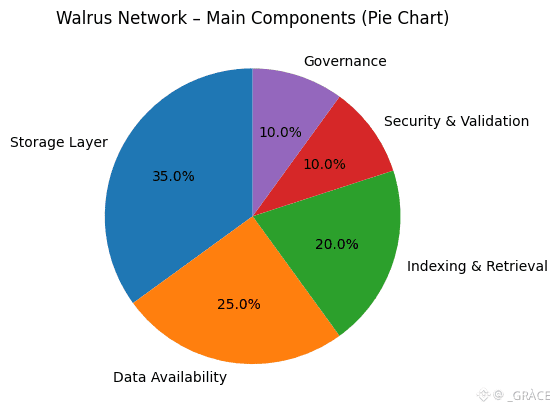
Walrus is built with this reality in mind. It treats storage as the backbone of Web3, not as a side feature. The goal is simple but powerful: data should stay available, perform consistently, and feel effortless for both developers and users. When storage works quietly in the background, applications can finally feel complete.
Today’s decentralized apps generate huge amounts of data. Social platforms create endless streams of content. Games rely on heavy assets and constant updates. Marketplaces store large digital files. Analytics tools track historical information. AI systems depend on growing datasets. All of this data must remain accessible under real demand, not just during testing. This is where many systems struggle, and where strong storage becomes essential.
One of the biggest shifts in Web3 is the move from early trials to serious production use. Teams are no longer building just to prove an idea. They are building to serve thousands or millions of users. This change exposes weaknesses in infrastructure very quickly. Storage solutions that look fine in small demos often break under pressure. Reliability becomes more important than flashy features.
Walrus focuses on stability and consistency. Instead of chasing attention, it concentrates on making storage dependable at scale. Files should load smoothly even when usage increases. Data should remain available without constant monitoring. For developers, this removes stress. For users, it creates a better experience without them ever needing to know what is happening behind the scenes.
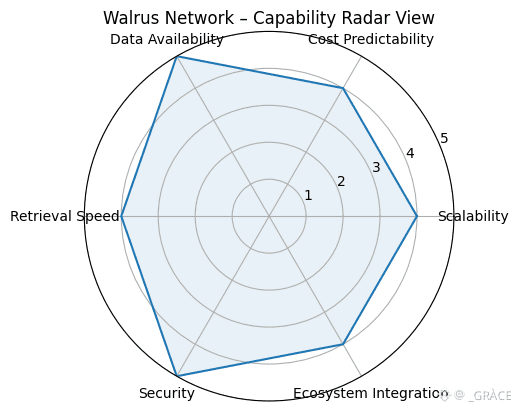
Another important factor is predictability. Builders need to understand how their systems will behave as they grow. Sudden cost spikes or performance drops make it hard to plan long term. Storage that behaves in a steady and transparent way allows teams to build with confidence. This encourages better products and healthier ecosystems.
Trust is built through repetition. Every time an app loads correctly, trust grows. Every time it fails, trust fades. Storage plays a major role in this process. It affects loading times, availability, and overall reliability. When storage is strong, users feel comfortable returning. When it is weak, even the best ideas struggle to survive.
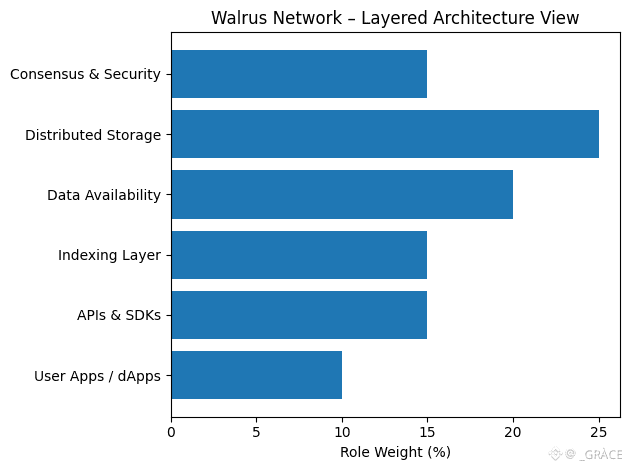
As Web3 infrastructure becomes more specialized, storage is taking its place as a core layer. Execution, consensus, and storage each have different needs. Trying to solve everything with one system often leads to compromises. By focusing deeply on storage, Walrus strengthens the entire stack. Other layers can perform better when data is handled properly.
This approach works especially well alongside fast execution environments like Sui. When a network can process logic quickly and storage can handle real world data smoothly, developers get a balanced system. Applications feel responsive. Content loads without friction. The result is an environment where complex products are easier to build and maintain.
Looking ahead, data demands will only increase. Digital worlds will become more immersive. Onchain social platforms will grow larger. AI driven applications will interact with data constantly. Creators will upload richer content. All of this puts pressure on storage systems. Only those built for long term reliability will keep up.
Scalability is not just about more users. It is about handling more data without breaking the experience. Storage must support growth in both size and activity. It must stay calm during traffic spikes and consistent during long periods of use. This kind of performance does not happen by accident. It comes from careful design and ongoing improvement.
Developer experience is closely tied to storage quality. When storage works well, builders can focus on creating features instead of fixing problems. They spend less time worrying about lost files or slow retrieval. This leads to better products and faster progress. Over time, this attracts more serious teams to the ecosystem.
Users may never talk about storage, but their behavior reflects its importance. Smooth apps keep people engaged. Broken experiences push them away. As Web3 competes with polished Web2 platforms, the margin for error is small. Infrastructure must meet modern expectations, not just technical ideals.
The next phase of Web3 will be shaped by products that feel reliable and complete. Adoption will not come from promises alone. It will come from experiences that work every time. Storage is a major part of that equation. Strong storage turns ideas into usable applications.
Walrus represents a focus on fundamentals. By building storage that developers can rely on, it supports the growth of real products. This approach may be quieter than hype driven launches, but it is far more sustainable. Over time, reliability speaks louder than marketing.
As the ecosystem matures, the difference between experimental tools and production ready infrastructure will become clear. Systems that cannot support real demand will fall behind. Those built with stability in mind will form the foundation of future growth.
Adoption is ultimately about confidence. Users need to trust that applications will work. Developers need to trust that their data is safe and accessible. Storage sits at the center of both. By strengthening this layer, Walrus helps Web3 move closer to everyday use.
Strong storage does more than hold data. It protects user experience, supports builders, and enables growth. As Web3 continues to evolve, the importance of this role will only increase. Walrus shows that when storage is done right, everything built on top becomes stronger.

