

Tokenizing real-world assets sounds simple until regulation enters the conversation. Securities are not just numbers. They represent legal claims, ownership rights, and reporting duties. Many projects talk about bringing assets on-chain without fully accounting for what comes with them.
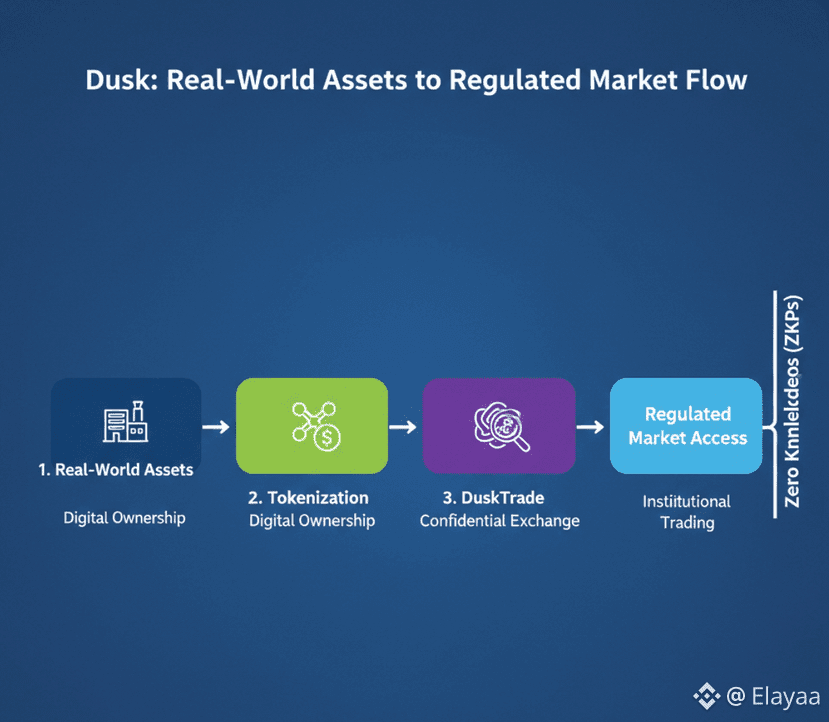
Dusk does not treat tokenization as a shortcut.
The upcoming DuskTrade platform, built with NPEX, is important not because it is on-chain, but because it is regulated. Licenses change everything. They force systems to behave correctly under real legal frameworks. They remove the option to improvise later.
This is where Dusk’s design becomes practical rather than philosophical. Privacy protects sensitive positions. Auditability ensures accountability. Neither is sacrificed for the other.
Hedger enables this balance at the transaction level. DuskEVM allows applications to be built using familiar tools while settling on infrastructure that expects compliance. The modular structure ensures that future products do not strain the system beyond its limits.
$DUSK powers this environment in the background. It is not there to represent ownership or governance narratives. It exists to keep regulated, privacy-aware financial systems operating without friction.
Most users interacting with Dusk-based platforms will never think about these layers. They will simply experience systems that do not raise alarms where alarms usually appear.
In finance, that kind of quiet is not accidental. It is engineered.