
Blockchain systems were initially designed as conceptual layers for decentralized consensus, but their long-term relevance depends on whether they can evolve into practical financial rails capable of supporting real economic activity. Plasma represents a key step in this evolution, and within the XPL token ecosystem, it serves as a structural mechanism that converts theoretical scalability into usable on-chain value exchange. Plasma was originally introduced to address the limitations of base-layer blockchains by enabling transactions to be processed off-chain while retaining the security and final settlement guarantees of the main network. For XPL, this approach is not just a scalability enhancement but a foundational design choice that enables the token to function efficiently in high-volume, real-world financial environments. By leveraging Plasma-style architectures, XPL can support fast execution, lower transaction costs, and predictable performance without compromising decentralization or trust minimization.
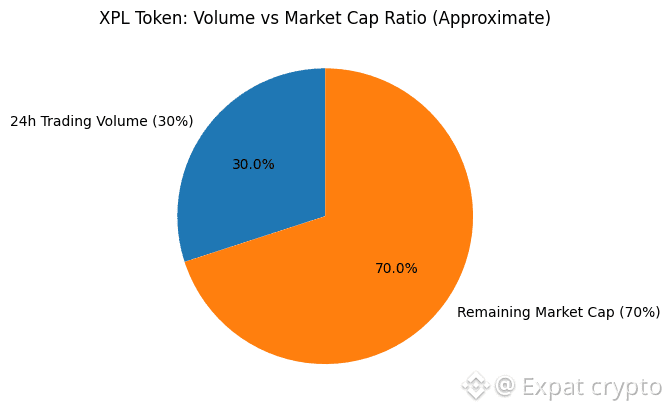
This layered structure allows transaction data to be aggregated and validated outside the main chain, with periodic commitments anchoring activity back to the base layer, ensuring transparency and security. As a result, XPL operates within a system where throughput scales with demand rather than becoming constrained by it. This is particularly important for value exchange, where delays, congestion, and volatile fees undermine usability. Plasma transforms the blockchain from a slow settlement engine into a responsive financial rail, and XPL becomes the asset that moves seamlessly across this rail.
From the user’s perspective, this means near-instant confirmation and minimal friction, which are essential characteristics for payments, microtransactions, and decentralized financial applications. From a network perspective, Plasma reduces computational overhead on the base layer, allowing the ecosystem to remain sustainable as adoption grows. This architecture also strengthens economic inclusivity, as lower fees make XPL transactions accessible to users in diverse regions and use cases. More importantly, Plasma aligns with the long-term vision of XPL as a utility-driven token rather than a purely speculative asset. By enabling continuous value flow rather than static holding, Plasma allows XPL to function as an active component of an on-chain economy. As blockchain technology matures, the distinction between conceptual innovation and financial infrastructure becomes increasingly important.
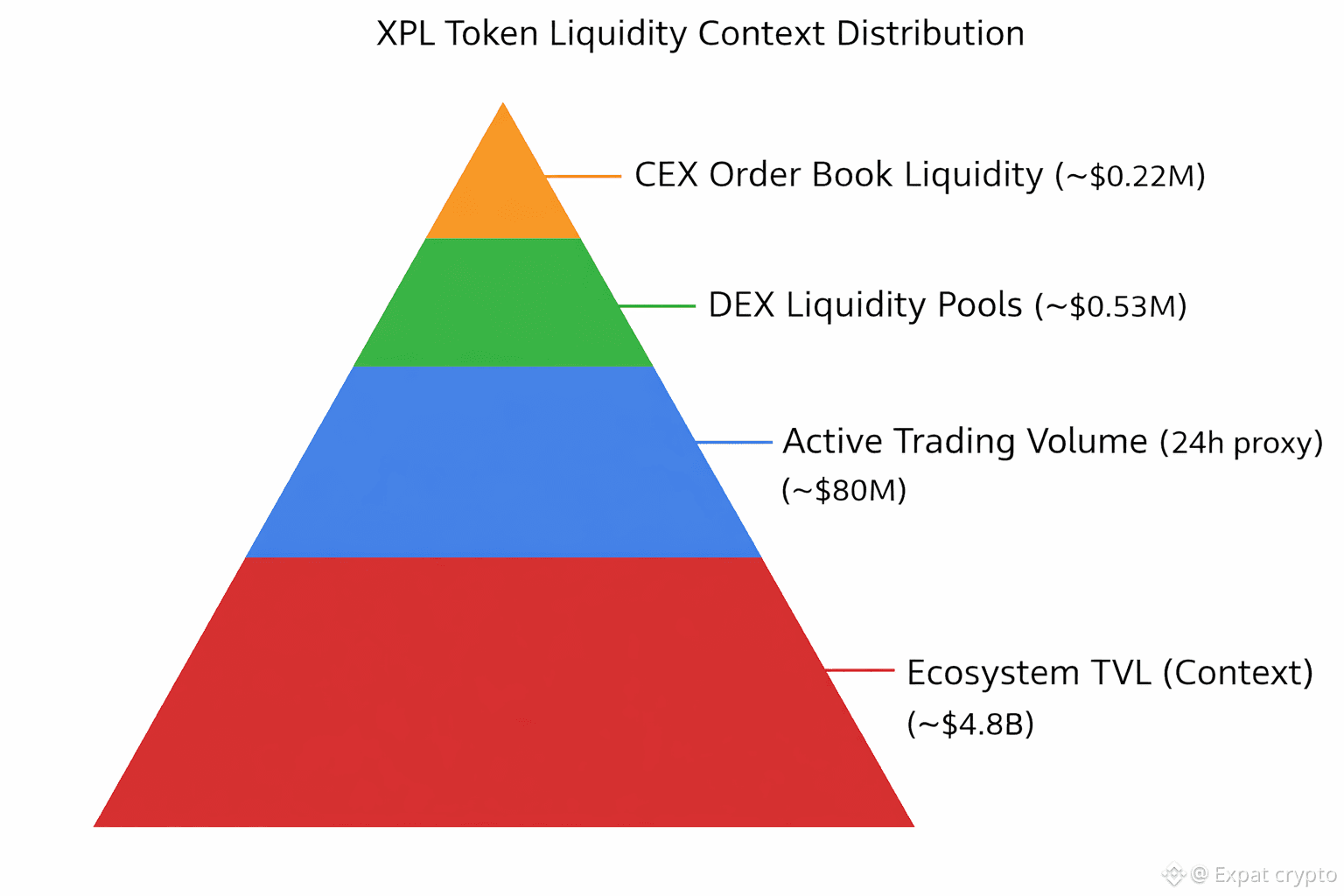
Networks that fail to translate ideas into operational rails risk stagnation. XPL’s integration of Plasma demonstrates a clear transition from abstract scalability theory to applied financial mechanics, positioning the token within a system designed for real usage, not experimentation. In this model, Plasma is the structural layer that enables scale, while XPL is the economic unit that carries value across it. Together, they represent a practical blueprint for how decentralized systems can evolve into functional financial infrastructure while preserving the core principles of blockchain technology.

