

Most of us don’t think about data until something goes wrong.
A photo disappears. A file won’t load. A platform shuts down. And suddenly, something personal — a memory, months of work, a creative idea — is just… gone.
That uneasy feeling is exactly why Walrus exists.
Walrus isn’t trying to be flashy or loud. It’s trying to solve a very human problem: how do we keep the things we care about safe in a digital world we don’t control?
Why Today’s Storage Still Feels Fragile
Cloud storage is convenient, sure. But deep down, we all know the truth — our data isn’t really ours. It lives on someone else’s servers, under someone else’s rules.
Companies can change policies. Prices can rise. Services can shut down. And when that happens, users usually have no say.
Centralized systems are efficient, but they’re also fragile. One failure, one decision, and millions of people are affected at once. Walrus was built because people want an alternative — something that doesn’t disappear when trust breaks.
How Walrus Actually Protects Your Data
Walrus takes a very different approach.
Instead of storing your files in one place, it breaks them into small encrypted pieces and spreads them across many independent storage nodes around the world. No single node has the full file. No single failure can erase it.
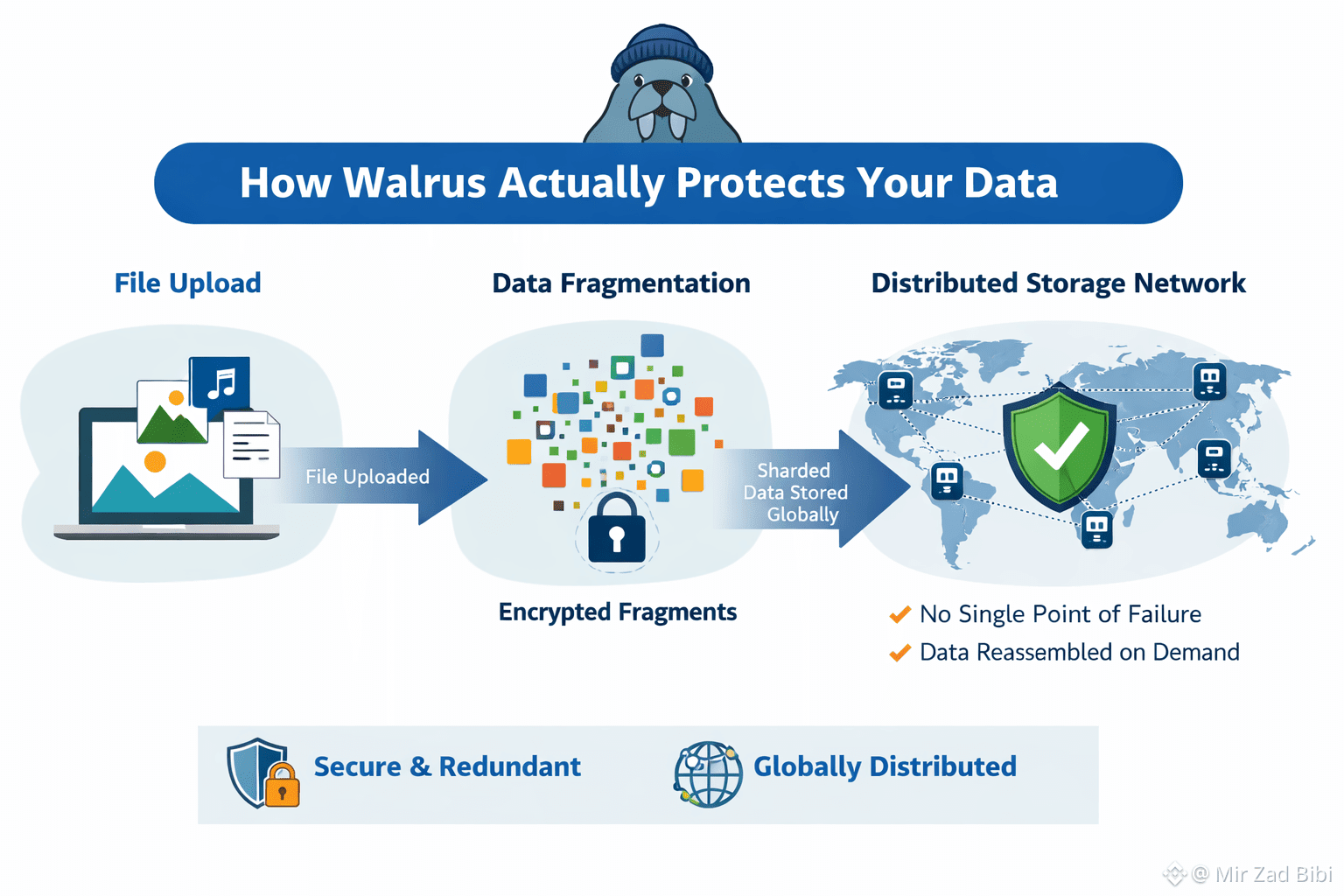
When you need your data, those pieces come back together smoothly. Even if some nodes go offline, your files stay accessible.
You don’t need to understand the tech to feel the benefit — it simply means your data doesn’t depend on one server, one company, or one point of failure.
Built on Sui, Built for the Future
Walrus runs on the Sui blockchain, and that gives it some powerful advantages.
Sui lets Walrus prove that data is actually stored, not just promised. It also allows smart contracts to interact with that data directly. That means files aren’t just sitting there — they can be used by apps, games, AI systems, and decentralized platforms.
Your data becomes something you can build with, not something locked away behind permissions.
WAL Token: More Than Just a Token
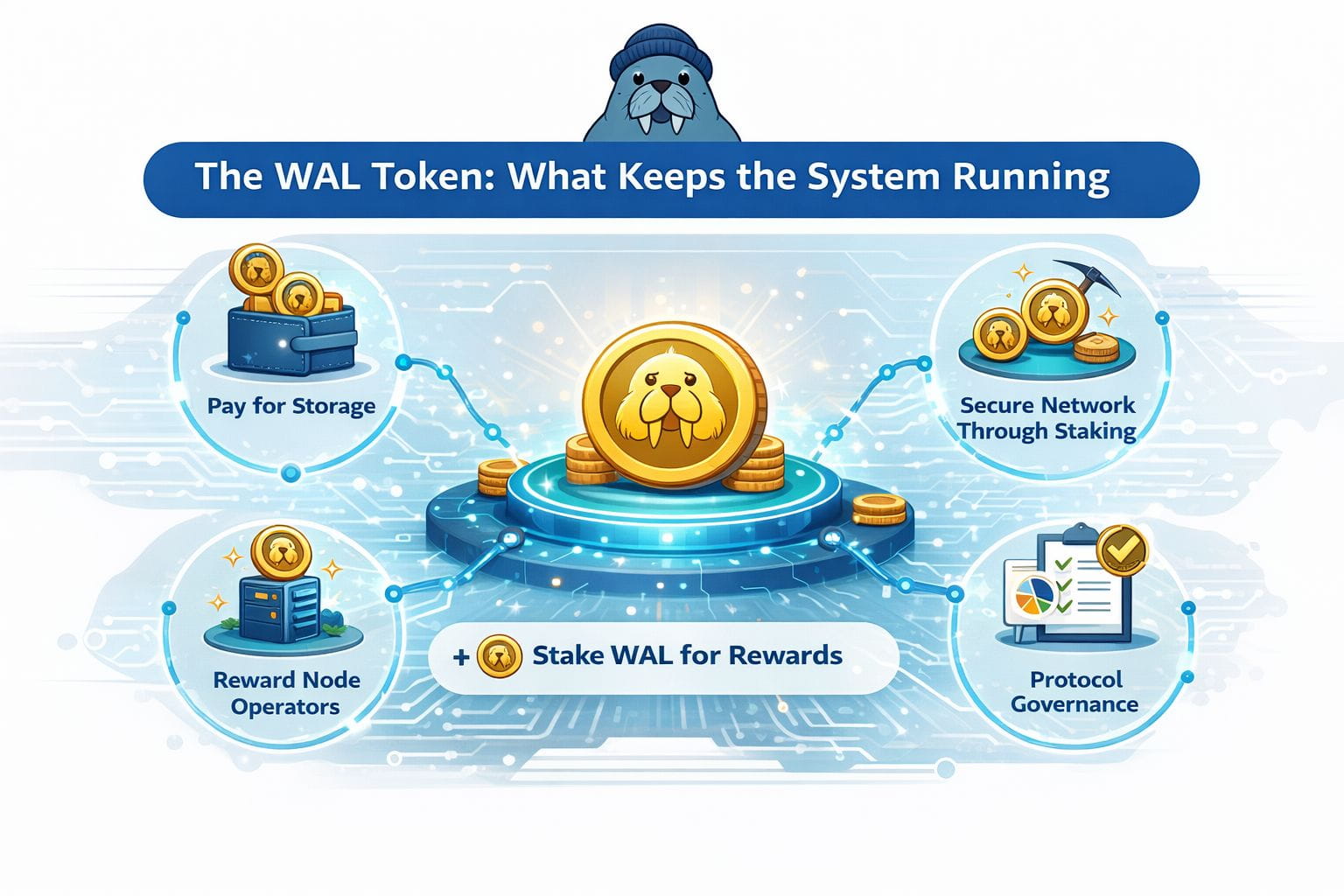
The WAL token is what keeps the whole system running.
It’s used to pay for storage, secure the network through staking, reward node operators, and guide how Walrus grows over time. Instead of relying on trust, Walrus relies on incentives — people are rewarded for keeping the network healthy.
One important detail: storage costs are designed to stay predictable. That matters a lot. Creators and developers need stability, not surprise price jumps just because a token moved.
Real People, Real Use Cases
This isn’t just theory.
Walrus is already being used by Web3 projects that need reliable storage for large files. Developers are storing datasets. Artists are hosting media. Builders are creating applications that depend on data being available long-term.
Think about a journalist who wants their work to remain online forever. A musician who doesn’t want their catalog tied to a single platform. A researcher who wants their data accessible years from now.
Walrus makes these things possible without asking permission.
What Walrus Really Stands For
At its heart, Walrus is about control — or rather, taking it back.
It’s about knowing that your digital life won’t disappear because someone else flipped a switch. It’s about choosing resilience over convenience and ownership over dependency.
When you store data on Walrus, you’re not just uploading files. You’re trusting a network of people instead of a single company.
And that simple shift — from control to collaboration — is what makes Walrus feel less like technology and more like progress.

