
I have learned to be careful with familiarity. When something feels similar to what I have read or written before, it usually means the surface looks the same while the structure underneath has changed. When I revisited Plasma recently, that was the feeling that stayed with me. The ideas are not loud or novel in presentation, but the execution feels more grounded now. PLASMA XPL sits quietly inside that execution, not asking for attention, just doing the work it was designed to do.
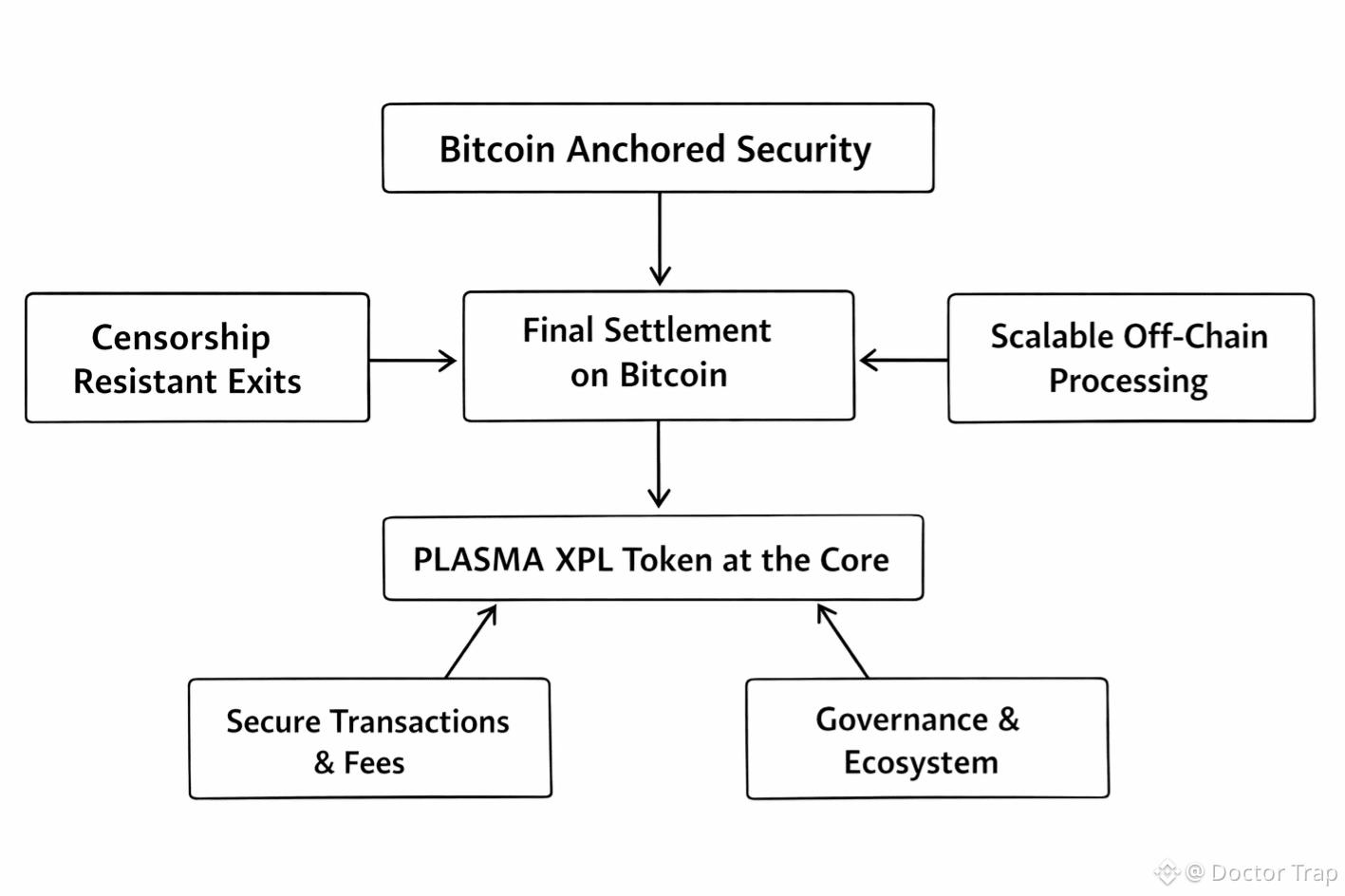
Anchoring to Bitcoin is less a design choice and more a confession. A confession that security is expensive, slow, and earned over time. Plasma accepts that instead of trying to escape it. When I trace how Plasma commits its state back to Bitcoin, I am reminded why early infrastructure mattered. Finality is not negotiated, it is inherited. PLASMA XPL exists inside this inheritance, enabling participation without pretending to replace the base.
What does not move as much as what does. Plasma’s on-chain footprint shows steady usage, modest but persistent. TVL has grown gradually, sitting comfortably in the tens of millions when I last checked, without the sharp rises that usually precede sharp falls. That tells me users are experimenting carefully.
PLASMA XPL flows through these interactions, paying for execution and access. Nothing about it feels rushed. Quiet systems often survive because they are not built to impress, only to function.
I have been trapped before, locked inside systems that promised safety until they needed it most. Plasma’s exit design is something I keep coming back to. The ability to leave without permission, with Bitcoin as the ultimate arbiter, is not a marketing feature. It is a safety valve. PLASMA XPL aligns incentives around keeping that valve functional.
The token does not eliminate risk, but it helps keep the path open. For me, that is where censorship resistance becomes real, not in slogans, but in exits that work under stress.
There is a certain honesty in Plasma’s approach to scaling. It does not deny the limits of base layers. It works around them. Execution happens off the main chain, settlement returns home.
When I looked through recent technical updates, I noticed incremental improvements in proof handling and operator efficiency. These changes rarely attract attention, but they reduce long-term friction. PLASMA XPL operates within this structure, absorbing operational costs without distorting the underlying security assumptions. Depth over breadth shows itself in these small decisions.
Plasma’s integrations have appeared slowly, wallets, infrastructure tools, developer support. No sudden announcements, just steady compatibility. When I dig into usage patterns, I see developers testing, deploying, refining. PLASMA XPL benefits from this pace because demand emerges naturally. Tokens tied to infrastructure tend to mirror the temperament of their networks. In this case, the temperament is patient.
Governance has become theater in many places. Plasma’s governance feels closer to routine maintenance. Parameter changes, security discussions, gradual upgrades. PLASMA XPL holders participate, but it does not feel performative. From my vantage point, that restraint matters. Networks that last usually do so because decisions were made quietly, by people focused on keeping systems stable rather than visible.
Over time, PLASMA XPL liquidity has become more consistent. Not dramatic, not attention-grabbing, just present. Volume follows usage rather than speculation. I have learned to respect that pattern. It suggests that the token is being used, not just traded.
After years of watching cycles rise and collapse, I am drawn to projects that accept their limits. Plasma does not try to be everything. It anchors to Bitcoin, builds under the surface, and lets PLASMA XPL function as a component, not a promise. That restraint is rare. It reminds me why I stayed in this space long after the noise faded.
The strongest systems rarely announce themselves, they simply remain.


