
Have you ever wondered how a giant decentralized system like Walrus keeps your files safe even when different computers join or leave the network? Today, I want to walk you through a really clever process called shard migration. It is basically the way the system reshuffles data to make sure it is always in the right hands.
When we talk about Walrus, we are looking at a network that relies on trust and stakes. If the data stayed in the same place forever while the power of certain nodes changed, the whole thing could become risky. I think it is amazing how this protocol automatically moves "shards" of data around to keep everything balanced and secure for all of us.
Why Do We Move Shards in Walrus?
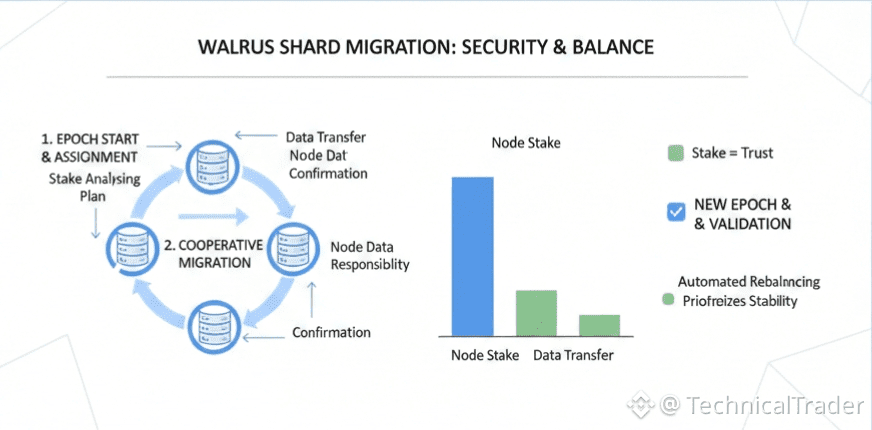
You might be thinking why we do not just leave the data where it is. The main reason is security. In the Walrus world, the nodes with the most "stake" or investment are the ones trusted to hold the data. If a node loses its stake but keeps the data, the system becomes less secure.
By migrating these shards, we make sure that no small group of bad actors can grab enough power to stop the system. It is like a constant game of musical chairs where the music never stops, ensuring that the most reliable participants are always the ones looking after your information.
The smart way they assign shards
Before a new time period or "epoch" starts, Walrus uses an assignment algorithm. This is basically the plan for where everything should go next. It looks at who has gained or lost stake and decides if any data needs to move to a new home.
I really like how this algorithm prioritizes stability. It does not just move data for no reason because that would waste energy. If a node is doing a great job and its stake stays the same, the Walrus system tries to let it keep the shards it already has so things stay nice and steady.
Dealing with Growth and Space
One interesting thing I found is that the system focuses on stake rather than just how much empty hard drive space a node has. This means a node might be asked to take on more Walrus shards if its influence grows. It sounds a bit intense, but there is a good reason for it.
The system gives nodes a warning before the move happens. This gives the people running the nodes enough time to go out and buy more storage if they need it. It ensures that the Walrus network can grow as big as it needs to be without hitting a sudden wall.
Working Together Through Cooperative Migration
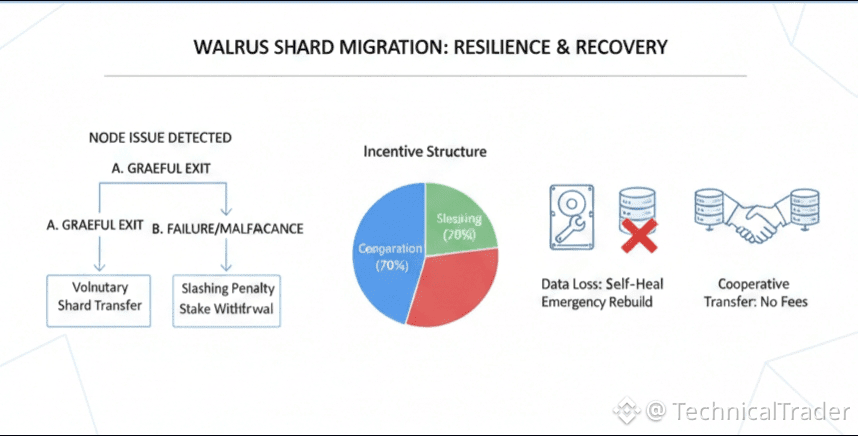
When it is time to move the data, the best way is the "cooperative pathway." This is where two nodes work together like a team. One node sends the shard, and the other node confirms they got it. It is a smooth handoff that keeps the network running without any extra fees or trouble.
I think this is a great way to handle things because it keeps the community working together. When the receiver tells the Walrus network that the transfer is done, the old node is officially relieved of its duty, and the new node takes over the responsibility of keeping that data safe.
How a Node Leaves the Walrus Network
What happens if someone wants to stop being a node operator? Walrus has a built-in way for them to exit gracefully. The node simply asks to withdraw its stake and then spends time helping to move its shards to other active members of the community.
Once all the data is safely moved and the new owners confirm they have it, the exiting node can take their tokens and go. It is a very fair way to handle departures, ensuring that your data is never left behind or forgotten when a server shuts down.
The Safety Net Known as the Recovery Pathway
We all know that technology is not perfect and sometimes things fail. If a node disappears or refuses to send its shards, Walrus uses the "recovery pathway." This is the emergency backup plan that makes sure your data is never lost just because one person stopped cooperating.
In this case, the node that failed to do its job gets its stake "slashed," which means they lose some of their money as a penalty. That money is then given to other nodes in the Walrus network who step in to help rebuild and move the missing data pieces.
Keeping Everyone Honest and Responsible
I find it very smart that even the receiving node gets a tiny penalty if a transfer fails. You might think that is mean, but it actually keeps everyone honest. It stops a receiver from lying about not getting the data just to get someone else in trouble.
By having these clear rules, Walrus creates an environment where everyone wants to do the right thing. Once the recovery is over, the new node is fully in charge of the shards. This level of accountability is what makes decentralized storage actually work in the real world.
Fixing Broken Hardware and Errors
Sometimes, a node might lose data by accident, like if a hard drive crashes. Walrus allows these nodes to be honest about it. They can put in a request for help and pay a small fee to get the shard recovered by the rest of the network.
Even though they pay a penalty, it is much better for them than trying to hide the mistake. By coming forward, they keep the Walrus network healthy. It is like a self-healing system where the community helps fix broken parts so the whole stays strong.
Looking Toward a Stronger Future
As we look at the future of Walrus, there are even more ideas on the table. There might be ways for nodes to trade their migration duties to save on internet costs, or emergency systems that act even faster if a node goes completely offline.
I believe that understanding these migrations helps us see why Walrus is such a tough and reliable system. It is constantly moving, checking, and healing itself to make sure that no matter what happens to individual computers, your files remain exactly where they should be.
what you think about this? don't forget to comment 💭
Follow for more content 🙂

