
I want to talk to you today about something we often take for granted where our digital stuff actually lives. When you save a photo or a document, it has to sit on a server somewhere. Walrus is a new way of doing this that doesn't rely on one big company. Instead, it uses a huge network of people working together. I think it is fascinating because it treats storage like a shared resource that we can all use fairly.
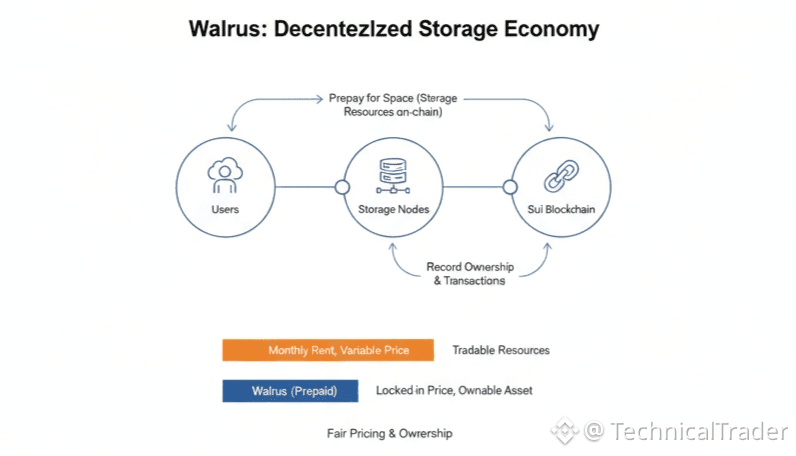
In this system, we are looking at a world where computers compete to give you the best deal. Because it is decentralized, no single person is the boss. This means the network stays open and the prices stay honest. We are moving toward a future where you have more control over your digital footprint than ever before.
How We Can Own Our Storage Space
One thing I really want you to understand is how Walrus lets you "buy" space before you even use it. Think of it like booking a hotel room in advance. You get a specific amount of space for a specific amount of time. These are called storage resources, and they live on the Sui blockchain so everyone can see who owns what.
What is even better is that if you change your mind, you can actually trade these spots. If you have space you aren't using, you can let someone else have it. We are seeing a real marketplace where storage is something you truly own, not just something you rent month-to-month from a giant corporation.
How the Community Decides on Capacity
You might be wondering who decides how much room is available in the Walrus network. It is actually decided by a vote. The people running the storage nodes get together and submit their ideas for how big the system should be. They don't just pick a random number; they have to reach a consensus.
I love this because it means the network grows based on what the community can actually handle. It is not about one person making a guess. By looking at what the majority of nodes want, the system finds a healthy balance. It ensures there is always enough room for your files without making the system too heavy to run.
Setting Fair Prices for Everyone
Pricing is always a big topic, right? Well, Walrus handles this through a voting process too. The nodes suggest what they think is a fair price for storing data and for writing new files. The system then takes all those suggestions and finds the middle ground that most people agree on.
This protects you and me from seeing prices jump around like crazy. Since the prices are set an entire "epoch" in advance, we always know what we are getting into. It feels a lot more human than having an algorithm change the price on you every five minutes. It creates a sense of trust between the people providing the storage and those of us using it.
Getting a Reward for Being Helpful
I found a really cool detail about how Walrus handles data uploads. When you want to save something, there is a small extra fee that acts like a deposit. If you do a good job of sending your data to many different nodes across the network, you actually get most of that money back.
This is such a smart way to keep the network fast. It encourages all of us to be "good neighbors" by making sure the data is spread out properly. When we help the system run smoothly, we save money. It is a win-win situation that keeps the whole community's data safer and easier to find.
Why Prepaying for Storage is a Good Move
I know that paying for things upfront can feel a bit annoying sometimes, but in the case of Walrus, it is actually a huge benefit. When you pay for your storage at the start, your price is locked in. Even if the value of the network tokens goes up or down, your deal doesn't change.
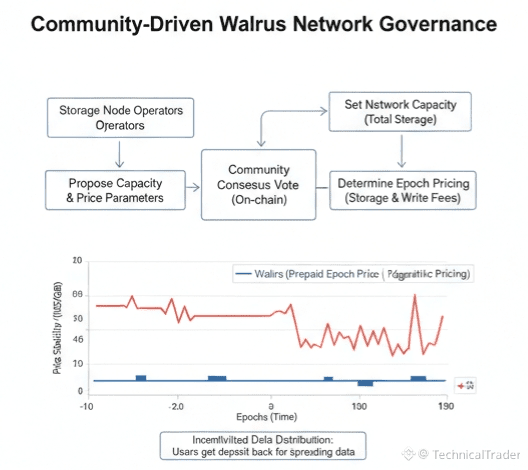
This gives us peace of mind. You don't have to worry about a "surprise bill" three months from now. The nodes get their fair share, and we get the security of knowing our data is paid for. It builds a stable relationship where everyone knows exactly what to expect from the start.
The Future of the Walrus Network
As we look ahead, the team is already thinking about how to make things even better for us. They are looking at ways to make it cheaper to start a contract so you don't have to put down so much money at once. They are also thinking about how to keep prices stable relative to everyday money like the dollar.
I am really excited to see how this evolves. The goal is to make decentralized storage as easy to use as the apps we use every day. By listening to the community and making these small changes, Walrus is setting itself up to be a major player in how the internet stores information.
Final Thoughts on Joining the Network
At the end, Walrus is about creating a storage system that belongs to the people. It is built on fairness, clear rules, and a bit of clever math to keep everyone honest.
I think it is a breath of fresh air compared to the old ways of storing data. I hope this helped you see why this project is so unique.
It is not just about technology, it is about building a better digital economy for all of us. When we use systems like this, we are voting for a more open and fair internet.
what you think about this? don't forget to comment 💭
Follow for more content 🙂


