
I remember the first time I slowed down enough to really read governance code instead of skimming the whitepaper. It was late, markets were flat, and the noise had finally faded. When I dig into Plasma and the XPL token, that same calm returns. Nothing here is loud. Nothing asks for attention. It feels like something built by people who expect to be around for a while.
What keeps pulling me back is not the surface narrative, but the way decisions move through the system. Governance on Plasma feels less like a vote. And more like a shared maintenance ritual. That matters more than most people realize.
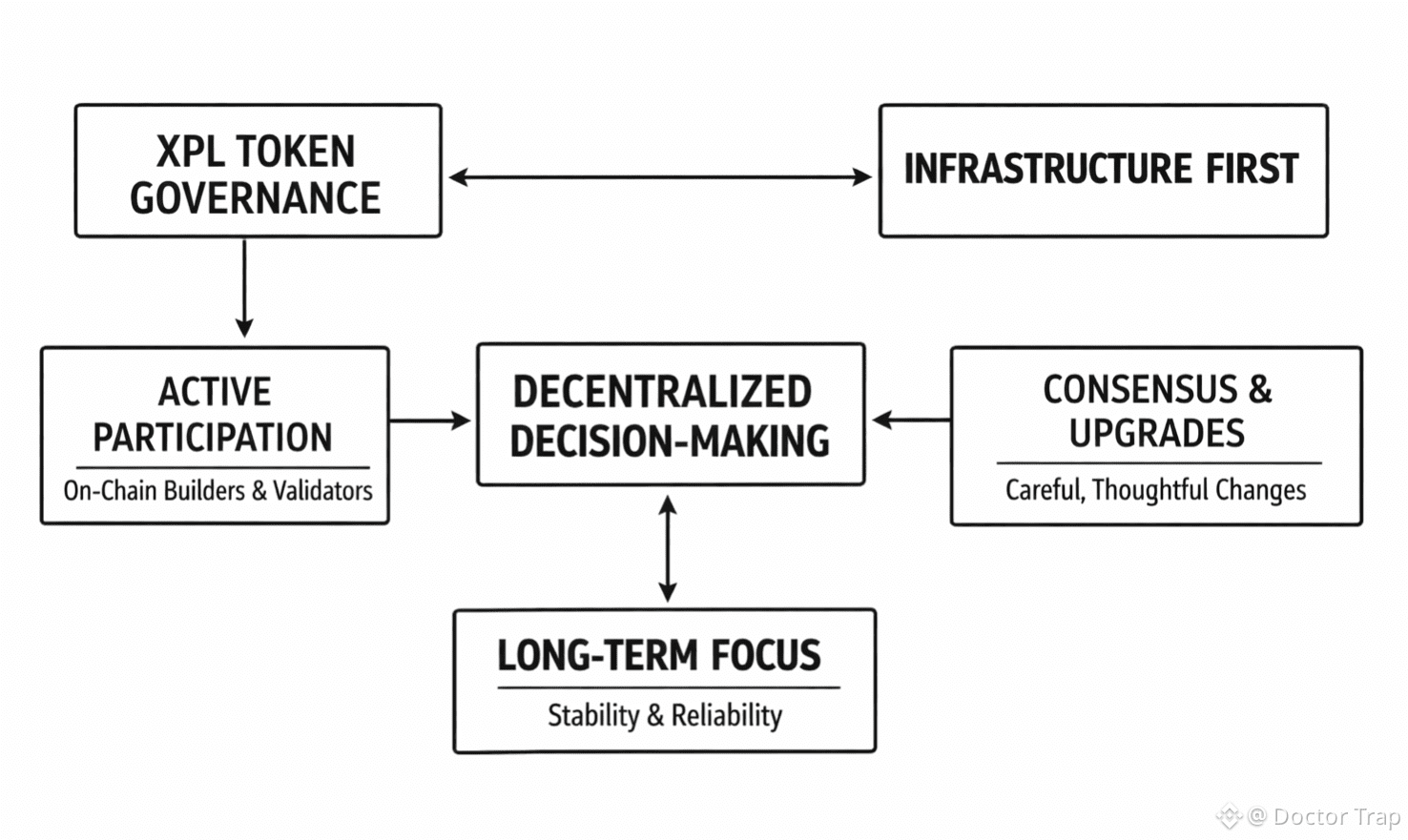
The strongest governance systems rarely feel dramatic. On Plasma, XPL does not sit on top of the network as a symbol. It sits inside it, like wiring behind a wall. When I trace how proposals form and settle, I see a design that assumes participants will disagree, but still need to ship code.
XPL governance leans toward process over personality. Proposals move slowly, discussions are layered, and changes tend to arrive after long digestion.
This reminds me of early infrastructure teams where stability mattered more than applause. The token’s role is clear, to align those who maintain the system with the system itself. No theatrics, just responsibility.
Governance fails when voting power floats without context. Plasma avoids that trap by tying XPL participation to on-chain activity. When I dig into recent governance cycles, I notice that the most influential voices are also the most active builders and operators.
This creates a subtle pressure toward competence. You cannot easily shout from the sidelines. You have to show up, stake attention, and accept that your choices have consequences. I’ve watched networks where governance became a popularity contest. Plasma feels different.
Here, XPL is less about control and more about accountability, which is harder and quieter.
While digging through public dashboards, I noticed Plasma’s locked value has been steadily holding rather than spiking. It sits in that unexciting zone that engineers respect. Transaction counts follow a similar pattern, not explosive, but consistent. That consistency tells me more than any headline ever could.
Partnership activity shows the same tone. Integrations arrive without fanfare, often infrastructure focused, settlement layers, tooling, backend services. These are not flashy announcements, but they deepen the network’s roots. XPL governance touches these decisions indirectly, shaping priorities rather than outcomes. That restraint feels intentional.
Previous cycles when governance only worked during good times. The real test came under load, congestion, disagreement. When I study Plasma’s upgrade history, I see governance used as a coordination tool, not a weapon.
Recent technical upgrades moved through discussion, revision, and delayed activation. That patience costs attention in the short term, but buys trust over years. XPL holders are not rushed into choices. They are invited to think. In a space addicted to speed, this almost feels melancholic, like choosing depth over applause.
The quiet strength of Plasma governance is that it does not pretend humans are perfect. It assumes fatigue, conflict, and uneven participation. The system bends around that reality instead of fighting it.
XPL becomes a lens rather than a lever. It focuses long-term interest instead of amplifying short-term emotion. I’ve watched many governance tokens burn out by trying to do too much. Plasma does less, and because of that, it endures.
When I lean back from the screen, I notice something about how XPL sits in my head. It doesn’t spark that quick rush, it doesn’t beg me to check it every hour. It feels closer to the boring parts of a system that keep everything else honest. Like the pipes in a building, the parts you never talk about at dinner. If they do their job, life just works. If they don’t, suddenly nothing else matters. Plasma has kept itself out of that kind of drama so far, and I find myself respecting that more than I expected.
Real systems speak softly, and Plasma listens even softer.

