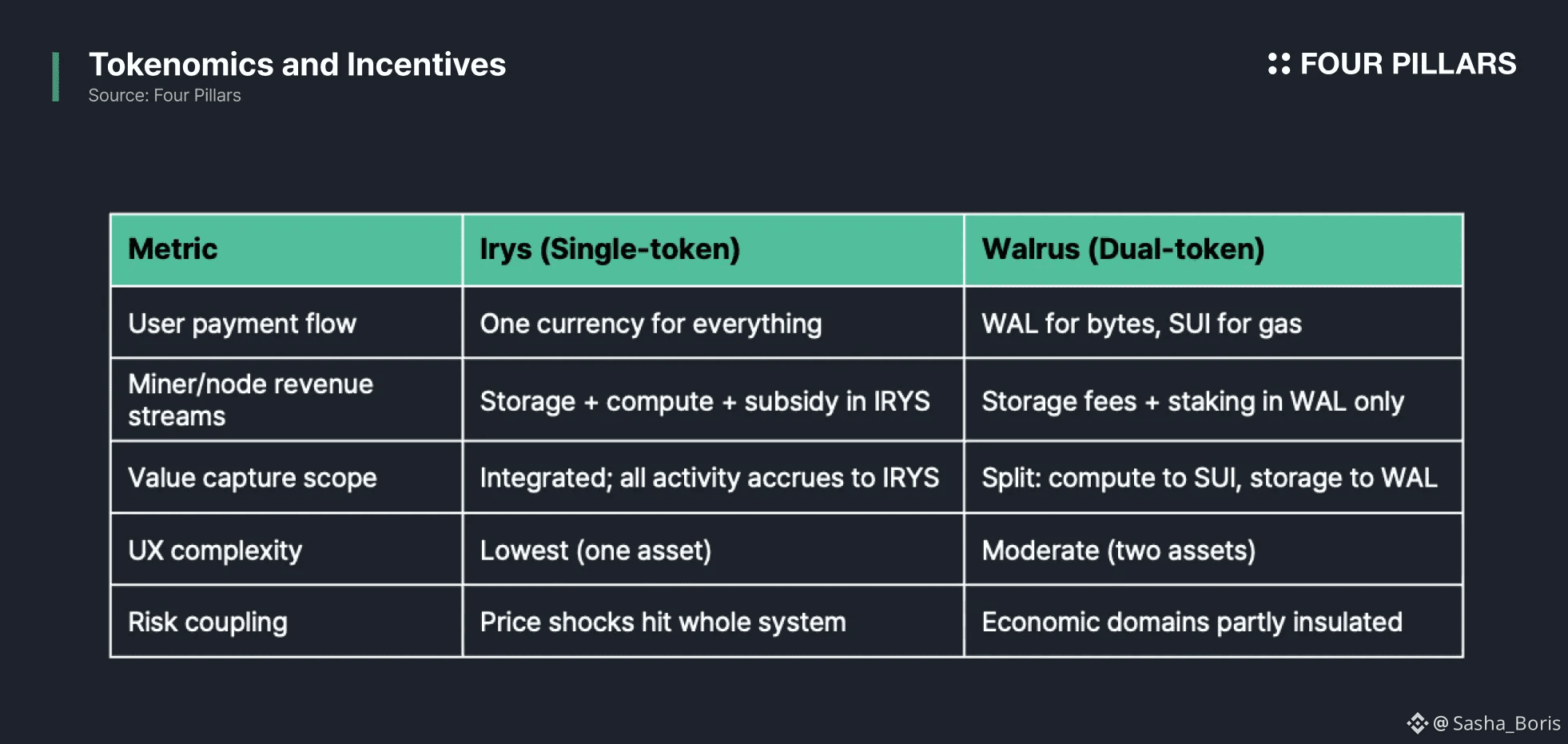
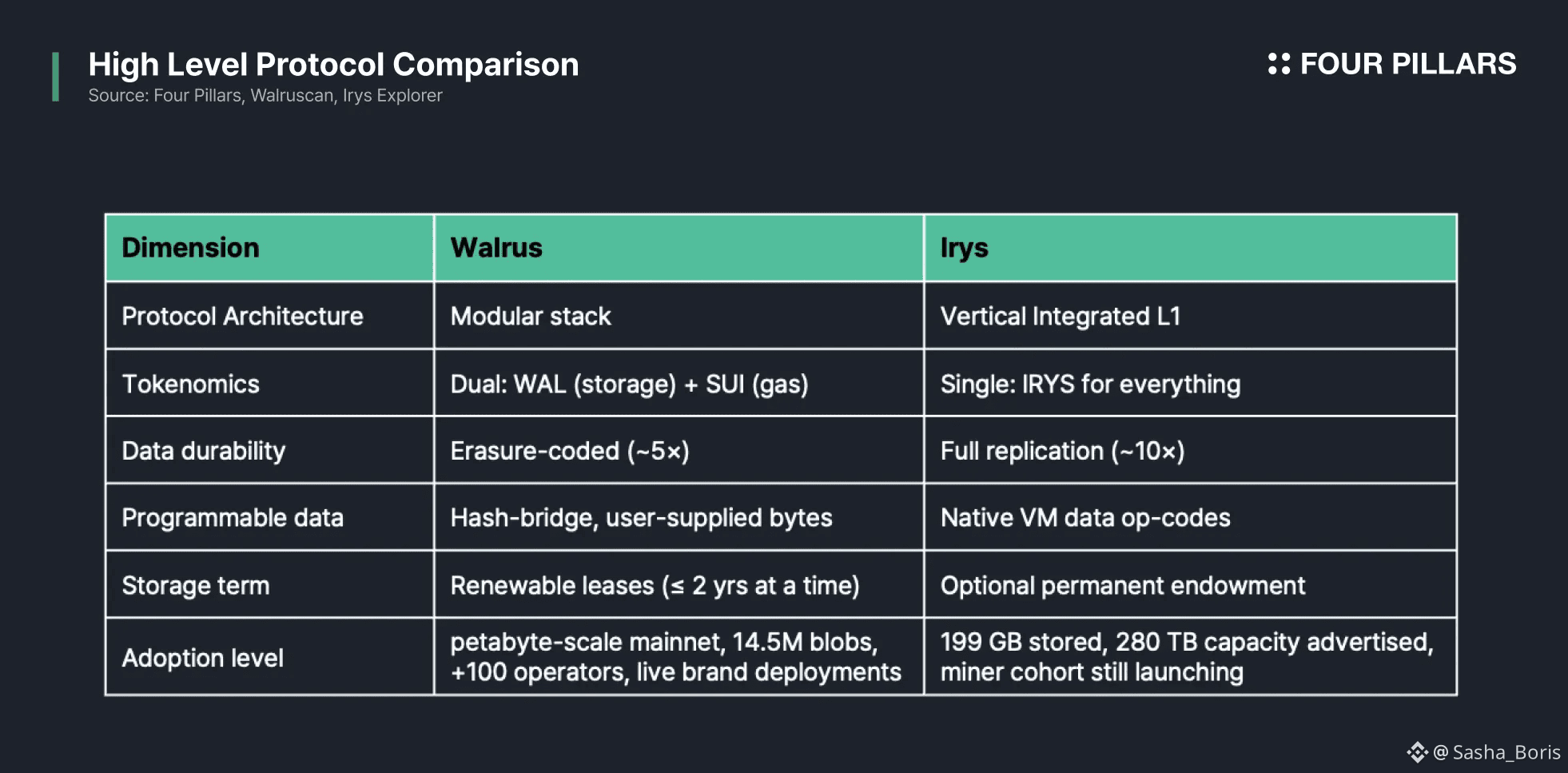
Walrus is built around a carefully structured economic model that separates storage value from blockchain execution costs. At the center of this system is the WAL token, which functions as the native currency for buying storage, rewarding operators, and securing the network. Instead of bundling everything into a single asset, Walrus uses a dual-layer model: WAL handles storage economics, while Sui’s native token is used for transaction execution and settlement on the base layer. This separation allows each token to reflect a different kind of demand—one tied to persistent data usage and the other to broader on-chain activity.
In the Walrus ecosystem, users pay for storage leases in WAL. The amount of WAL required depends on how much data is stored and for how long. These payments flow directly to storage node operators, who are responsible for hosting data shards, maintaining uptime, and responding to availability challenges. This creates a direct, market-driven link between real-world storage demand and operator revenue, making the network’s economics more grounded than purely speculative token models.
Node operators are also required to post economic bonds and face penalties if they fail to meet availability or performance requirements. If a node goes offline or cannot prove it still holds its assigned shards, part of its bonded value can be slashed. This mechanism discourages unreliable behavior and ensures that operators treat data custody as a long-term responsibility rather than a short-term opportunity. Over time, this produces a healthier operator set made up of participants who are economically motivated to remain online and invest in proper infrastructure.
The reward system is designed to scale with network usage. As more users store data on Walrus, more WAL flows into the system through storage leases. This increases operator revenue and, in turn, attracts additional storage providers. As supply expands, pricing pressure helps keep storage costs competitive. This self-balancing loop is essential for long-term sustainability, allowing Walrus to grow capacity without requiring heavy protocol-level intervention.
One important nuance of Walrus’s model is the interaction between WAL-based storage fees and Sui-based transaction fees. While WAL determines the cost of storing data, every action—uploading, renewing, deleting, or enforcing contracts—still requires Sui gas. This means the user experience depends on the health of two markets rather than one. If Sui gas prices rise sharply, it could temporarily increase the friction of using Walrus even if WAL storage prices remain stable. Managing this dual-market dynamic is a key governance and design challenge for the protocol.
From a developer perspective, this economic structure brings clarity. Compute and coordination costs are cleanly separated from long-term storage costs. Teams building apps on Sui can budget WAL specifically for persistent data needs while continuing to use Sui for general transactions. This improves financial planning and makes decentralized storage feel more like a predictable infrastructure expense rather than a volatile speculation-driven cost.
In the long run, WAL’s value proposition depends on real storage adoption rather than hype cycles. If Walrus becomes a core data layer for NFTs, games, AI workloads, and social platforms on Sui, WAL demand should grow organically as more bytes are stored and more leases are renewed. This makes Walrus one of the few crypto infrastructure projects where token utility is tightly coupled to a tangible, measurable service: keeping data alive and accessible over time.