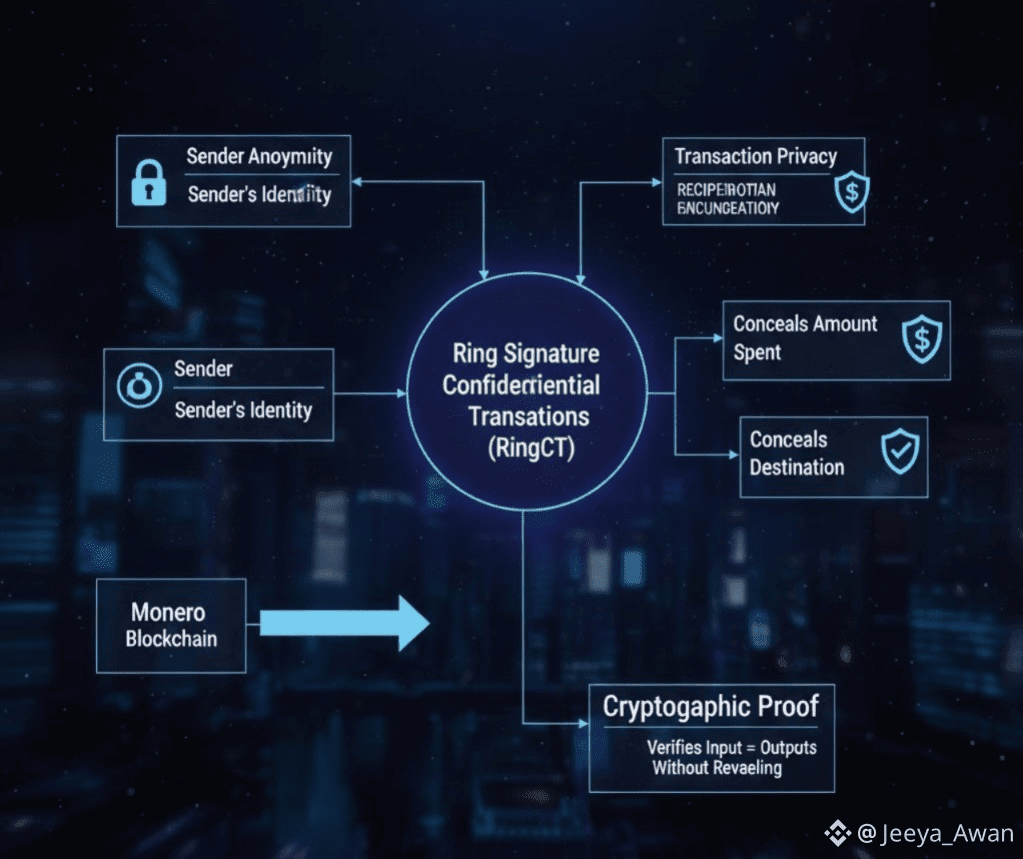
In the Dusk Network, Ring Confidential Transactions (RingCT) play a fundamental role in preserving transactional privacy. By extending ring signature schemes to include amount hiding, RingCT ensures that transactions remain unlinkable, verifiable, and resistant to financial metadata analysis.
Blockchains such as Monero use a particular breed of ring signatures called Ring Signature Confidential Transactions (RingCT), where the privacy is taken one step further by not only giving full anonymity at the sender level (as explained above), but also on the amount spent and destination. The RingCT technology makes the payment virtually unlinkable to the original spender, it is fast, and it also conceals the amount being transferred. Confidential Transactions include cryptographic proof that, given a set of input amounts, proves that their sum equates the output amounts, without revealing them.
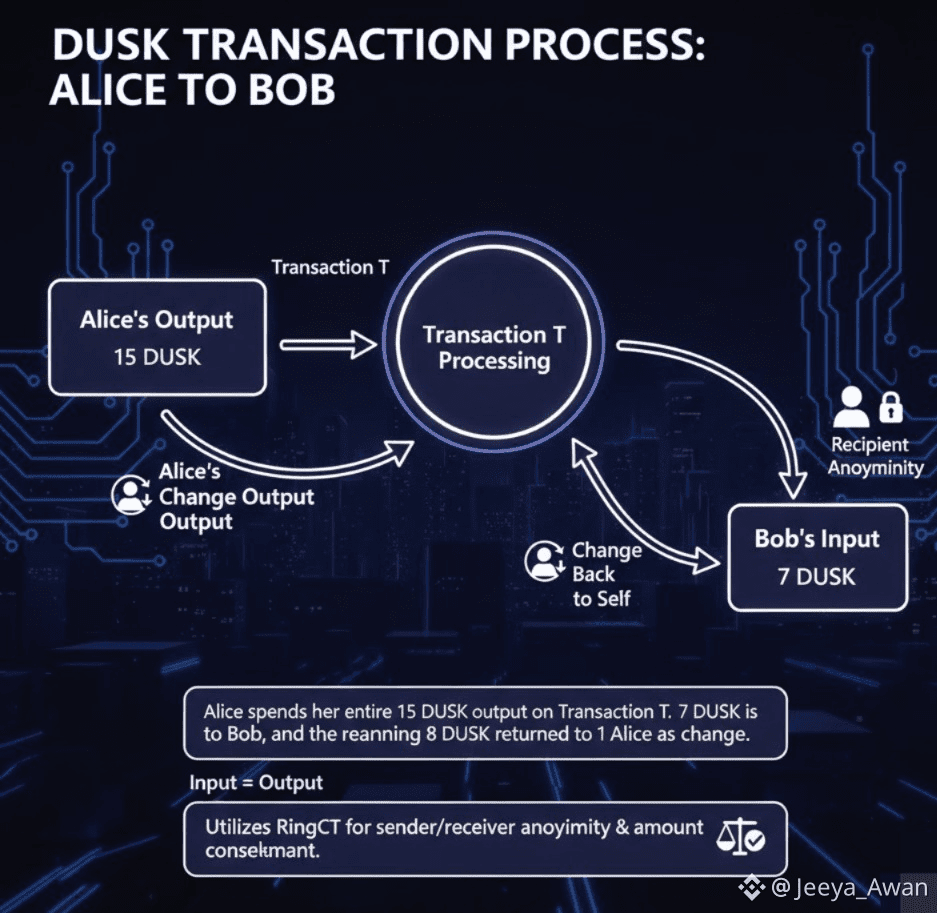
In practice, if Alice has an output of 15 Dusk and wants to send Bob 7 Dusk, she will have to spend the output in its entirety on transactionT, and then send the change (8 Dusk) back to herself.
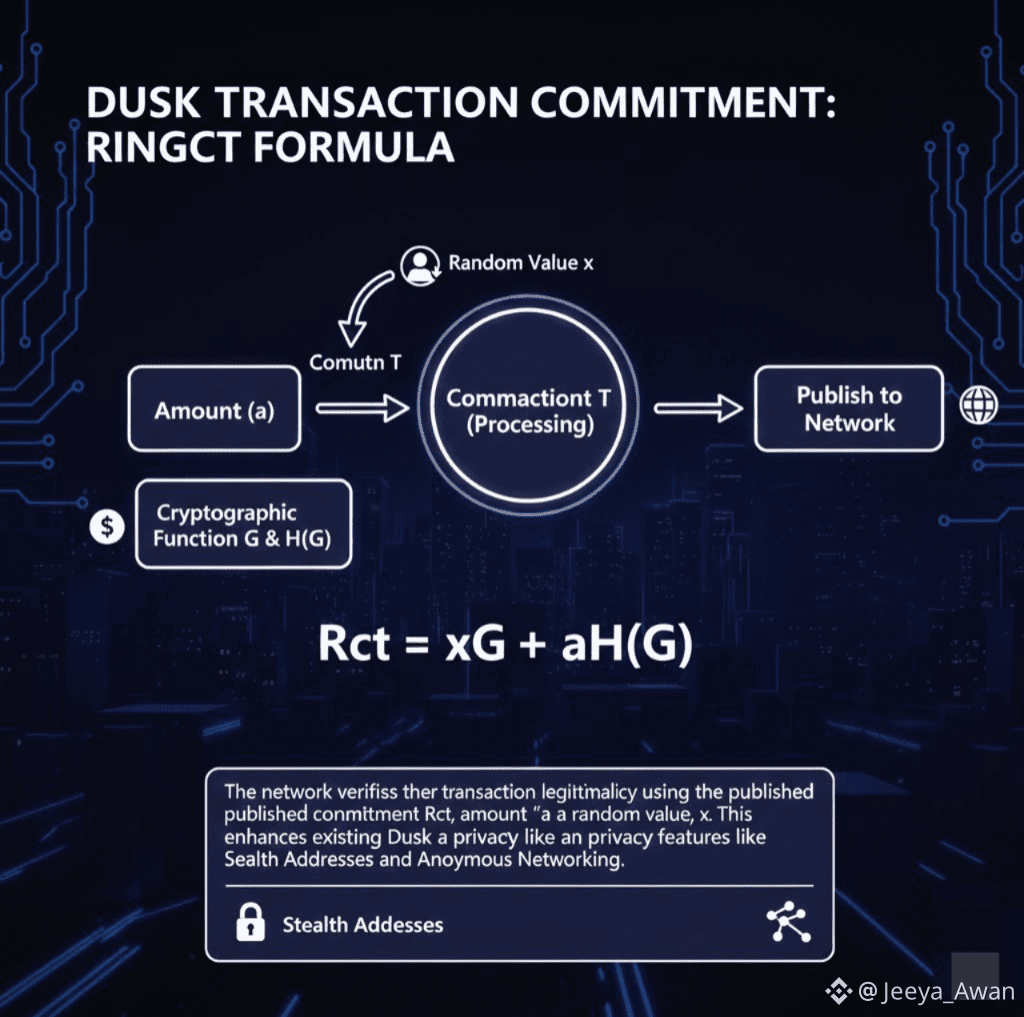
This commitment is represented by the formula:
Rct = xG +aH(G)
In the formula, a is the amount sent out in the transaction, x is a computed random value. By publishing the value of Rct to the network as an output, the network will be able to verify the legitimacy of the submitted transaction. This technology goes on top of the already untraceable (Stealth) addresses used by the Dusk blockchain, and anonymous networking used to give full anonymity to the nodes involved.
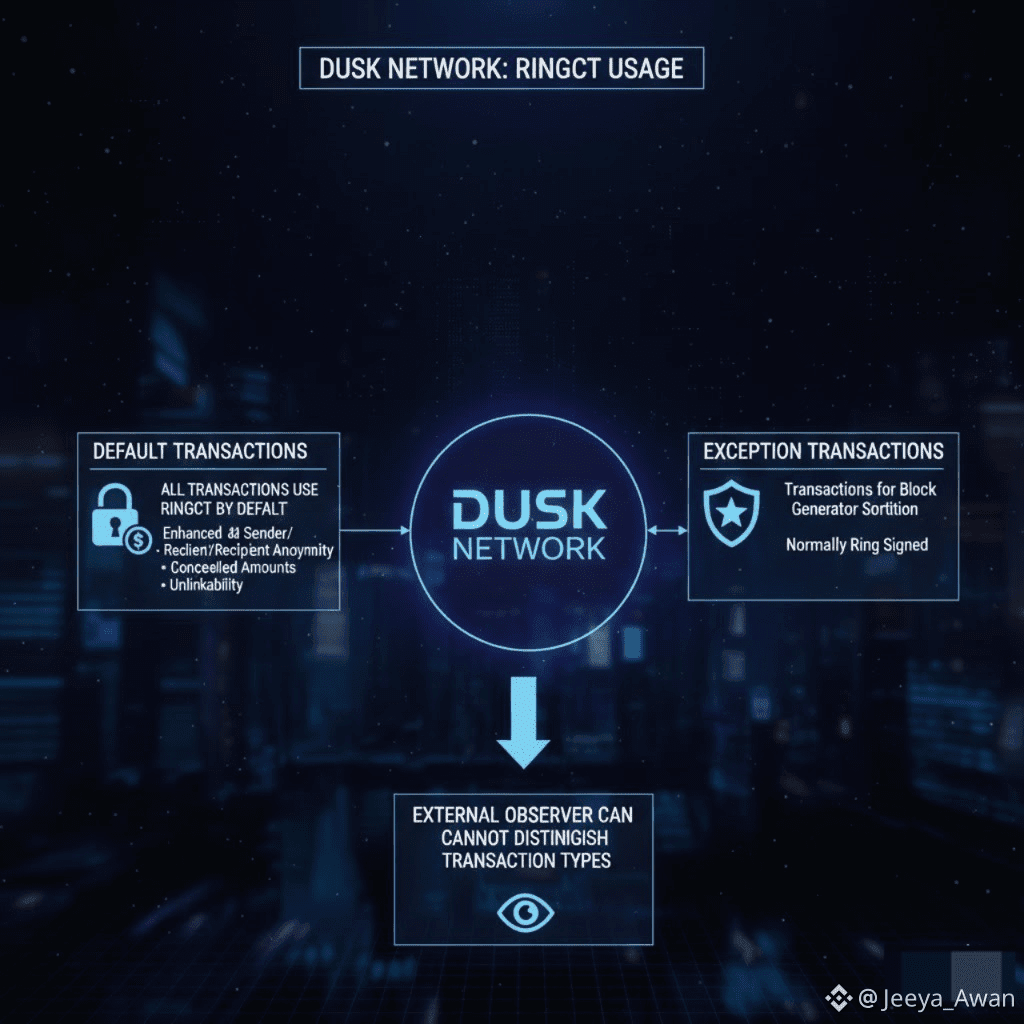
 In the Dusk Network, RingCT is used by default for all transactions except those used to participate to the sortition for Block Generator (which are normally ring signed). This is merely a detail, though, considering that an external observer would not be able to tell these two kind of transactions apart from each other.