Introduction
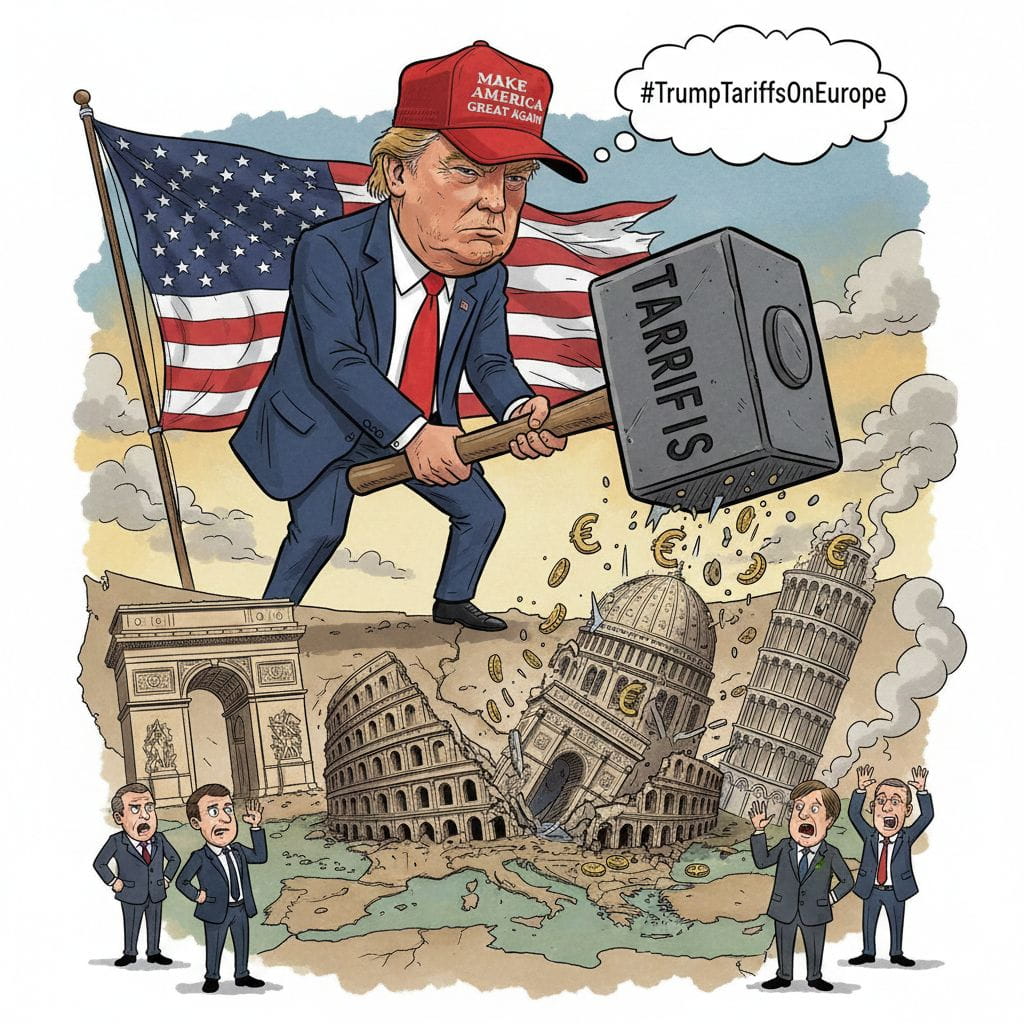
The hashtag #TrumpTariffsOnEurope is once again gaining attention in global financial and economic discussions. Statements associated with former U.S. President Donald Trump regarding the possibility of imposing tariffs on European imports have raised concerns across international markets. Such trade policies can significantly influence global trade flows, inflation, currencies, and investor sentiment.
This article explains what Trump tariffs mean, why Europe could be affected, and how global markets may respond.
What Are Trump Tariffs?
Tariffs are taxes imposed on imported goods to make foreign products more expensive and protect domestic industries.
Donald Trump’s trade approach has historically focused on “America First”, emphasizing reduced imports, stronger local manufacturing, and trade balance correction.
Under this strategy, higher tariffs on European goods could be used as a tool to pressure the European Union in trade negotiations.
Why Europe Could Be Targeted
Possible reasons behind tariffs on Europe include:
Ongoing trade imbalances between the U.S. and the EU
Disputes over subsidies, automobiles, steel, and agriculture
Retaliatory trade measures from previous agreements
Political messaging aimed at domestic voters
Europe is one of America’s largest trading partners, making any tariff action economically significant.
Impact on the European Economy
If U.S. tariffs are imposed on European goods, potential consequences may include:
Reduced European exports to the U.S.
Pressure on key sectors such as automobiles, steel, luxury goods, and food products
Lower corporate earnings for export-dependent companies
Increased pressure on the Euro currency
This could slow economic growth across parts of the European Union.
Effects on Global Markets and Investors
Trade tensions often trigger uncertainty in financial markets. Possible outcomes include:
Increased market volatility in global stock exchanges
Shift of capital toward safe-haven assets like gold and the U.S. dollar
Fluctuations in commodity prices
Potential spillover effects on emerging markets and cryptocurrencies
Investor confidence tends to weaken during prolonged trade disputes.
How the U.S. Economy Could Be Affected
While tariffs aim to protect domestic industries, they also come with risks:
Potential benefits:
Support for U.S. manufacturers
Reduced reliance on imports
Short-term political gains
Potential drawbacks:
Higher costs for consumers
Increased inflation
Retaliatory tariffs from Europe affecting U.S. exports.
Economists often warn that prolonged tariff policies can slow overall economic growth.
What Investors Should Do
In periods of trade uncertainty, investors are advised to:
Monitor global economic and political developments
Diversify investment portfolios
Focus on long-term fundamentals rather than short-term fear
Avoid panic-driven trading decisions
Strategic planning becomes more important during uncertain trade environments.
The discussion around #TrumpTariffsOnEurope highlights how trade policy decisions can impact not only the U.S. and Europe but the entire global economy. Whether implemented or not, such tariff threats influence markets, currencies, and investor behavior worldwide. Staying informed and prepared is essential for navigating potential economic shifts.