

Why Dusk Foundation Treats Security as a Governance Issue
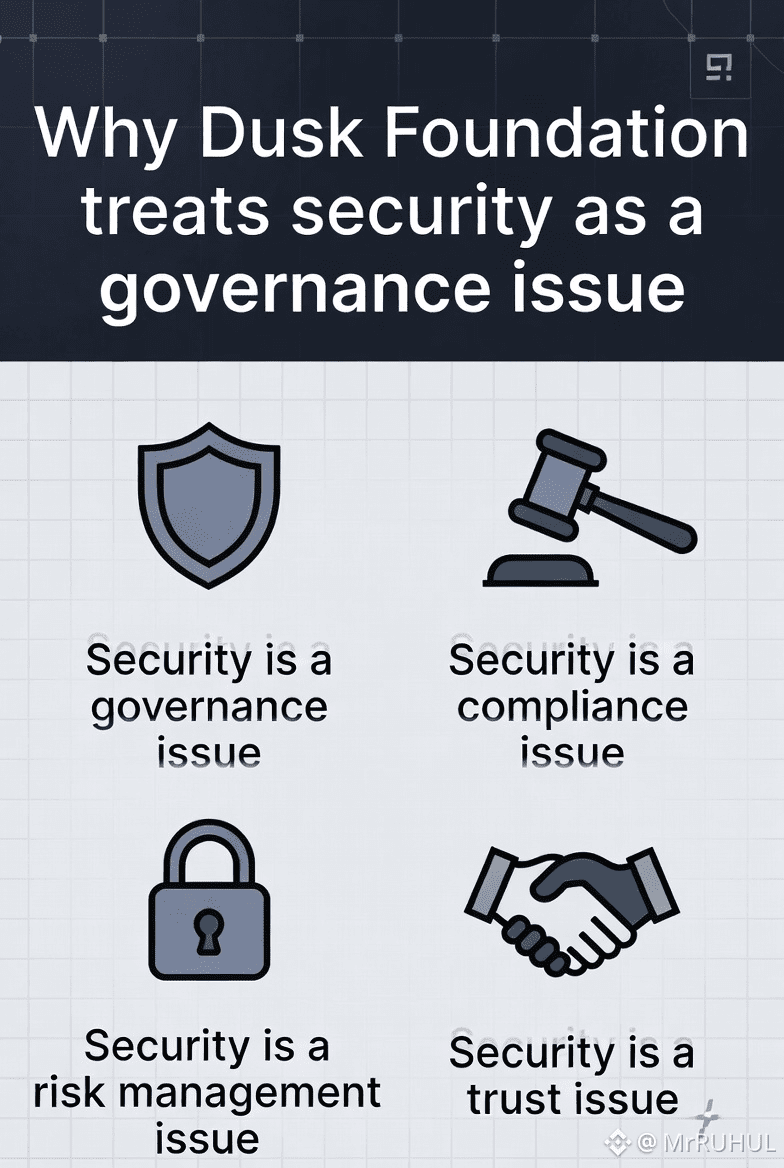
Most blockchain projects split things up: engineers focus on security—handling cryptography, audits, and all the tech details—while governance is just about voting and protocol upgrades. Dusk Foundation doesn’t buy into that divide. For them, security goes way past code. It’s about the people, the rules, and the decisions shaping everything behind the scenes. That’s not just a philosophy—it runs through everything they build. Dusk wants to create financial infrastructure that’s actually trustworthy for big institutions: private, compliant, and tough to break.
Here’s what they’ve figured out: software bugs aren’t the real problem most of the time. The real trouble starts when there’s confusion over who’s responsible, upgrades get rushed, or the incentives just don’t line up. So Dusk weaves security right into its governance. They work to seal the cracks before anyone even spots them—on the technical side and everywhere else. At the end of the day, it’s about protecting trust, not just code.
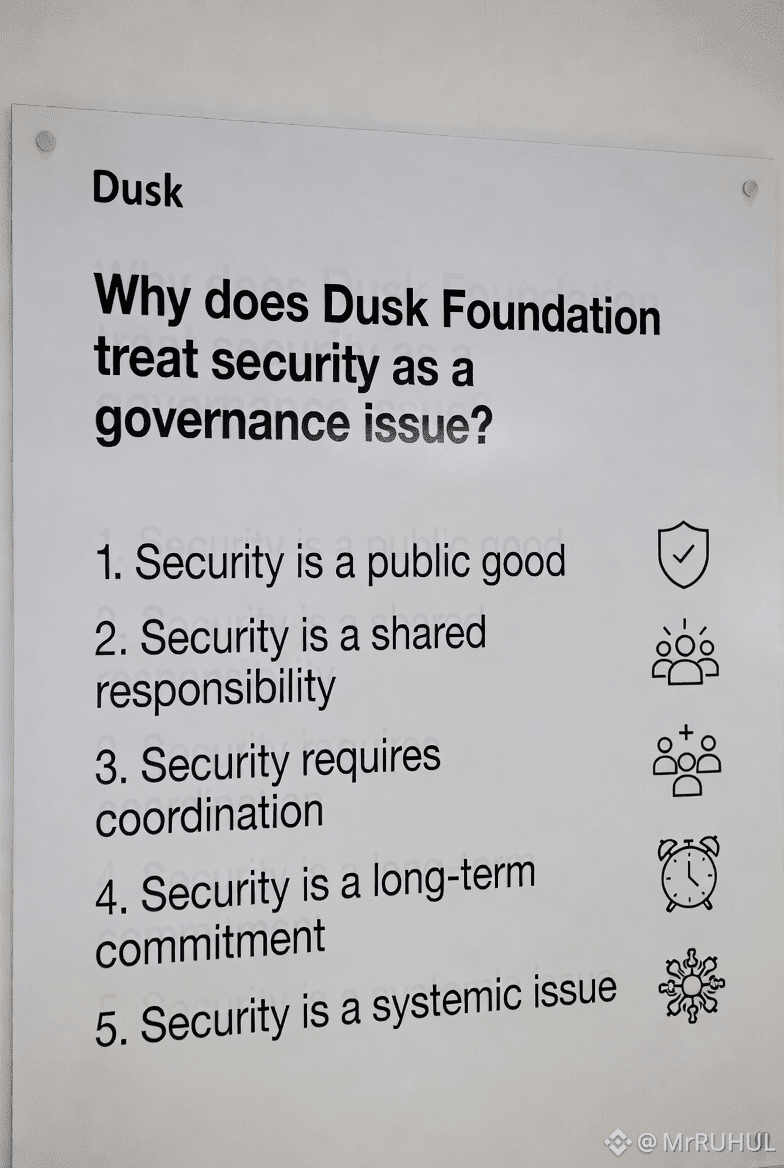
Security Means Trust, Not Just Technology
Dusk isn’t aiming for small-time crypto. They’re building for tokenized securities, confidential contracts, and institutional DeFi—the serious stuff. In those arenas, trust is as important as the math. Banks and big players want more than airtight cryptography. They want to know who’s steering the ship, how risks get managed, and what happens when things go wrong.
By tying security directly to governance, Dusk makes sure every protocol change isn’t just about shiny new features—it’s about risk. Governance isn’t just a box to check; it’s the firewall, just like in old-school finance. That’s a big reason Dusk doesn’t look like the typical crypto project chasing the next fad.
Every Governance Decision Alters Security
Every time the community changes something—adds a new feature, tweaks consensus, upgrades contracts—the security landscape shifts. There’s always a chance for new threats to sneak in. Dusk treats every one of these moves as high-stakes, not just routine updates.
They’re not in a hurry to push out changes. They slow down on purpose, get more eyes on major upgrades, and test things harder. They lean toward resilience instead of racing to ship. This way, they dodge the usual traps: rushed launches, drama, and upgrades that accidentally open the door to attackers.
Incentives Shape Security
People follow the money. In blockchains, the wrong incentives can blow everything up—inviting hacks, speculation, or even power grabs. Dusk doesn’t leave this to chance. They see incentive design as a security tool, and governance has to nail it.
They set up staking, validator rewards, and participation so that long-term commitment wins out over short-term gains. Every incentive gets checked: Does it keep honest people involved? Does it block out bad actors? Does it keep things decentralized? By running this through governance, Dusk fixes issues before they explode.
Privacy Needs Real Oversight
Dusk uses zero-knowledge proofs and private smart contracts—a pretty advanced move. But privacy isn’t automatically safe. Done wrong, it just hides trouble or lets people game the system. Dusk knows this. So they don’t just roll out privacy features and call it good—they govern them.
Governance decides how privacy works, makes sure it gets audited, and draws the lines. They set the rules for disclosures, compliance, and transparency. The goal: make privacy a security strength, not a hole.
Guarding Against Governance Capture
One of the worst things in blockchain? Governance capture—a small group grabs the reins and twists the rules. Dusk sees it for what it is: a security risk.
To stop this, they encourage broad, low-noise participation, move toward decentralization step by step, and draw clear lines between what the foundation controls and what the network decides. That means less hype, fewer rushed votes, and a system that’s tougher for bad actors to hijack.
Choosing Stability Over Snap Decisions
A lot of networks get caught up chasing quick fixes and reacting to every market tremor. Dusk does the opposite: they move slow, build steady, and aim for something that lasts.@Dusk #Dusk $DUSK
