
Dusk Foundation began with a clear, pragmatic idea: blockchains should serve real-world needs, not just speculative markets. From the start, the team focused on building a Layer-1 blockchain that balances privacy with compliance, allowing institutions to operate on-chain without exposing sensitive data. This vision has shaped every part of the network, from its core architecture to its growing list of partnerships, and has positioned Dusk as a serious infrastructure project rather than a short-term experiment.
At its core, Dusk blends familiar blockchain development tools with advanced privacy technology. Developers can work with smart contracts in an environment that feels familiar, while the network adds privacy-preserving mechanisms such as selective disclosure and cryptographic proofs. These features allow participants to demonstrate compliance with regulatory requirements without revealing underlying transaction details. The result is a system that offers transparency when needed and confidentiality where it matters most, addressing a long-standing challenge in blockchain adoption.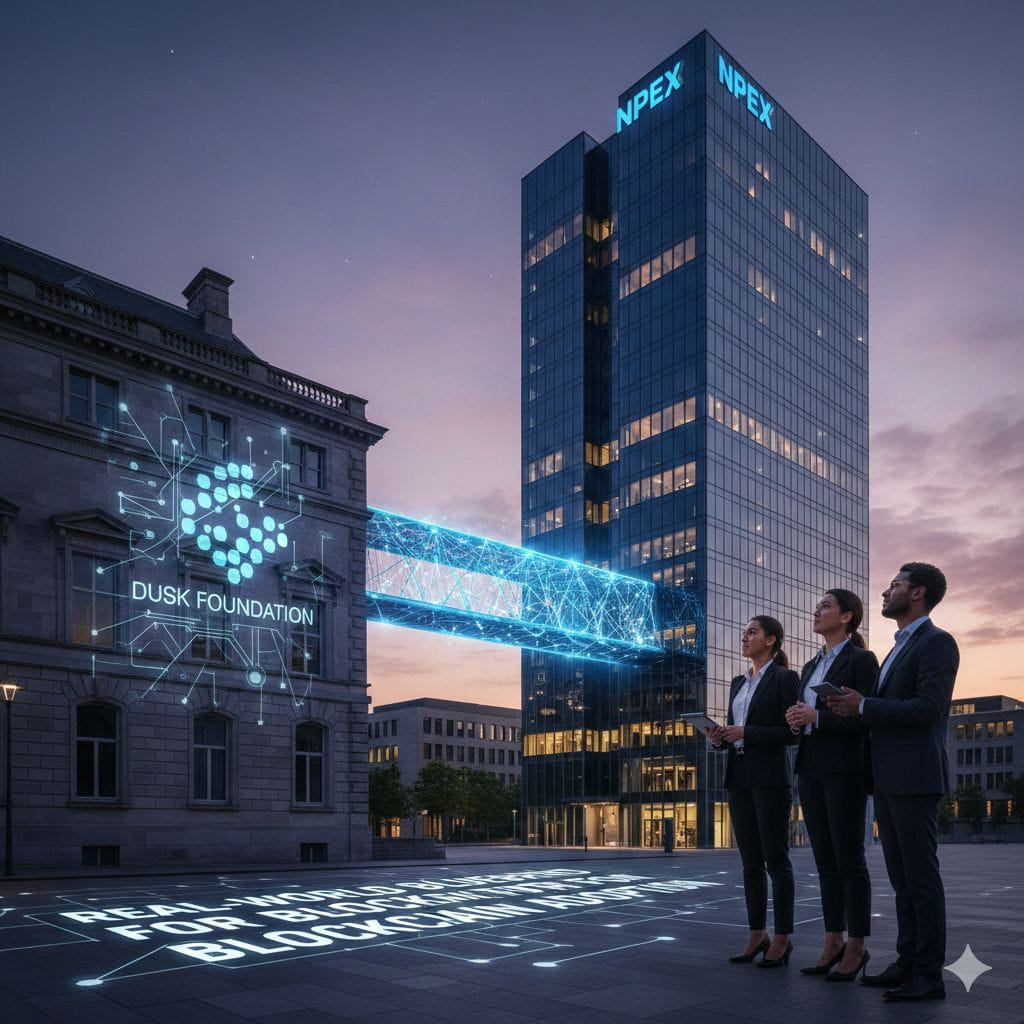
Technology alone is never enough without real-world implementation. A key milestone for Dusk came with its collaboration alongside Cordial Systems and NPEX, a regulated Dutch trading platform. This initiative focuses on creating a secure, zero-trust custody and trading environment for tokenized real-world assets on the Dusk blockchain. Through this setup, assets can be issued and managed on-chain while custody remains secure through institutional-grade infrastructure. This collaboration highlights Dusk’s intent to operate as production-ready infrastructure rather than an experimental network.
The DUSK token plays a functional and carefully designed role within the ecosystem. It is used to pay transaction fees, secure the network through staking, and reward participants who contribute to consensus. The supply model reflects a long-term approach, with a capped maximum supply and emissions spread over decades rather than front-loaded inflation. By gradually reducing emissions over time, the network aims to align incentives between early participants and long-term stakeholders while avoiding unnecessary pressure on the token’s value.
What makes Dusk particularly compelling is how its design translates into practical use cases. The network is well suited for tokenizing regulated instruments such as securities, debt products, and other real-world assets. Its privacy features allow institutions to operate in a compliant manner while still benefiting from blockchain efficiency. Beyond finance, the same privacy-first architecture can support permissioned marketplaces, confidential business settlements, and enterprise applications where data protection and auditability must coexist.
Market accessibility has also played a role in Dusk’s growth. The DUSK token has been available on major exchanges for several years, providing liquidity and visibility to a global audience. This exchange presence allows both individual users and institutions to interact with the network’s economic layer, supporting staking, governance participation, and broader ecosystem activity. Consistent trading activity has helped establish DUSK as a live asset rather than a purely conceptual token.
Behind the technology is a team that has consistently focused on execution and partnerships. The foundation has emphasized structured development, clear roadmaps, and collaboration with infrastructure providers rather than chasing short-term hype. By prioritizing compliance-ready tooling, custody integrations, and enterprise-grade solutions, Dusk has built credibility among regulated entities looking to explore blockchain without compromising operational standards.
Looking ahead, Dusk’s roadmap centers on strengthening its infrastructure and expanding real-world adoption. Ongoing efforts include deeper custody integrations, enhanced asset tokenization frameworks, improved interoperability, and continued mainnet development. While challenges remain—particularly around regulation and institutional onboarding—the project’s measured approach reduces friction compared to platforms that attempt to bypass existing systems entirely.
In the broader context, Dusk occupies a valuable position at the intersection of privacy, compliance, and real-world blockchain utility. As more institutions explore on-chain settlement and asset digitization, the demand for infrastructure that respects confidentiality while enabling verification is likely to grow. Dusk’s focus on these fundamentals gives it a strong foundation to capture that demand over time.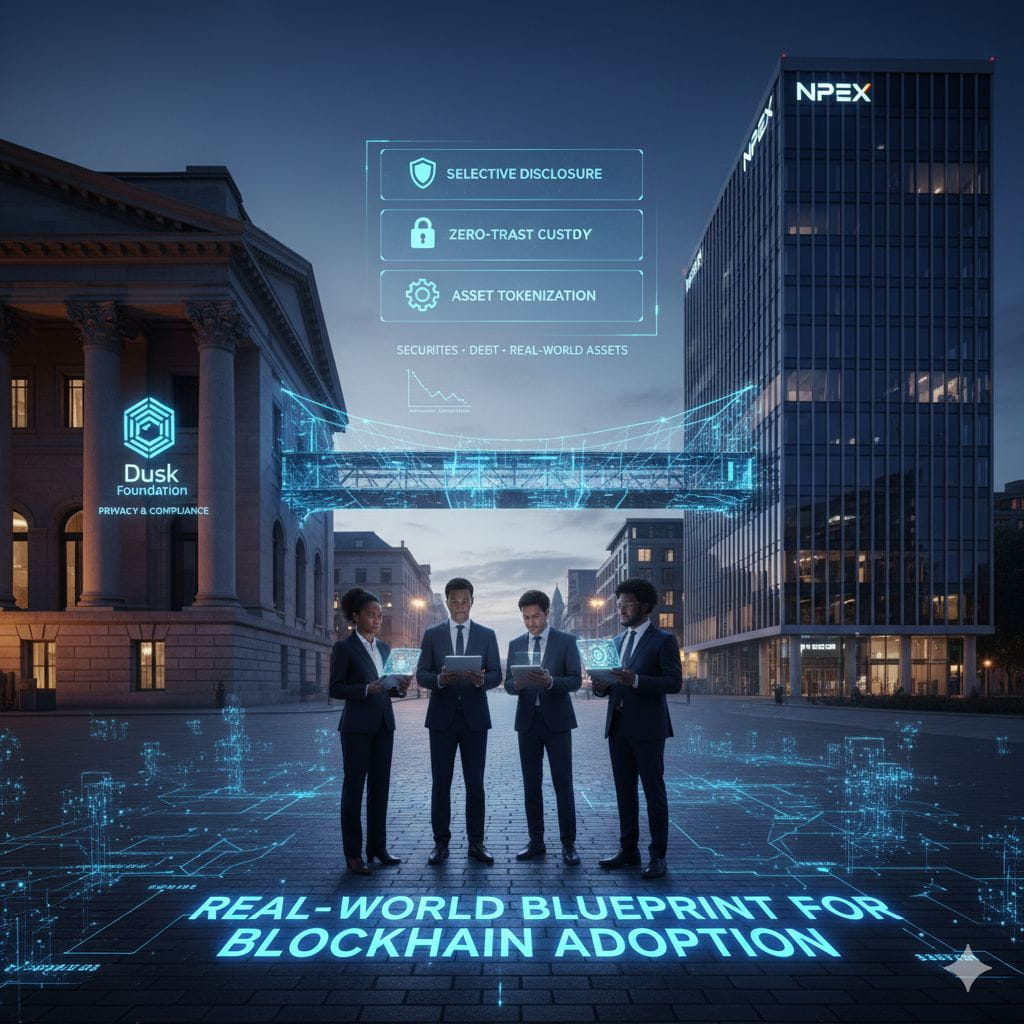
Ultimately, Dusk Foundation represents a long-term effort to make blockchain technology practical, trustworthy, and compatible with real-world systems. Rather than promising rapid disruption, it focuses on building bridges between established institutions and decentralized infrastructure. In a space often driven by speculation, Dusk’s emphasis on privacy, compliance, and real utility sets it apart as a project built for endurance rather than hype.
