

Dusk Network does not start from the usual DeFi question of speed or yield. It starts from a quieter, more structural concern: what happens when financial systems are expected to behave like infrastructure instead of experiments. In traditional markets, settlement and execution are not the same thing. Trading desks move fast. Settlement systems move carefully. Airports do not mix runways with boarding gates for a reason. Dusk takes that same intuition and applies it to blockchain design. Instead of pushing everything through a single chain with competing priorities, it draws a clear line between where transactions are executed and where they are settled. That separation is not cosmetic. It is the core of the system.
Most blockchains try to be good at everything at once. They execute contracts, finalize transactions, store data, and enforce consensus inside one tightly coupled environment. That works for early experimentation, but it creates friction as soon as you introduce real-world constraints. Settlement wants stability, predictability, and clear finality. Execution wants flexibility, fast iteration, and developer-friendly tooling. When those two live in the same place, one always ends up compromising the other. Dusk avoids that trap by splitting the system into two layers, each optimized for its own job. The base layer, DuskDS, focuses on settlement, consensus, and data. On top of it sits DuskEVM, an Ethereum-compatible execution environment designed for building and running smart contracts without forcing developers to learn a new mental model.
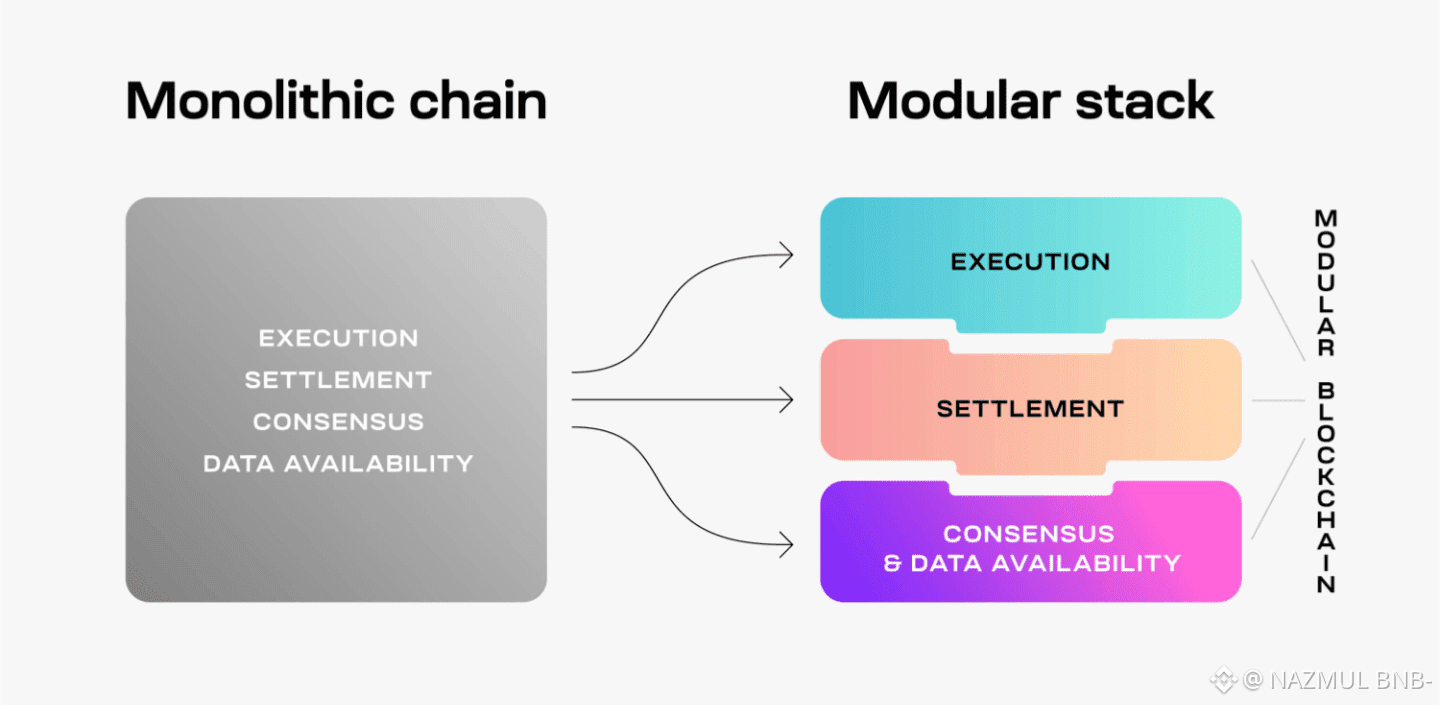
The role of DuskDS is deliberately conservative. It is where transactions become final and where data availability and consensus live. This is the layer that needs to behave more like financial plumbing than a consumer app. Finality matters here because regulated finance depends on knowing when something is truly settled, not just likely to be reversed. By anchoring settlement at this layer, Dusk creates a stable foundation that does not need to change every time a new application trend appears. It is also the layer that supports native bridging to execution environments above it. Instead of treating bridges as external add-ons, Dusk builds asset movement into the protocol itself, so value can move between layers without relying on wrapped tokens or third-party custodians.
On top of that foundation sits DuskEVM, which is where most developers will spend their time. From the outside, it feels familiar. Smart contracts are written in Solidity. Standard Ethereum tooling works as expected. Wallets, deployment flows, and interaction patterns remain largely unchanged. The difference is what happens underneath. Execution can move quickly because it is not responsible for final settlement. It inherits security and finality from DuskDS instead of having to provide them itself. This allows Dusk to offer a developer experience that feels modern and flexible without asking the settlement layer to take on unnecessary risk. It is a clean boundary, and that boundary is doing real work.
One practical detail makes this design easier to reason about in the real world. The same token is used across layers. When DUSK is bridged from DuskDS to DuskEVM, it becomes the gas token for execution. There is no separate fee asset and no confusing economic split. Assets move to the layer where they are most useful, and their role changes naturally with context. This might sound minor, but it matters. Complex token mechanics often create hidden friction, especially for institutions that need clarity around custody, accounting, and operational flows. Keeping the economic model simple helps reduce that friction without overselling certainty or guarantees.
The deeper value of this architecture shows up when you think about regulated use cases. Financial institutions care less about raw throughput and more about boundaries, auditability, and control. They want to know which part of the system is responsible for what, and how changes propagate. By isolating settlement from execution, Dusk makes those answers clearer. Execution environments can evolve, experiment, and even fail without undermining the integrity of settlement. Settlement can remain stable and conservative without blocking innovation at the application layer. This does not magically solve regulation, and Dusk does not claim that it does. What it offers instead is a structure that aligns better with how regulated systems already work.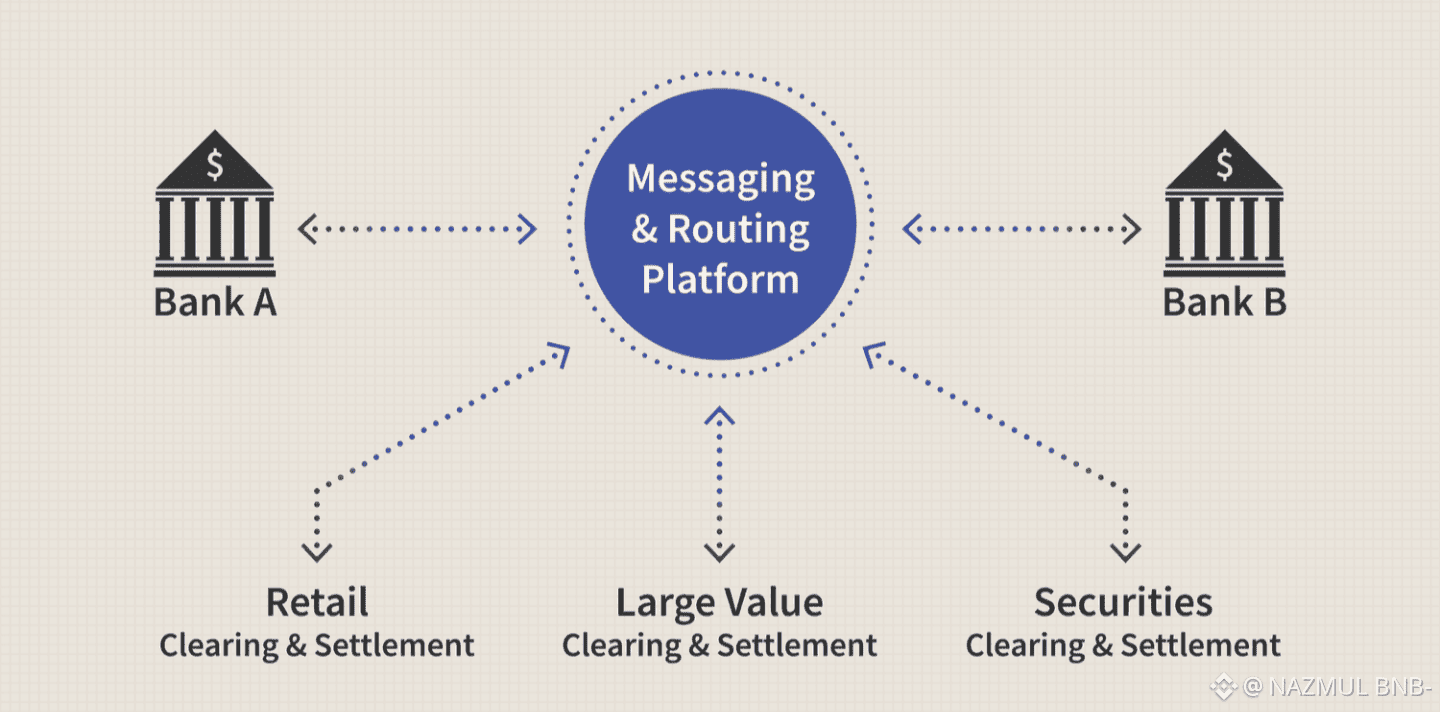
The takeaway is simple but important. Dusk’s modular design is not about chasing performance benchmarks or buzzwords. It is a statement about boundaries. Settlement should not be dragged around by every new application idea. Execution should not be slowed down by the most cautious part of the protocol. By separating the two, Dusk positions itself as infrastructure that can grow without losing its footing. Whether that promise holds depends on execution, governance, and adoption over time. But as a systems-level blueprint for regulated DeFi, the logic is sound, familiar to anyone who has worked with real financial infrastructure, and refreshingly grounded in how complex systems survive long term.
