
Most crypto traders I know still track narratives before they track flows. I used to do the same until I started analyzing where capital actually settles rather than where attention temporarily spikes. Over the last year my research kept pointing to a quiet but decisive shift is stablecoins are no longer just tools inside crypto they are becoming the settlement layer itself. Plasma enters this picture not as another Layer 1 but as infrastructure aligned with how money is already moving. Here is the hook that changed my thinking. According to a 2024 Bitwise and Visa report stablecoins settled more than 11 trillion dollars in transaction value in a single year overtaking Visa's global network. At the same time data from The Block Research shows that roughly two thirds of all on-chain transactions now involve stablecoins rather than volatile assets. In my assessment this is not a trend anymore it's the base layer of crypto activity. The question becomes simple is which chains are actually designed for that reality?
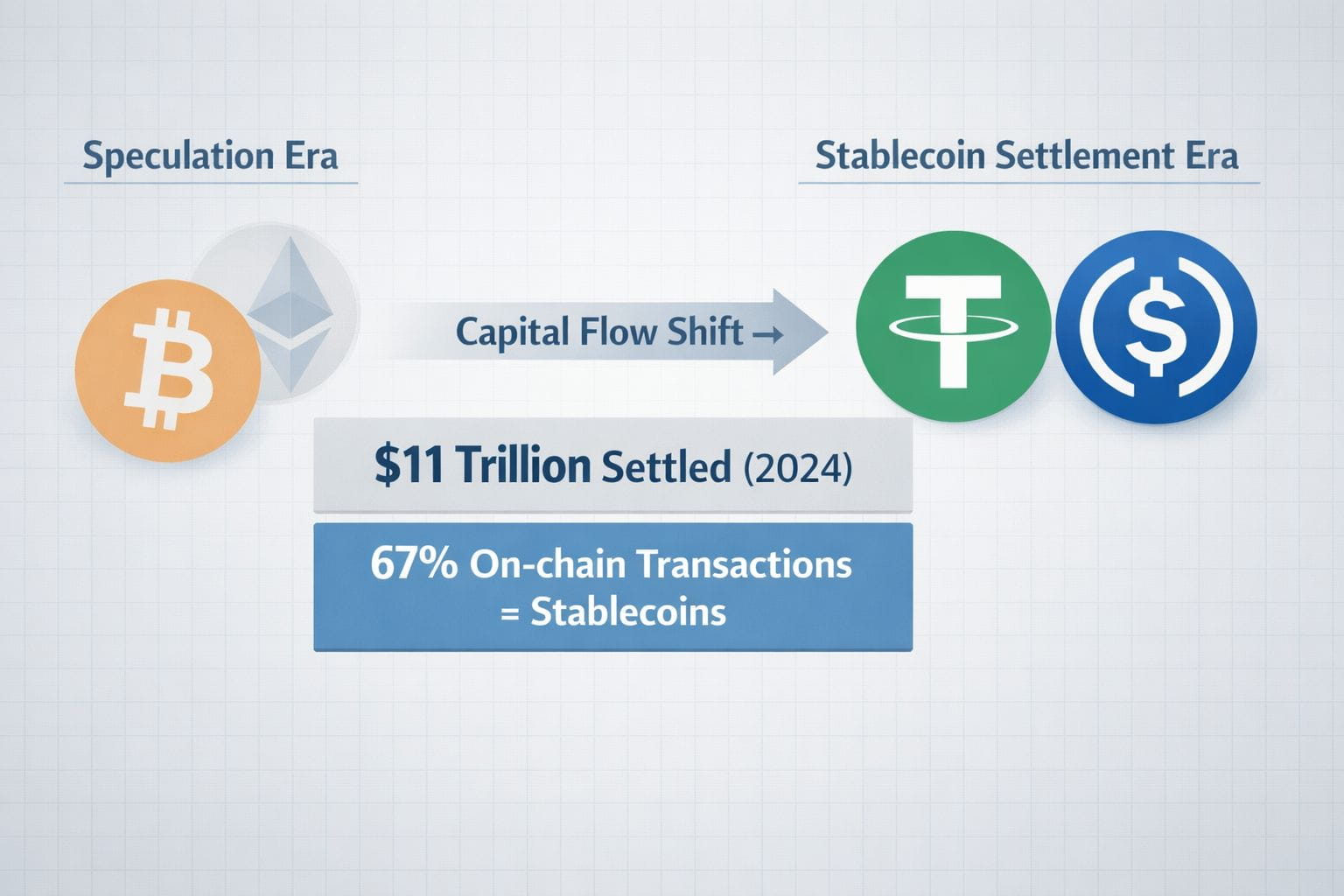
Plasma does not try to answer every problem in crypto. It focuses on one problem extremely well.
A blockchain designed around money not speculation
When I analyzed Plasma's technical design the first thing that stood out was how intentionally unglamorous it is. Plasma is a Layer 1 blockchain built for stablecoin settlement. It's fully EVM compatible, thanks to Reth and runs on its own consensus system, PlasmaBFT. Instead of maximizing headline TPS numbers. It prioritizes sub second finality and predictable transaction behavior. Finality matters more than most traders admit. Ethereum's average block time sits around 12 seconds and even fast rollups introduce confirmation delays that feel trivial in DeFi but problematic for payments. Plasma reduces this to under a second which in my experience brings blockchain settlement closer to the feel of traditional payment rails. It's the difference between waiting for a confirmation screen and simply knowing a transfer is done.
Gasless USDT transfers are where Plasma's philosophy becomes obvious. I often explain this to non crypto users with a simple analogy. Imagine needing to buy a separate airline token just to pay airport taxes every time you fly. That's how most blockchains treat users today. Plasma removes that requirement by allowing USDT transfers without holding a volatile native token or by letting fees be paid directly in stablecoins. This design aligns closely with real world data. Circle ran a stablecoin adoption survey for 2025 and businesses did not beat around the bush is fee predictability topped their wish list for on-chain payments. Not decentralization. Not composability. Plasma's stablecoin first gas model is not some philosophical statement. It's just meeting that need head on. One thing that really stands out is Bitcoin anchoring. Plasma regularly anchors its state to Bitcoin. Basically it borrows security and neutrality from the most censorship-resistant blockchain out there. These days, with stablecoins tangled up in regulation and geopolitics. That neutrality matters a lot more than just cranking out transactions as fast as possible. Plasma is not just thinking about the next hype cycle. It's looking to build real trust that lasts.
Honestly a simple chart comparing transaction finality times think Ethereum big Layer 2 Solana, Tron and Plasma would make all this even clearer. Another useful chart would show average stablecoin fees during congestion events. A conceptual table comparing gas payment models across chains would clearly highlight why Plasma feels purpose built.
How Plasma stacks up against other settlement focused chains?
Plasma is often lumped together with Ethereum Layer 2 but my research suggests that comparison is misleading. Layer 2 exist to scale Ethereum execution environment while Plasma rethinks settlement from the ground up. Its closest peers are actually chains like Tron and Solana both of which already host significant stablecoin volume. Tron handles over half of all USDT transfers right now. Tether's own reports back that up. It's not because Tron did anything wild with DeFi. People just like the cheap fees and how fast everything settles but look closer and Tron's validator setup sparks real debates about how decentralized or censorship resistant it actually is. Now, Solana's a speed demon no question but when the market heats up especially with speculation running wild in 2024. Its fees get messy and unpredictable. Ethereum's Layer 2? They are great for piecing things together but you are still stuck dealing with ETH gas fees and the headache of bridging. Plasma goes a different route. It skips the extra layers and just aims for direct settlement that is simple for users. Honestly I don't see Plasma as trying to outdo Ethereum, Solana or Tron. It's carving out its own lane. It's positioning itself as a neutral settlement layer optimized specifically for stablecoins.
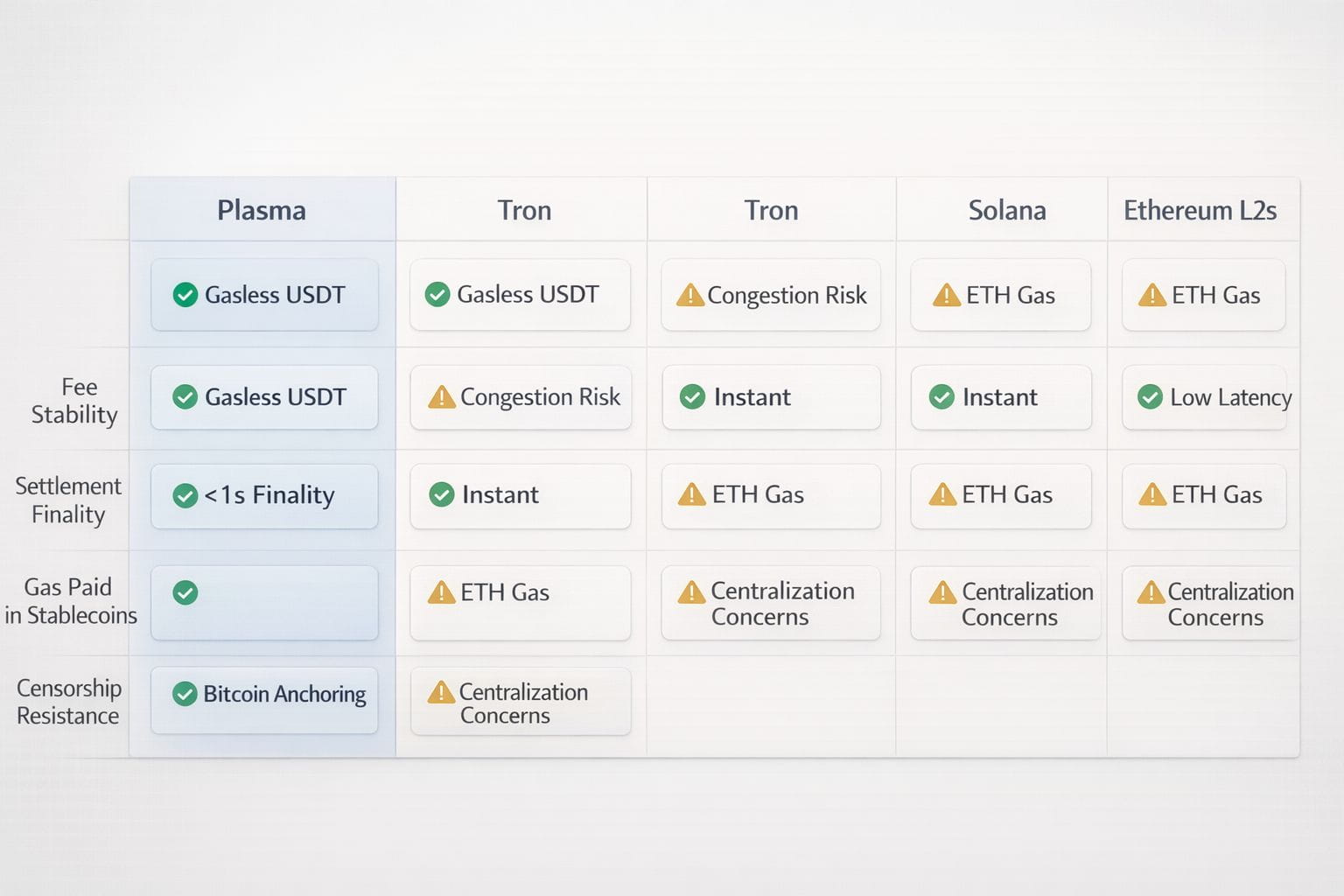
A conceptual table comparing Plasma, Tron, Solana and Ethereum Layer 2 across fee stability, settlement finality and censorship resistance would make this distinction clearer. It's not about which chain is "best but which is optimized for moving money at scale.
Trading XPL with infrastructure aware expectations
From a trading perspective XPL should be approached differently than narrative driven altcoins. Infrastructure tokens historically move in slower phases where adoption metrics lead price rather than the other way around. I have gone through earlier Layer 1 launches aimed at payments and there is a clear trend is prices drift sideways for ages then suddenly jump once real usage shows up and nobody can brush it off. With XPL I think a staggered accumulation approach makes way more sense than diving in with heavy leverage. I usually watch for entry points close to solid support especially when the whole markets pulling back. For me patience is baked into how I size my positions. If XPL breaks through a well defined resistance and I see on-chain stablecoin transactions picking up. That's when I start thinking the accumulation phase is over and things are shifting into high gear. Risk management matters more here than entry precision. I define invalidation not by a single price level but by fundamentals. If stablecoin volume on Plasma fails to grow or if gasless UX does not attract users price strength alone won't sustain. Infrastructure rewards conviction backed by data not impulse. Two useful visuals for traders would be a chart overlaying XPL price against on-chain stablecoin transaction growth and another comparing XPL's relative performance versus Bitcoin during both risk on and risk off market phases. Execution speed is a major variable. Payments infrastructure requires integrations, partnerships and regulatory alignment, all of which take time. There is also competitive risk. Ethereum keeps pushing forward with account abstraction, Solana’s focused on making fees more predictable and Tron is still a major player in stablecoin activity. Regulatory uncertainty around stablecoins matters too. From what I’ve seen, rules are heading toward more standardization, not outright bans. Sure, the occasional policy shakeup might slow things down for a bit, but once the dust settles, projects built with compliance and neutrality usually come out ahead when regulations get clearer. The question I keep asking myself is straightforward. If stablecoins continue to dominate on-chain activity where will that settlement ultimately consolidate? Plasma’s design choices suggest it’s betting on a future where stablecoins behave like real money,not experimental tokens. In my assessment, Plasma represents a different kind of Layer 1 bet. It’s not about chasing narratives or outperforming benchmarks in a single cycle. It’s about aligning with the most durable trend in crypto is the steady transformation of stablecoins into global settlement rails. When markets finally price based on flows instead of stories, infrastructure like Plasma tends to stop being ignored.

