
Last summer, I was rotating stablecoins between a few yield strategies. Nothing exotic, just routine moves. Still, even on chains marketed as “fast,” fees piled up, confirmations lagged, and bridges felt like rolling dice every time I clicked confirm. That’s what bothered me most. Stablecoins are supposed to behave like cash. Predictable. Boring. Instead, they were getting dragged into the same congestion as memes, NFTs, and speculative trades. After years of digging into infrastructure plays, it felt like wasted potential caused by networks trying to be everything at once.
The deeper issue is general-purpose design. Most blockchains chase flexibility, packing in support for every possible use case. That breadth comes at a cost. When speculation spikes, fees surge. When demand peaks, finality stretches. Security models end up optimized for optionality, not for the one thing stablecoins actually need: consistent, cheap, high-throughput settlement. Despite stablecoins moving trillions each year, the rails beneath them still behave like shared highways during rush hour. Developers notice this, which is why payment-focused apps struggle to gain confidence in the base layer.
I tend to think of it like rail infrastructure. Passenger trains and freight sharing the same tracks sounds efficient on paper, but in practice it creates delays and wear. Dedicated freight lines exist for a reason. They’re built for weight, repetition, and predictability, not comfort or flexibility. Strip out the extras, and throughput becomes reliable. That same logic applies to payments.
That’s the design philosophy behind Plasma. Instead of competing as a general-purpose chain, it narrows its scope to stablecoin settlement. It keeps EVM compatibility so developers don’t have to relearn tooling, but it avoids loading the network with unrelated execution paths. One practical outcome is flexible gas handling. Users aren’t always forced to hold the native token just to move dollars. At the protocol level, simple USDT transfers are sponsored through a paymaster system, keeping everyday sends effectively free within set limits.
On the consensus side, Plasma runs PlasmaBFT, a modified HotStuff-style design that pipelines agreement steps to keep block times under a second. In testing and early mainnet usage, this setup has pushed past a thousand transactions per second without leaning on rollups. Since the late-2025 beta launch, integrations with protocols like Aave and Pendle have helped pull in over seven billion dollars in stablecoin deposits across more than twenty-five assets. The zero-fee USDT path currently averages modest throughput, but total transaction counts have already crossed into the hundreds of millions, suggesting real payment-style usage rather than one-off spikes.
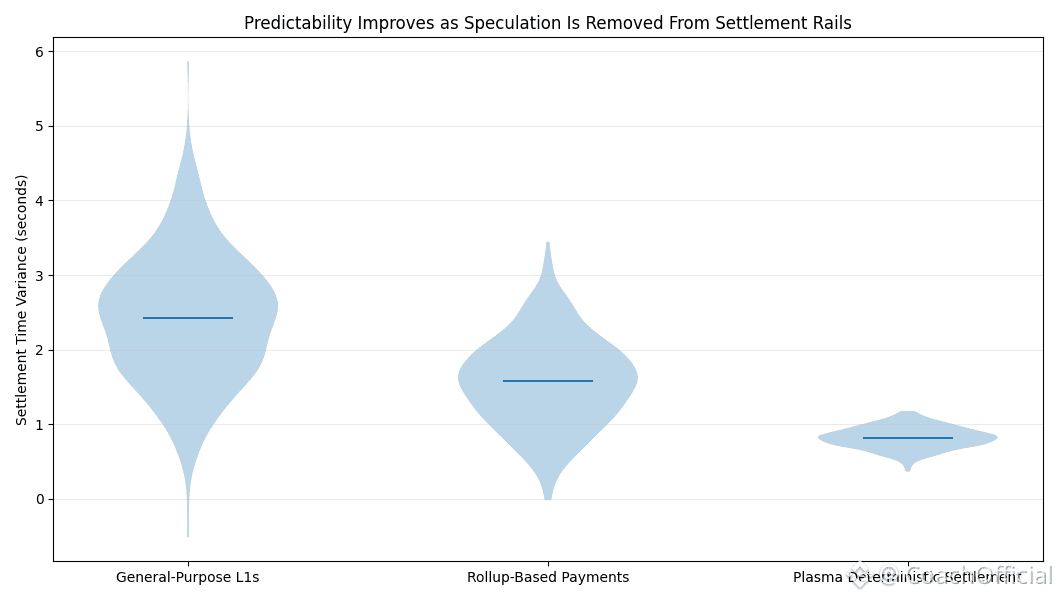
The XPL token stays mostly in the background. Validators stake it to produce blocks and secure the chain. It covers standard fees when alternative gas options aren’t used and anchors governance around protocol changes. Emissions started higher and taper down over time, with a burn mechanism offsetting usage, tying supply dynamics directly to network activity rather than hype narratives. It’s functional, not ornamental.
From a market standpoint, Plasma sits around a mid–hundreds-of-millions valuation, with daily volume high enough to provide liquidity without the wild swings seen in trend-driven launches. Short-term trading here still revolves around sentiment, unlock schedules, or ecosystem announcements. I’ve traded enough of those cycles to know they’re fleeting. The longer-term question is simpler: does this narrow focus attract sustained stablecoin flows? If integrations like card payments, CoW Swap routing, and wallet support continue to expand, usage could compound quietly through fees and staking demand.
There are real risks. Generalist chains like Solana already dominate stablecoin volume, and Ethereum’s scaling layers keep improving. Regulatory pressure could intensify on chains heavily weighted toward dollar tokens. And there’s always a failure scenario to consider. A coordinated validator outage during a volume spike could undermine the promise of deterministic finality, freezing transfers when reliability matters most.
Still, infrastructure rarely proves itself in headlines. It proves itself in repetition. Day after day of uneventful transfers. Plasma’s bet is that by isolating payments from speculation, it can deliver that kind of boring consistency. Whether that restraint becomes an advantage or a limitation is something only time and real usage will answer.
@Plasma #Plasma $XPL


