

Plasma did not begin as a product meant to be marketed or a network meant to be branded. It began as a question that refused to go away. What happens when a decentralized system actually works and people really start using it? Not thousands, not early adopters, but millions of users acting at the same time. I’m seeing that Plasma emerged from this uncomfortable but honest question, one that many early blockchain systems quietly avoided because the answer was inconvenient.
To understand Plasma properly, it helps to imagine the emotional environment in which it was first conceived. Blockchain technology had proven that trust could be distributed. Value could move without intermediaries. Rules could be enforced by code. But as enthusiasm grew, so did congestion. Networks slowed down. Fees climbed. Simple actions became expensive and unpredictable. Developers were forced to choose between decentralization and usability. Plasma was born out of the refusal to accept that this trade-off was inevitable.
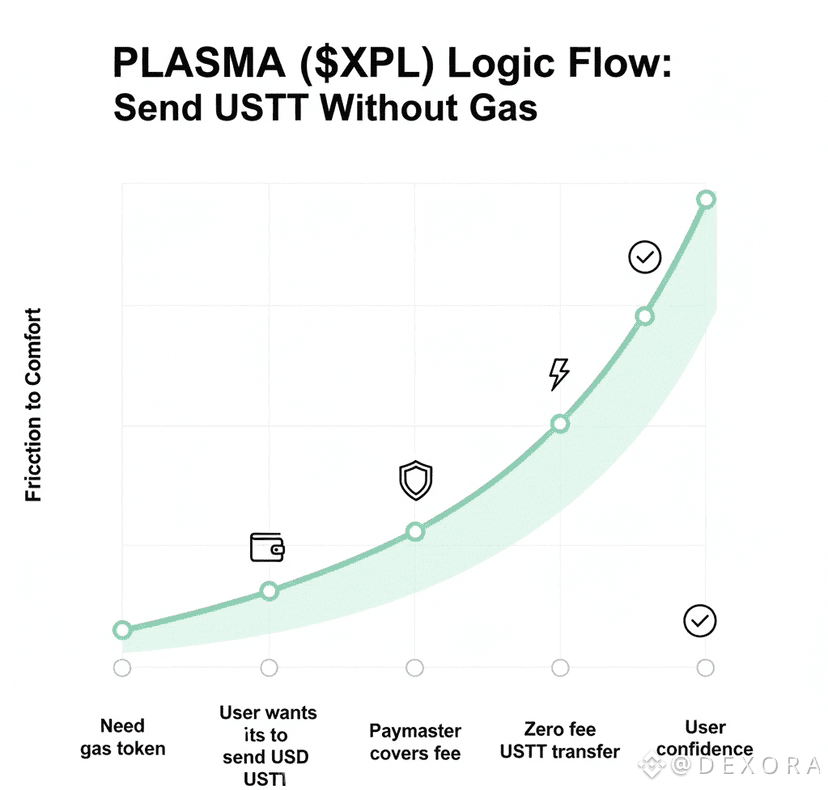
The earliest idea behind Plasma was not to create another chain that competed for attention. It was to change how people thought about blockchain architecture itself. Instead of treating a blockchain as a single road that everyone must share, Plasma proposed a system of many roads connected to a secure center. This was not about speed for its own sake. It was about survival. If blockchains were ever going to support real economies and real communities, they needed a way to grow without breaking.
At the conceptual level, Plasma reframed the scalability problem. Rather than asking how to make blocks bigger or confirmations faster, it asked how responsibility could be distributed. Why should every participant verify every action, even when most actions are irrelevant to them? Plasma introduced the idea that users could operate in smaller environments, or child chains, while still being protected by a shared root layer. This idea sounds simple in hindsight, but at the time it challenged deeply held assumptions about how trust should work.
The early theoretical phase of Plasma was filled with debate. Moving activity away from the main chain raised fears about security and censorship. What if operators cheated? What if data disappeared? Plasma addressed these fears not by asking users to trust operators, but by designing escape routes. If something went wrong, users could exit back to the main chain with cryptographic proof. This mechanism was more than a technical feature. It was a philosophical statement. Trust should be optional, not mandatory.
As Plasma moved from theory to early implementation, the focus shifted toward precision. Every assumption had to be formalized. Every edge case had to be considered. Plasma chains needed to process transactions efficiently while preserving the ability to prove correctness to the root chain. This required careful design of state commitments, fraud proofs, and exit logic. Progress was slow, sometimes frustratingly so. They’re not chasing speed of development. They’re chasing correctness.
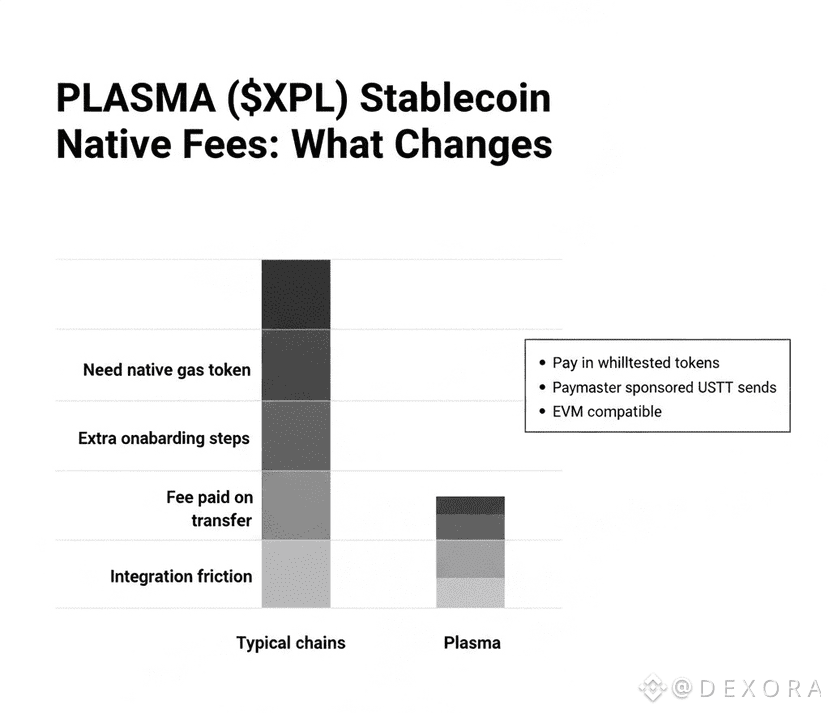
During this phase, Plasma attracted a specific kind of attention. It appealed to developers and researchers who were less interested in quick wins and more interested in foundational design. Plasma became part of a broader conversation about layer separation, influencing how people thought about scaling even beyond its own implementations. We’re seeing here how ideas can travel independently of products, shaping the ecosystem in subtle ways.
The introduction of the XPL token marked a transition from concept to ecosystem. The token was designed to support network participation and align incentives among validators and users. It was not presented as a shortcut to value, but as a tool for coordination. XPL exists because decentralized systems need economic glue. Without incentives, participation decays. Without penalties, security weakens. Plasma’s token model was built to reinforce the system rather than distract from it.
As Plasma-based systems began to take shape, one of the most important realizations emerged. Scalability is not uniform. Different applications have different needs. A payment system values speed and low cost. A settlement system values finality and security. Plasma’s architecture allowed these differences to coexist. Child chains could be specialized without fragmenting trust. This flexibility became one of Plasma’s most enduring strengths.
User experience played a surprisingly central role in Plasma’s evolution. Early blockchains exposed users directly to complexity. Plasma aimed to hide that complexity behind responsive applications. In a Plasma-enabled system, users interact with interfaces that feel immediate, while the underlying infrastructure ensures security in the background. This invisibility was intentional. If users have to think about exits and proofs during everyday use, something has gone wrong.
Over time, Plasma also revealed important lessons about decentralization itself. Absolute decentralization at every layer is not always practical. Plasma embraced a layered view. The root chain remains highly decentralized and conservative. Child chains can accept more coordination to achieve performance. This does not weaken decentralization. It contextualizes it. We’re seeing a more mature understanding of where decentralization matters most.
Governance became increasingly relevant as Plasma systems matured. Decisions about upgrades, security parameters, and economic rules could not be left to informal consensus forever. Plasma explored governance models that balanced flexibility with accountability. The goal was not perfect representation, but resilience. Governance needed to evolve without destabilizing the system.
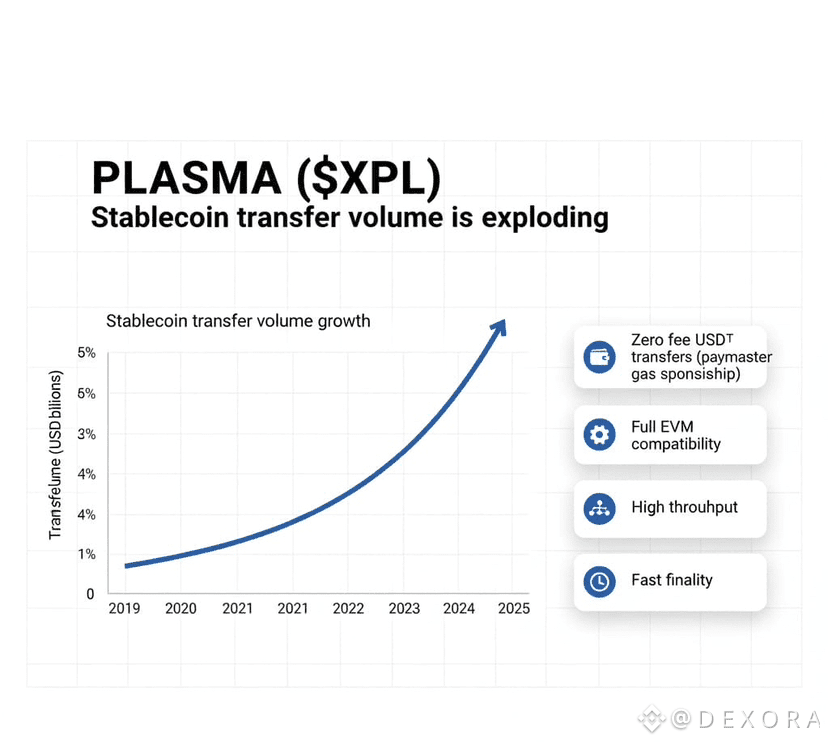
Security remained a constant concern. Plasma’s safety mechanisms were powerful, but they relied on users understanding their rights. Education became part of the infrastructure. Tooling was developed to make exits and monitoring accessible. Plasma acknowledged a difficult truth. Technology alone cannot protect users. Awareness and design must work together.
As the blockchain ecosystem evolved, new scaling approaches gained attention. Rollups, alternative layer-one networks, and hybrid systems offered different paths forward. Plasma did not disappear in this environment. Instead, its ideas were absorbed and adapted. Many modern systems reflect Plasma’s core insights even if they no longer use the name. This diffusion of influence is often how foundational ideas succeed.
Economically, Plasma introduced a way to think about fees and incentives that adapts to usage. Because activity is distributed, congestion in one environment does not necessarily affect others. This isolation reduces systemic risk and improves predictability. For developers, this means greater control. For users, it means fewer surprises. We’re seeing how economic design becomes more humane when systems are modular.
Looking ahead, Plasma’s relevance may increase rather than fade. As blockchain adoption diversifies, no single architecture will suit every use case. Systems that allow specialization without sacrificing security will be valuable. Plasma’s layered model supports this diversity naturally. It does not demand uniformity. It enables coexistence.
Regulatory considerations may also bring Plasma-like designs back into focus. Layered systems can isolate compliance-sensitive logic while preserving open settlement. This adaptability could become increasingly important as decentralized systems intersect with traditional institutions. Plasma’s architecture does not resist regulation by design. It allows adaptation.
There is also a deeper philosophical contribution in Plasma’s story. It challenges the idea that progress comes from making everything faster and bigger. Instead, it suggests that progress comes from organizing complexity intelligently. By allowing systems to branch and reconnect, Plasma mirrors how resilient systems grow in nature. This perspective moves blockchain design away from brute force and toward systems thinking.
As years pass, Plasma may not be remembered as a single network that dominated the market. It may be remembered as a moment when the ecosystem learned to think differently about scale. Its influence lives on in architectures that prioritize safety, modularity, and user protection. We’re seeing how ideas outlast implementations.
In reflecting on Plasma’s full lifecycle, from uncomfortable question to enduring concept, one thing becomes clear. Plasma was never about shortcuts. It was about patience. It accepted that real scalability would take time, careful design, and humility. It refused to sacrifice security for speed, even when the market rewarded those who did.
The future Plasma points toward is not one of a single chain ruling everything. It is a future of interconnected systems, each optimized for its purpose, anchored by shared trust. In that future, scalability is not a race to the top. It is a property of thoughtful design.
As decentralized systems continue to mature, the questions Plasma raised remain unanswered in any final sense. How do we grow without losing trust? How do we protect users without controlling them? How do we scale without centralizing power? Plasma does not claim to solve these problems completely. It offers a way to live with them responsibly.
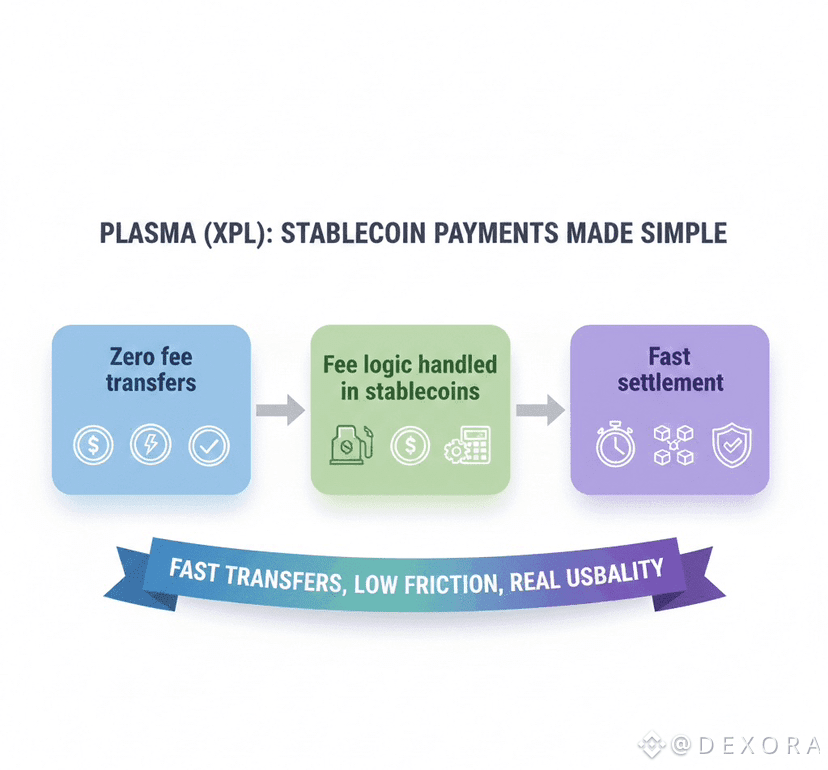
And perhaps that is Plasma’s lasting contribution. It reminds us that the hardest problems are not solved by louder promises or faster blocks, but by structures that respect complexity. As the decentralized world continues to unfold, the quiet architectures that learned this lesson early may shape the future more deeply than we realize.

