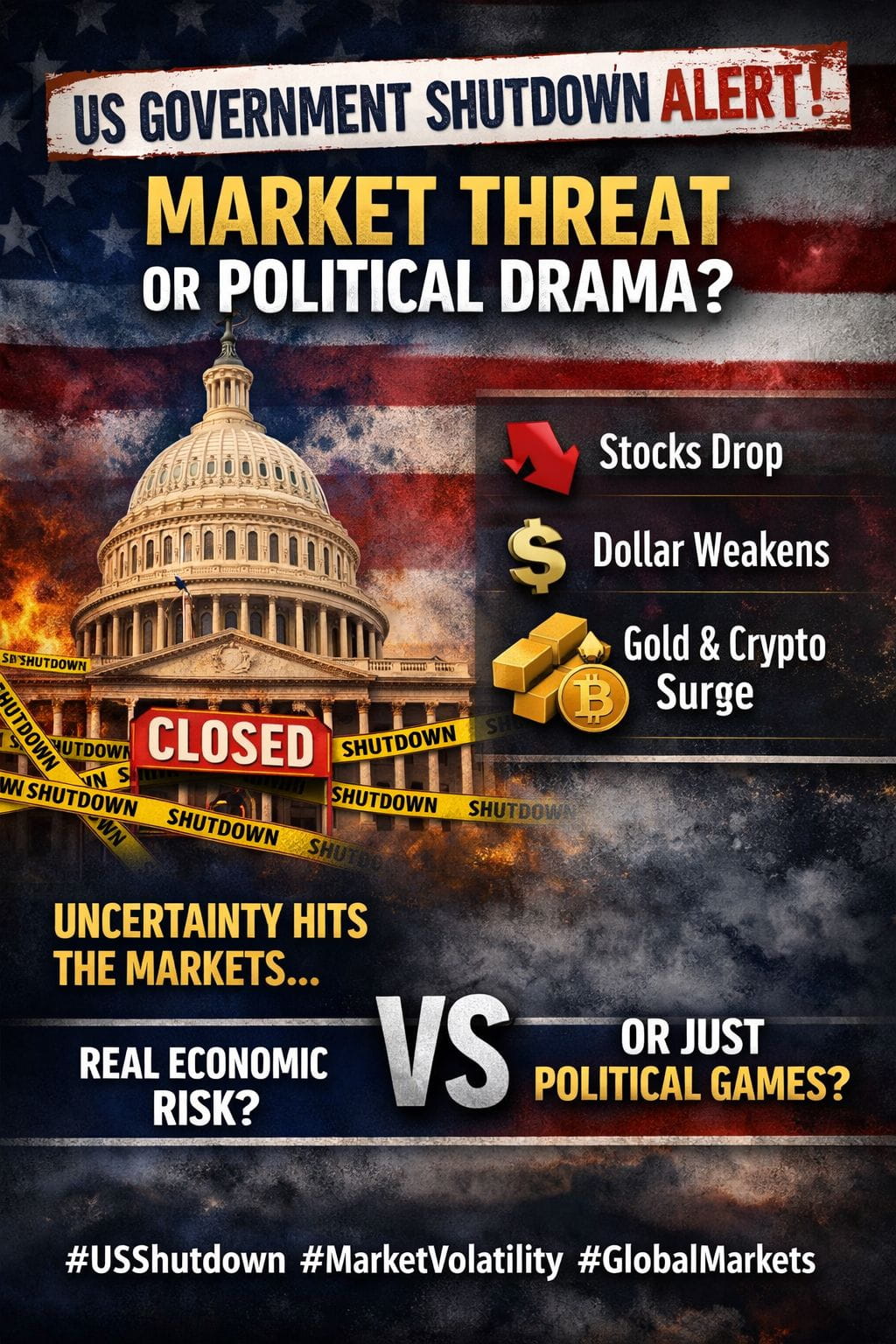
The United States is once again flirting with a government shutdown, and markets are watching closely. Every time Washington plays this game, one big question dominates Wall Street and global investors’ minds:
👉 Is this a real economic risk… or just another round of political drama?
📌 What Is a US Government Shutdown?
A shutdown happens when lawmakers fail to pass a funding bill, forcing parts of the federal government to halt operations. Non-essential services stop, federal workers go unpaid, and uncertainty spikes across markets.
📉 Market Impact: What Usually Happens?
Historically, shutdown fears create short-term volatility, not long-term damage.
Here’s how markets typically react:
📊 Stocks: Knee-jerk dips due to uncertainty, especially in government-linked sectors
💵 USD: Can weaken temporarily as confidence shakes
🪙 Gold & Safe Havens: Often see inflows as risk hedges
₿ Crypto: Volatility increases; Bitcoin sometimes benefits from “anti-system” narratives
👉 The key point: Markets hate uncertainty more than bad news.
🎭 Reality Check: Shutdown or Political Drama?
Let’s be honest—shutdown threats are a familiar Washington tactic.
Most past standoffs ended with last-minute deals, making the drama louder than the damage.
🔎 Market consensus right now:
A short-term shutdown is possible
A long-term shutdown is unlikely
Any market dip may be temporary and opportunity-driven
🚀 What Smart Investors Are Watching
⚠️ Volatility spikes = potential trading opportunities
📅 Key deadlines & political headlines
🏦 Fed policy remains far more important than shutdown noise
Big money knows: if fundamentals stay intact, fear-driven dips often get bought.
🔮 Final Take
This looks less like a financial apocalypse and more like classic political brinkmanship.
Yes, markets may shake.
No, it’s not the end of the bull cycle.
💬 What do you think? Real shutdown risk—or just another Washington drama episode?