

You open a game, step into a virtual world, or interact with a brand online, and you never once think about wallets, gas fees, or block confirmations. You just play. You explore. You collect. That’s it. That feeling of effortlessness is exactly what Vanar is trying to build.
Vanar isn’t chasing crypto-native users or traders glued to charts. It’s a Layer 1 blockchain designed for everyday people who don’t care how Web3 works behind the scenes. The goal is simple: make blockchain disappear into the experience.
That mindset comes straight from the team’s background. Vanar is built by people from gaming, entertainment, and brand ecosystems, not just pure crypto circles. When you build products for gamers and global brands, you quickly learn one thing. If it’s slow, confusing, or clunky, users leave. Vanar was designed with that reality in mind. Speed, smoothness, and simplicity come first.
Most blockchains expect users to adapt to crypto. New terms. New habits. New risks. Vanar flips that completely. Crypto adapts to the user. The mission is bold but clear: bring the next three billion people into Web3 without making them feel like they’re learning something new. That’s why Vanar focuses on areas people already love. Games. Metaverse worlds. AI-driven experiences. Digital brands. Not forcing new behavior, just upgrading what already exists
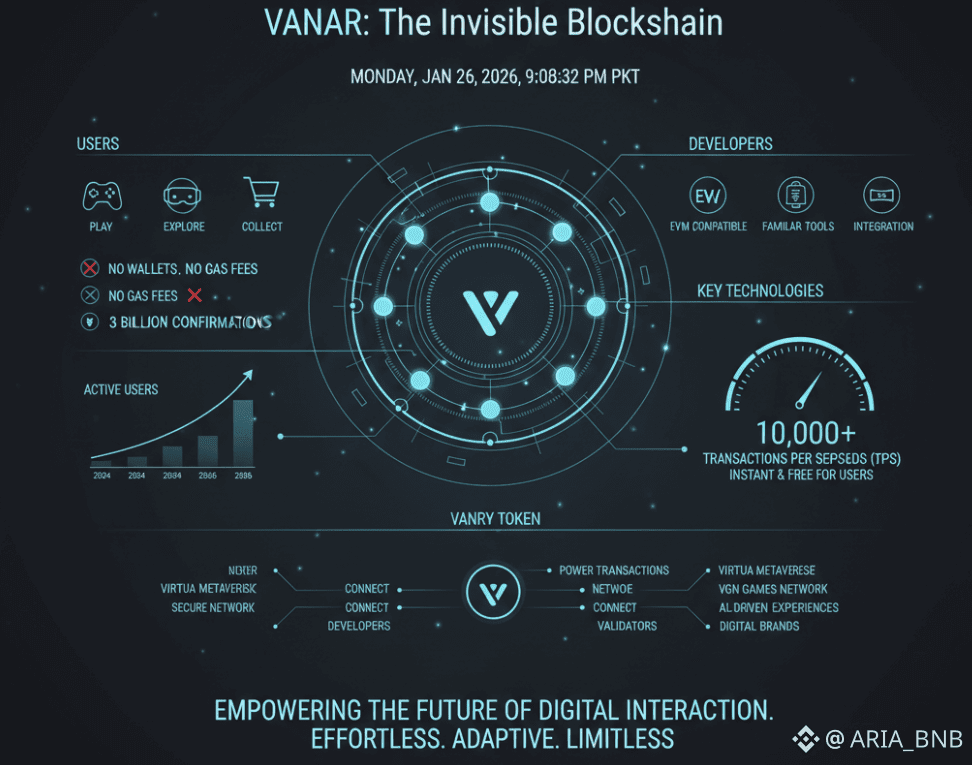
This vision isn’t theoretical. Virtua Metaversea is already live, offering immersive environments where users can explore, socialize, and own digital assets that actually feel part of the world. These aren’t static NFTs sitting forgotten in a wallet. They’re interactive, usable, and designed to feel natural inside the experience.
Then there’s the VGN Games Network. Its idea is simple but powerful. Game assets shouldn’t die when one game shuts down. Players should own items that move with them, evolve, and retain value across titles. Developers get stronger economies and loyal players. Gamers get ownership that finally means something.
Under the hood, Vanar is EVM compatible, so developers can use familiar tools while benefiting from a chain built for consumer performance. Transactions are fast and low cost, and often invisible. Brands can even cover fees so users never see gas at all. That’s critical for mainstream adoption. Normal users don’t want to pay to click buttons or claim rewards.
Vanar is also built with AI in mind. This unlocks experiences where digital assets respond, evolve, and remember. NFTs that change based on use. Characters that adapt to player behavior. Ownership becomes interactive, not static. Web3 starts to feel alive instead of technical

At the center of it all is the VANRY token. It powers transactions, secures the network, and connects users, developers, and validators. It isn’t just there to be traded. It’s tied to real activity happening across games, worlds, and applications.
What truly sets Vanar apart is its attitude. No loud promises. No technical flexing. Just a focus on making things work. Smooth onboarding. Familiar experiences. Real products. When Vanar succeeds, users won’t praise the blockchain. They won’t even notice it. And that’s the point.
If Web3 is ever going to reach billions, it won’t be through complexity or jargon. It will come through experiences that feel normal, fun, and rewarding. Vanar is betting everything on that idea. And if it works, most people will never realize they’re using blockchain at all. That may be the biggest success of all
