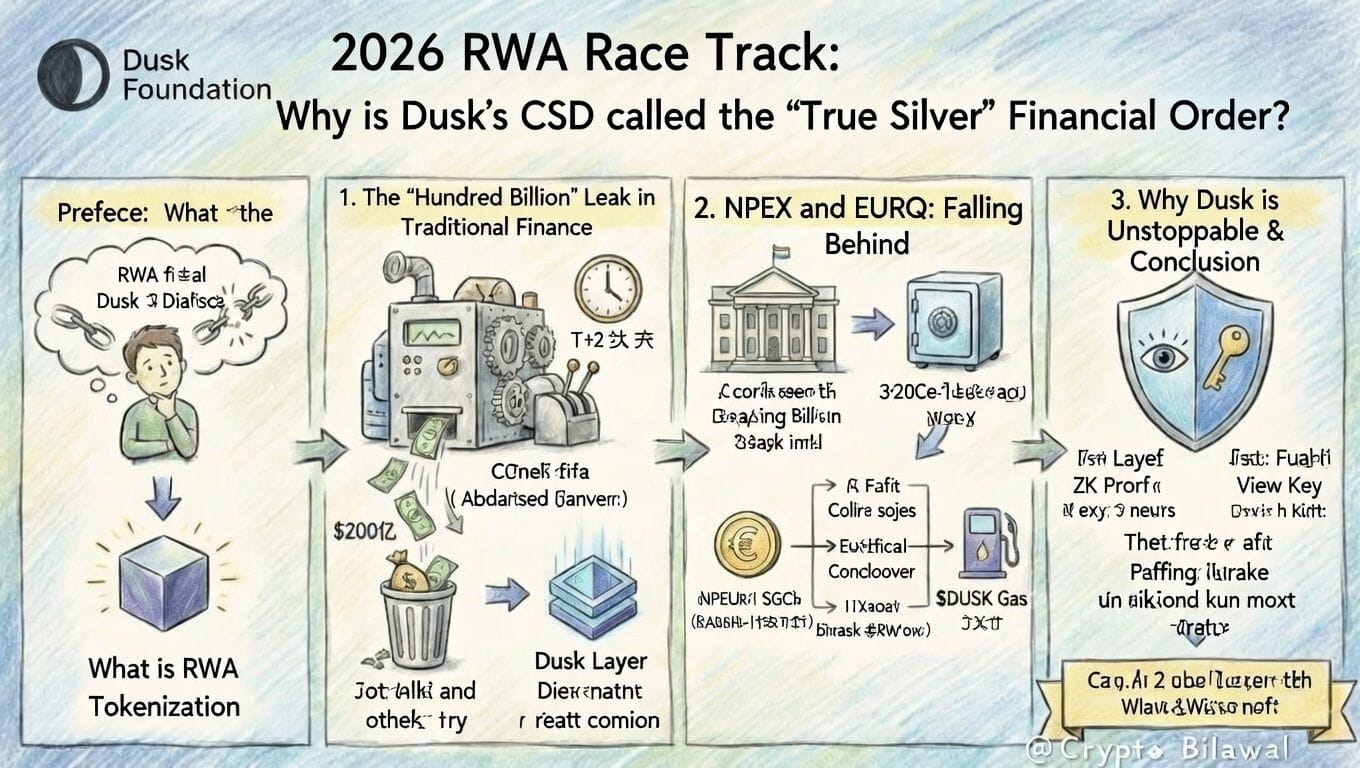
Speaking of which, the NPEX secondary market has already reached an on-chain asset scale of over €300M, and this number is expected to be even more impressive by Q1 2026. What truly attracts attention is not just tokenization, but their use of zero-knowledge proofs for anti-money laundering tracking, enabling private yet auditable transactions. This approach is especially friendly for high-net-worth clients issuing bonds — financial institutions have always wanted this kind of solution that balances privacy with compliance.
The Hedger tool is a practical implementation of this concept, allowing institutional investors to trade on-chain without exposing position details, while regulators can still see the necessary information. This is not a traditional "avoid regulation" tactic; rather, it integrates regulatory requirements directly into the protocol.
The DuskTrade platform launching in Q2 will be more intuitive. Europe is actively implementing MiCA and other policy frameworks, and Dusk’s approach fits perfectly at the compliance entry point — enabling small and medium-sized enterprises to raise funds globally without disclosing financial data, while meeting the requirements of each jurisdiction.
From another perspective, this reshapes the traditional financial access logic. Previously, a company wanting cross-border financing had to go through investment banks, audits, and cumbersome disclosure processes. Now, with privacy-preserving transactions and auditable infrastructure, banks are starting to consider how to connect. Dusk, to some extent, becomes this gateway — not breaking the financial order, but enabling a dialogue between the efficiency of native crypto and the constraints of traditional finance.#DUSK $DUSK @Dusk