
@Walrus 🦭/acc Most of us have learned, the hard way, that the web is less permanent than it looks. A link you saved last year 404s. A small project site goes dark because someone missed a renewal. A platform changes its rules, and what felt like “your” page turns out to be a rented corner of someone else’s building. It’s a small kind of grief, honestly, sometimes.
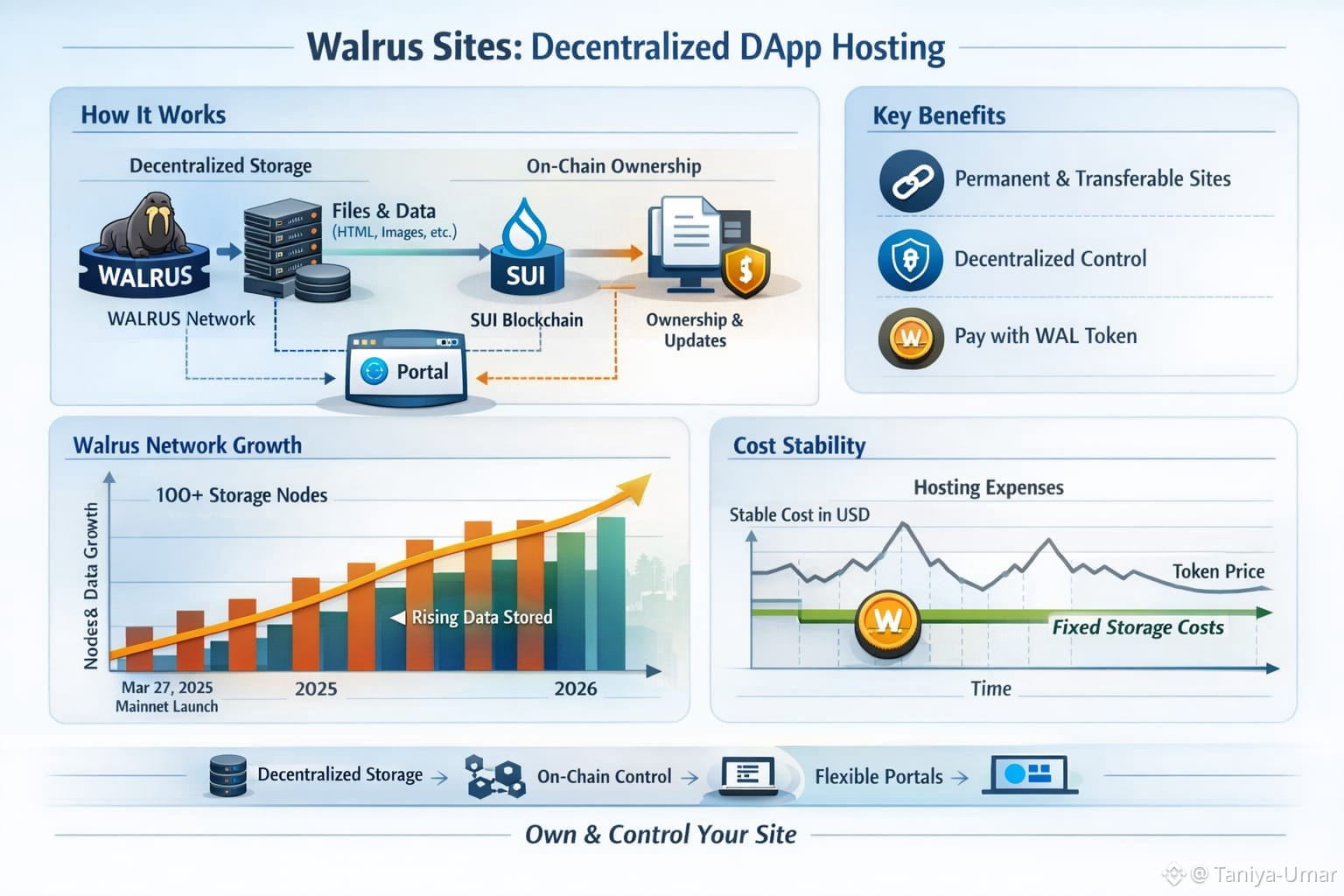 Walrus Sites is an attempt to make that arrangement sturdier. The idea is straightforward: store the website’s files—HTML, images, JavaScript—on Walrus, a decentralized storage network, and keep the site’s ownership and update rights on Sui. To keep the content available, you pay for storage in WAL, the token used by the Walrus network.
What I like about the design is the separation. Traditional hosting bundles everything: servers, files, permissions, and billing. When any one piece breaks, the whole thing can vanish. With Walrus Sites, the website becomes two linked parts. One part is the content, stored as “blobs” on Walrus. The other is a Sui object that points to that content and says, in plain terms, who controls updates. Because control lives on-chain, the site can be transferred or shared without copying the files around.
A browser still needs a normal way to reach that site. This is where portals come in. A portal fetches the site metadata from Sui and the files from Walrus, then serves everything over ordinary HTTPS so a standard browser can render it. There’s a public portal, but anyone can run their own portal, and there are approaches that use service workers or local setups. That detail matters. It means access doesn’t have to depend on a single company’s gateway.
So why is this getting attention now? The web has shifted. More crypto apps are mostly frontends that talk to wallets and on-chain programs, and users are more comfortable with that flow. At the same time, the things these apps need to deliver—rich media, game assets, community archives, even training data—are getting larger and more valuable. If your application depends on files that live in one cloud account, you have a quiet but real single point of failure.
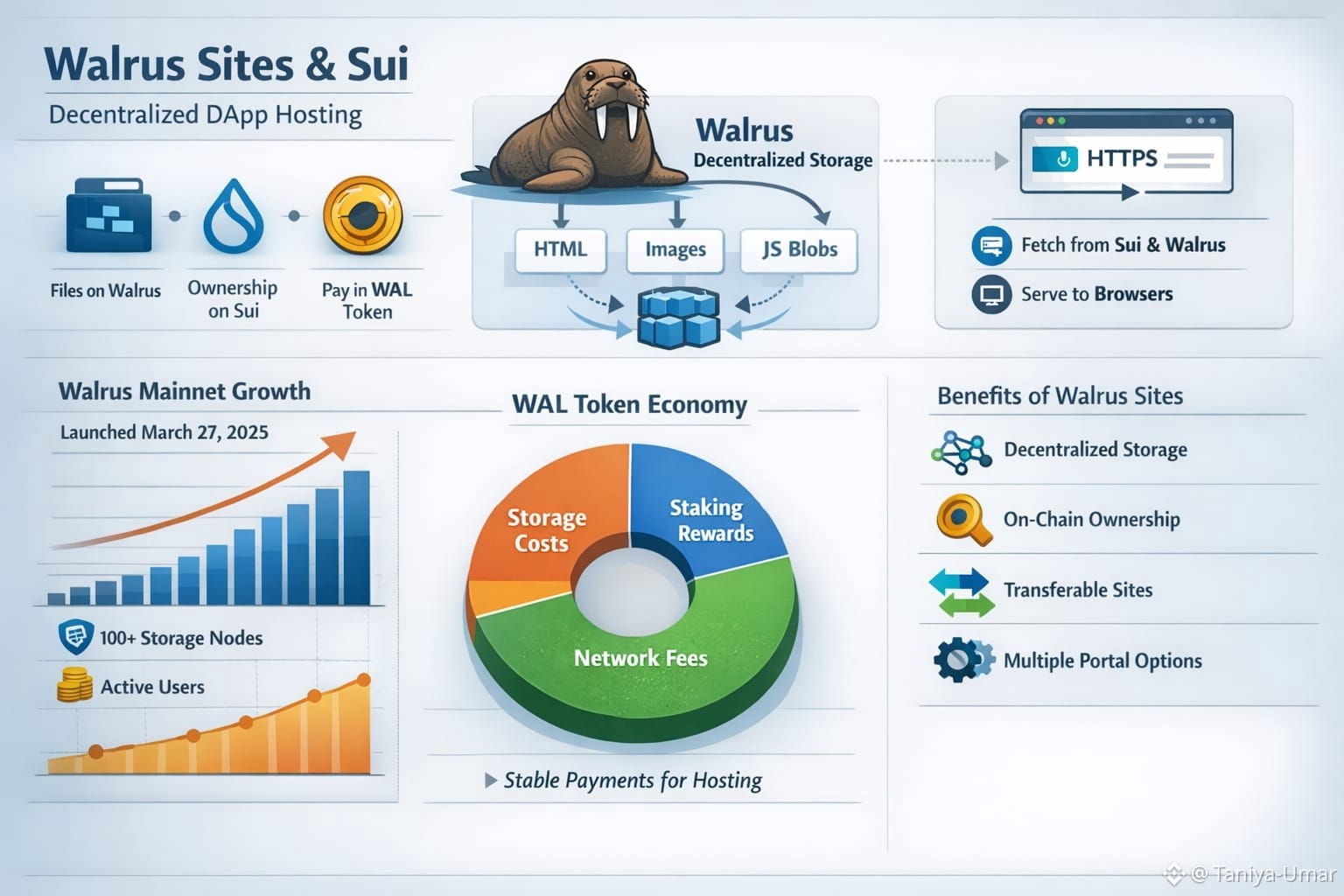
There’s also tangible progress, not just talk. Walrus Mainnet went live on March 27, 2025, operated by a decentralized network of over 100 storage nodes, and it supports publishing and retrieving blobs, browsing Walrus Sites, and staking with the live WAL token. The Walrus Foundation has also pointed to significant funding to keep the protocol moving. And the Walrus Sites repository keeps shipping mainnet releases, a quiet sign that teams are using it.
The economics deserve a calm look, too. Walrus frames WAL as a payment token for storage, with a mechanism intended to keep costs stable in fiat terms even when the token price moves. Users pay upfront for a fixed period, and that payment is distributed over time to storage nodes and stakers. That doesn’t guarantee cheap hosting, but it addresses the basic fear: nobody wants their website budget whiplashing with the market.
The decentralized part doesn’t remove the need for competence. A well-run portal can make everything feel smooth, but a poorly run one can make it frustrating, and the backbone infrastructure still matters more than most people want to admit. Still, Walrus Sites offers something the ordinary web has been losing: a clearer sense of authorship. If a site can be owned and updated like a piece of property, and linked directly from other on-chain objects, “publish” starts to mean more than “upload to a platform.” That shift, more than any single feature, is why people are paying attention right now.