
Vanar Chain is built on a simple but emotional belief that technology should feel natural to people and not confusing, and when I look at what they are trying to do I see a team that understands how hard it has been for normal users to step into Web3 without feeling lost, because most blockchains were created by engineers for engineers, and while they solved deep technical problems they often forgot the everyday person who just wants to play a game, buy a digital item, protect a ticket, or send value without reading a manual. Vanar positions itself as a Layer 1 blockchain designed from the ground up for real world adoption, and that phrase matters because it suggests the architecture, tools, and products were shaped around use cases like gaming, entertainment, brands, AI powered services, and digital commerce rather than only decentralized finance experiments.
At its core Vanar is an independent Layer 1 network, which means it has its own consensus, validators, and infrastructure instead of depending on another chain for final settlement. This gives the team more control over performance, fee structure, scalability decisions, and feature integration. They aim for fast transaction speeds and low costs because gaming and mainstream applications cannot survive if every small action becomes expensive or slow. In a game environment players expect instant responses, smooth purchases, and seamless item transfers, and brands expect their customers to click and confirm within seconds, so throughput and latency are not abstract numbers here, they are directly connected to user retention and satisfaction. The chain is designed to process transactions efficiently while maintaining security and decentralization through its validator network, and like other modern Layer 1 chains it relies on staking and node participation to secure the ecosystem.
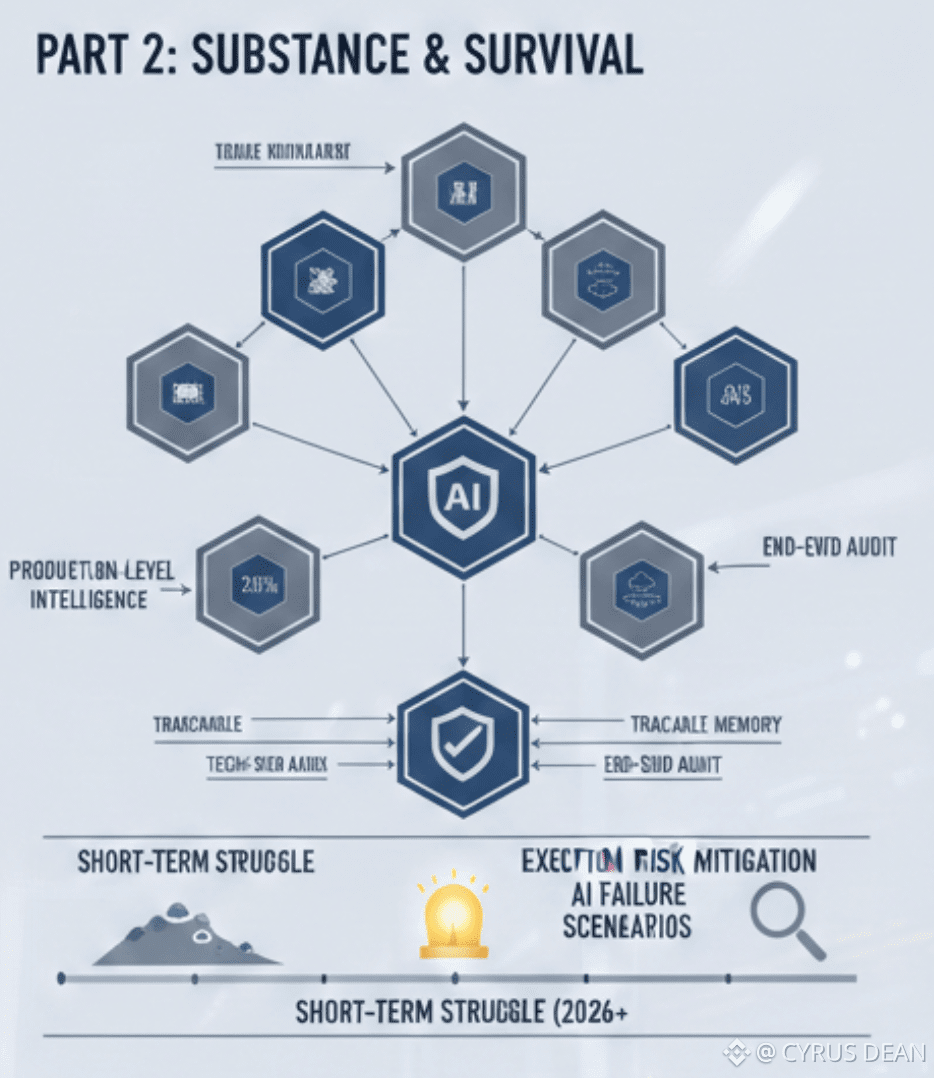
What makes Vanar different from many traditional blockchains is its strong emphasis on being AI native. Instead of treating artificial intelligence as an external plugin, Vanar integrates AI oriented layers into its design philosophy. The idea is that data on the chain should not just sit there as raw entries but should carry context and meaning. To support this vision the ecosystem introduces components described as semantic memory and contextual reasoning. In practical terms this means documents, records, and digital assets can be stored in compressed formats that remain searchable and logically connected. If a digital asset represents a warranty, a ticket, or a gaming item, the associated rules and metadata can be structured in a way that applications can query and validate automatically. This reduces the need for heavy off chain databases and fragile integrations, and it opens the door for automated decision making close to the data source.
The Vanar stack is often explained as a layered system. The base layer handles transaction settlement and storage. On top of that are modules that manage semantic memory, which is responsible for converting complex files and information into compact, meaningful records that the blockchain can understand and retrieve efficiently. Another layer focuses on contextual reasoning, allowing applications to evaluate conditions and apply predefined logic. For example, a digital ticket could automatically verify whether it is eligible for resale, refund, or transfer based on encoded rules. An in game item could carry its entire ownership history and usage conditions with it, reducing fraud and increasing transparency. By bringing memory and logic closer to the chain, Vanar attempts to minimize reliance on centralized servers while still delivering intelligent application behavior.
The project’s background in gaming and entertainment is central to its identity. The team has experience working with brands, digital collectibles, and immersive experiences, which led to the development of products like Virtua Metaverse and the VGN games network. Virtua Metaverse focuses on digital ownership, collectibles, and immersive environments where users can interact, showcase assets, and participate in branded experiences. The VGN games network aims to connect games within a shared ecosystem where digital items and rewards can move more freely. These products are not just marketing demonstrations. They act as real world testing grounds for the underlying blockchain. If players use these platforms daily, trade assets, and engage in transactions without friction, that becomes proof that the infrastructure is doing its job.
The native token of the ecosystem is VANRY. It powers transactions, staking, governance, and ecosystem incentives. Validators stake VANRY to help secure the network. Developers and users use the token to pay transaction fees. The token also plays a role in governance decisions, depending on how proposals and voting mechanisms evolve within the community. VANRY emerged after a migration from the earlier TVK token as part of the rebranding and expansion of the ecosystem. Token migrations are delicate processes because they require coordination with exchanges and clear communication with holders. In this case the swap was structured at a one to one ratio, and exchanges supported the transition to ensure users maintained access to their assets.
From an economic perspective several metrics help determine the health of Vanar. Transaction volume and active addresses indicate real usage rather than speculative activity. Developer growth shows whether builders see long term value in the platform. Total value locked in applications reflects trust and engagement. Liquidity on exchanges indicates how easily users can enter and exit positions. Market capitalization provides a broad sense of how the market values the project relative to its peers. However none of these numbers alone tell the full story. Real adoption is visible when applications maintain consistent daily active users and when brands choose to deploy live experiences rather than experimental pilots.
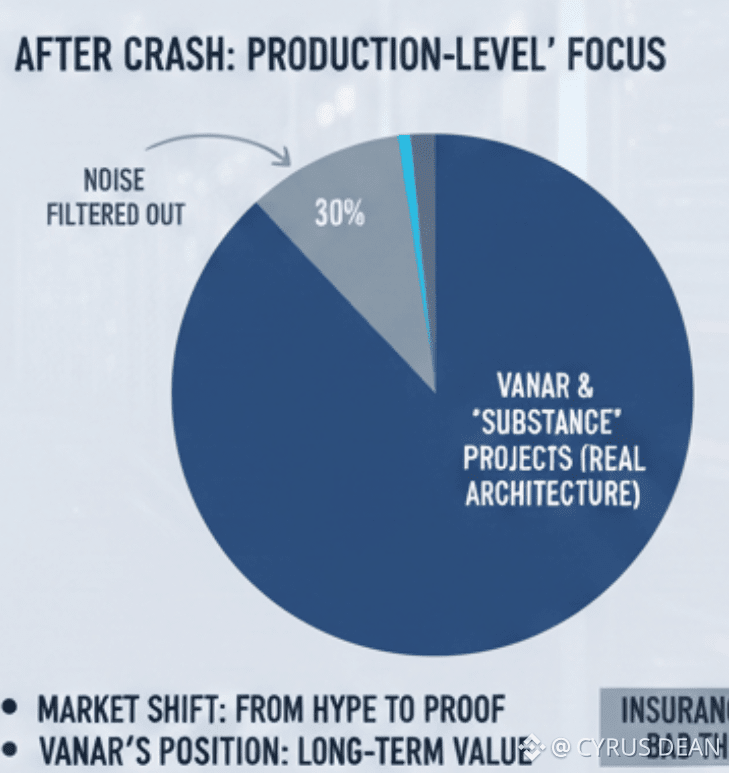
Vanar faces serious challenges, and acknowledging them honestly is important. Integrating AI concepts directly into blockchain infrastructure is technically complex. On chain storage and computation have real costs. If too much processing is forced into consensus it can increase fees and reduce scalability. If too much is pushed off chain it can weaken decentralization. Finding the right balance is a continuous engineering effort. Security is another critical factor. Gaming ecosystems and digital marketplaces are attractive targets for exploits. Smart contract audits, validator diversity, and strong operational procedures are essential to maintain trust. Regulatory uncertainty also creates pressure, especially when tokens interact with payments, rewards, or cross border transactions. Compliance frameworks must evolve alongside technological innovation.
There are also risks that many retail participants overlook. Liquidity risk can appear during volatile market conditions when it becomes harder to trade large amounts without impacting price. Governance concentration can create centralization concerns if voting power is heavily skewed. Ecosystem dependency on a few flagship products can limit diversification. If a primary metaverse or gaming platform struggles, network usage may decline. Long term sustainability depends on expanding beyond initial verticals into broader enterprise and consumer use cases.
Despite these challenges the long term vision remains compelling. If Vanar succeeds in making blockchain infrastructure intuitive for developers and invisible for users, it could reduce one of the biggest barriers to Web3 adoption. Imagine a world where a digital purchase automatically carries warranty verification across platforms, where gaming assets maintain provable scarcity and history, where brand loyalty rewards are tokenized and interoperable, and where AI driven automation reduces manual paperwork in digital commerce. These are not abstract dreams. They are practical extensions of the architecture Vanar is attempting to build.
The future possibilities expand further when you consider cross industry integration. Gaming items could be used as identity markers in social platforms. Tokenized tickets could integrate with travel and event ecosystems. AI powered compliance layers could help businesses verify transactions instantly across jurisdictions. As decentralized identity standards mature, assets on Vanar could interact with broader Web3 ecosystems while preserving ownership integrity. Success in these areas would not only benefit token holders but also redefine how digital property is perceived in mainstream culture.
In the end Vanar Chain is not just about speed or token price. It is about whether blockchain technology can mature into something ordinary people use without thinking about the word blockchain. It is about whether games, brands, and businesses can rely on decentralized infrastructure without sacrificing user experience. It is about whether AI and distributed ledgers can work together in a way that feels natural instead of forced. If the team continues to refine performance, expand partnerships, strengthen security, and nurture real user communities, the network could become a quiet backbone for digital ownership in the years ahead.
Technology changes the world slowly and then suddenly. Projects like Vanar stand at that quiet stage where foundations are being laid. If those foundations remain strong, transparent, and human focused, the impact could reach far beyond gaming and into the everyday lives of millions who may never realize that the invisible system supporting their digital experiences is a blockchain that was designed to care about them from the very beginning.