
Inside most organizations, completion is treated as a signal... not a cutoff. Something finishes, the record updates, and activity pauses just long enough for interpretation to creep in. No alarm goes off. No failure is logged. But motion doesn't resume immediately either.
That pause rarely gets named, yet it quietly dictates how teams behave downstream.
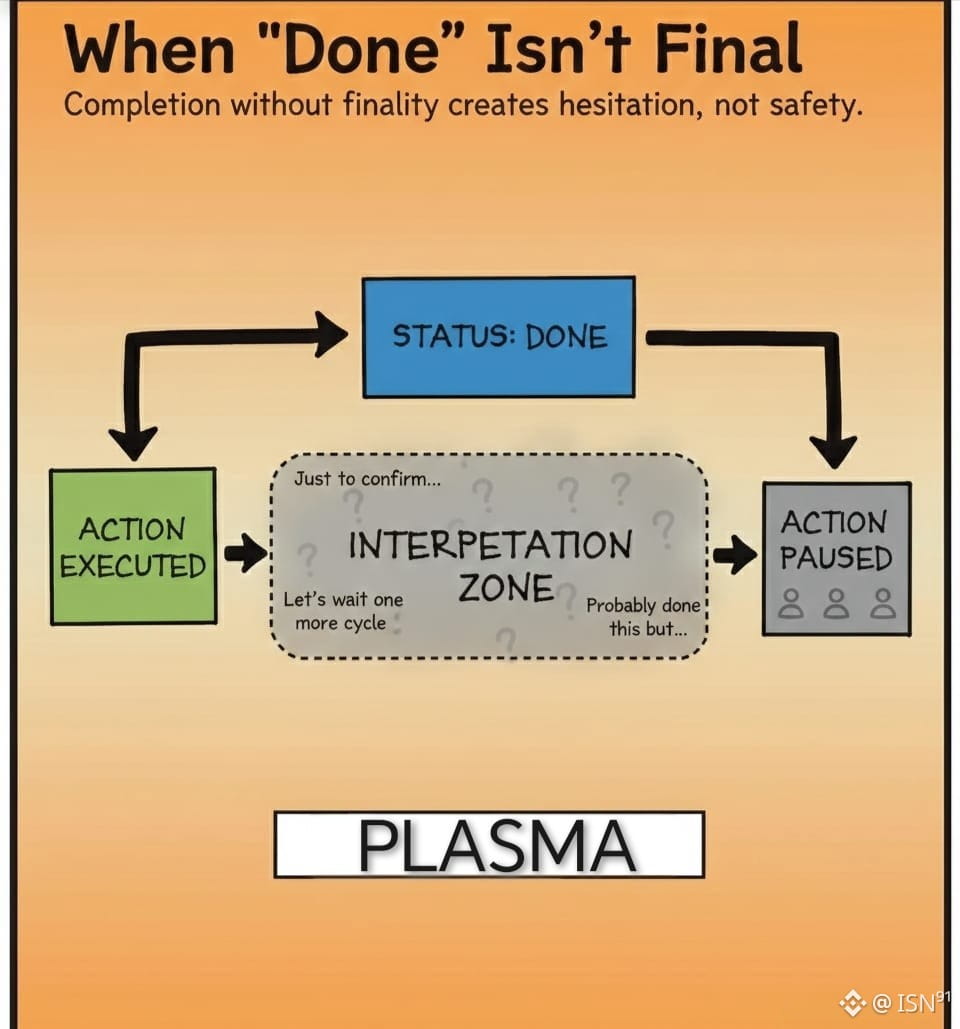 You see it when treasury hesitates before reallocating funds.When operations delay follow-on actions that could technically proceed. When “done” exists in the system, but not yet in practice. This isn't a problem of mistrust. It's a problem of how finality is experience.
Most systems are good at reporting completion. They surface information, confirm events, and update states. What they often fail to provide is a clear decision boundary; a moment that decisively ends interpretation and authorizes action. When finality feels soft, organizations compensate. People layer judgment on top of system output. Extra confirmations appear. Responsibility diffuses, because no single moment feels conclusive enough to act on without cover.
Eventually, this becomes muscle memory. Waiting feels prudent. Double-checking feels professional. Capital stays idle not because it must, but because movement no longer feels unambiguously sanctioned.This is the behavioral gap Plasma is designed to close.
Rather than allowing outcomes to linger in an interpretive state, Plasma resolves execution cleanly. There is no prolonged “almost settled” phase where humans are invited to second-guess results. From an organizational perspective, value doesn't hover in transit. It either hasn't arrived or it has. That distinction does more than improve settlement mechanics. It reshapes behavior.
When there's no interpretive space left, teams stop inventing one. They don’t wait for reassurance because there's nothing left to validate. Decisions don’t drift upward for safety because the system has already closed the question. Responsibility stops floating and lands precisely where execution lands. The difference becomes noticeable inside the organization.
Fewer “just to confirm” messages. Fewer side conversations asking whether action is acceptable. Fewer workflows designed purely to protect against uncertainty that rarely materializes.
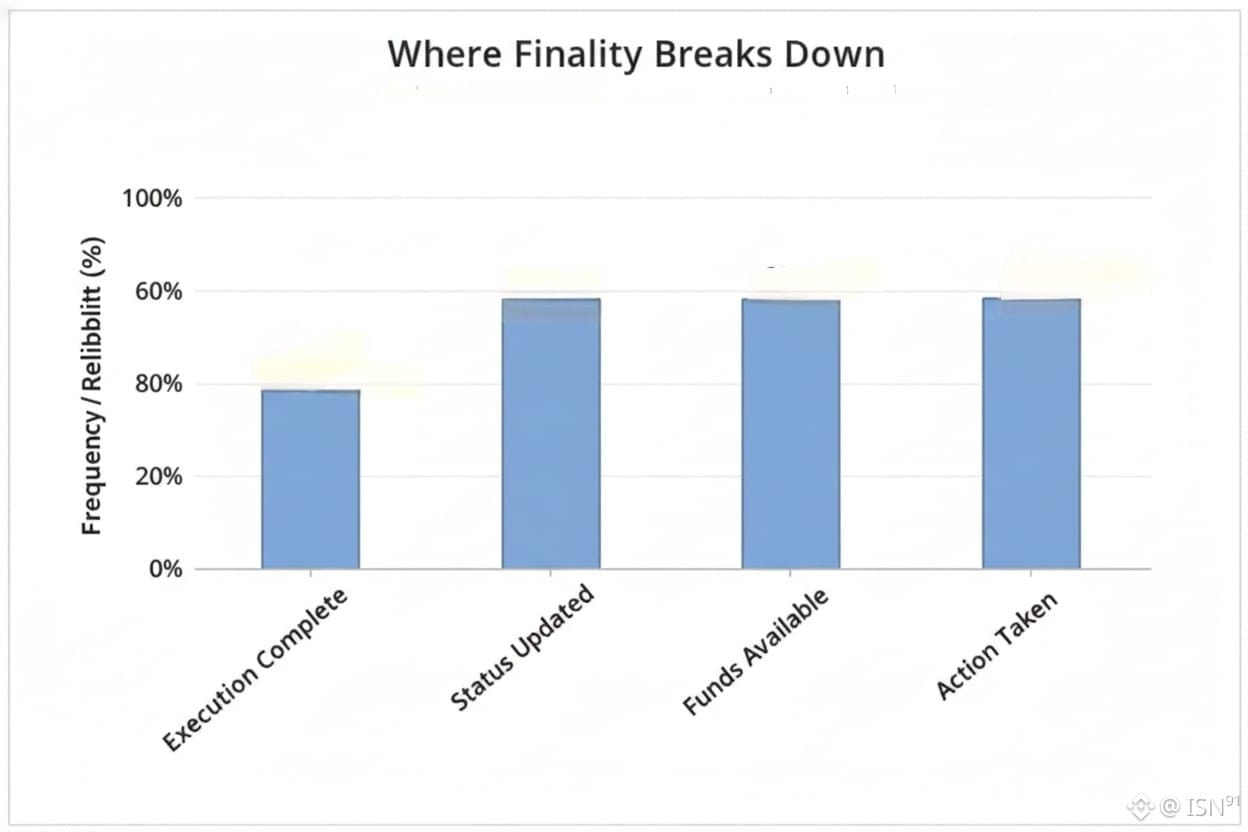 Plasma doesn't ask organizations to believe outcomes are safe to act on. It reduces the operational burden of having to decide whether they are. As transaction volume increases, this matters more than throughput alone. Each additional operation is another opportunity for hesitation to surface. Systems that leave outcomes open-ended allow that hesitation to compound quietly. Systems that enforce clean finality prevent the compounding altogether.
What changes isn't urgency — it's posture.
People move because nothing remains unresolved. Capital flows because its status no longer invites debate. Decisions occur closer to reality instead of circling it.
At that point, finality stops being a technical characteristic and becomes an organizational one. It shapes behavior, not just records. Coordination simplifies without new rules. Scale emerges without pulling more people into oversight. This is why the strongest infrastructure often feels unremarkable from the outside. There's nothing to interpret. Nothing to negotiate. Nothing to wait on.
Plasma fits this category not by being loud or complex, but by being conclusive in the places where organizations usually hesitate.


And once that habit disappears, organizations don't merely operate faster. They operate with far less friction in their own heads. That advantage is rarely measured but it's always felt.