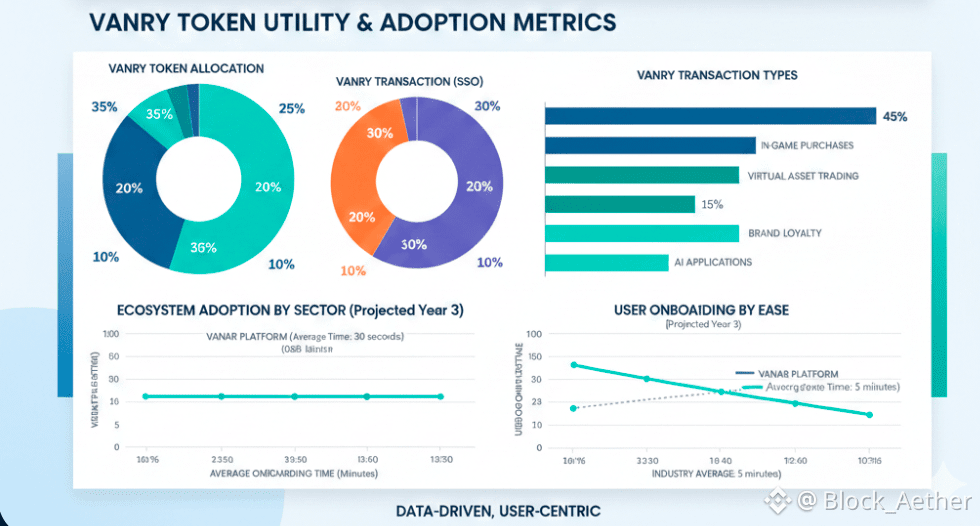
Some technologies announce themselves loudly. They arrive with jargon, diagrams, and an implicit demand that the world bend to their logic. Others move differently. They try to disappear into daily life, to become infrastructure so ordinary that no one stops to admire it. Vanar belongs to the second category. It is not trying to win arguments on crypto Twitter. It is trying to slip quietly into games, brands, digital worlds, and consumer experiences and stay there.
Vanar is a Layer 1 blockchain, but that label barely captures its intent. At its core, Vanar is an attempt to solve a problem that has haunted Web3 since its birth: how do you build decentralized systems that real people actually want to use, without asking them to become technologists first? The answer Vanar proposes is subtle but radical—design the chain around human behavior rather than financial abstraction.
The team behind Vanar did not come up through DeFi labs or cryptography research groups. They came from games, entertainment, and brand ecosystems, places where attention is fragile and friction is fatal. In those worlds, if a product takes too long to load, asks too many questions, or breaks immersion, it dies. That background shows in Vanar’s philosophy. Instead of optimizing for ideological purity, it optimizes for flow. Instead of assuming users want to “be early,” it assumes they want things to work.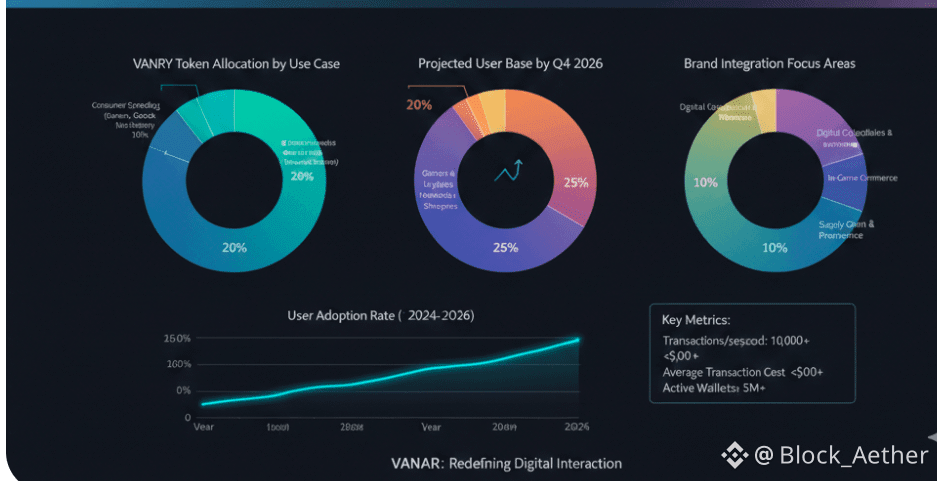
This is why Vanar talks less about speculation and more about experience. Its ecosystem spans gaming, metaverse environments, AI-powered applications, eco initiatives, and brand integrations. Products like Virtua Metaverse and the VGN games network are not experiments in decentralization for its own sake. They are attempts to make ownership, identity, and digital value feel natural inside environments people already understand—games, collectibles, social spaces. The blockchain is there, but it is not the protagonist. It is the stagehand, moving props in the dark.
Underneath that quiet surface is serious technical ambition. Vanar positions itself as an AI-native blockchain, built with the assumption that artificial intelligence will not merely sit on top of decentralized systems but live inside them. Traditional blockchains are excellent at recording events but terrible at understanding them. They know that something happened, not what it meant. Vanar aims to close that gap by introducing on-chain structures designed for semantic data, memory, and reasoning.
This matters because the next generation of digital experiences will not be static. Games will adapt to players. Virtual worlds will remember behavior. Brands will personalize engagement across platforms. AI agents will need persistent, verifiable memory that is not locked inside corporate servers. Vanar’s architecture is designed to treat memory as a shared resource—structured, queryable, and secured by the chain itself. In this vision, a blockchain is not just a ledger; it is a long-term, tamper-resistant brain.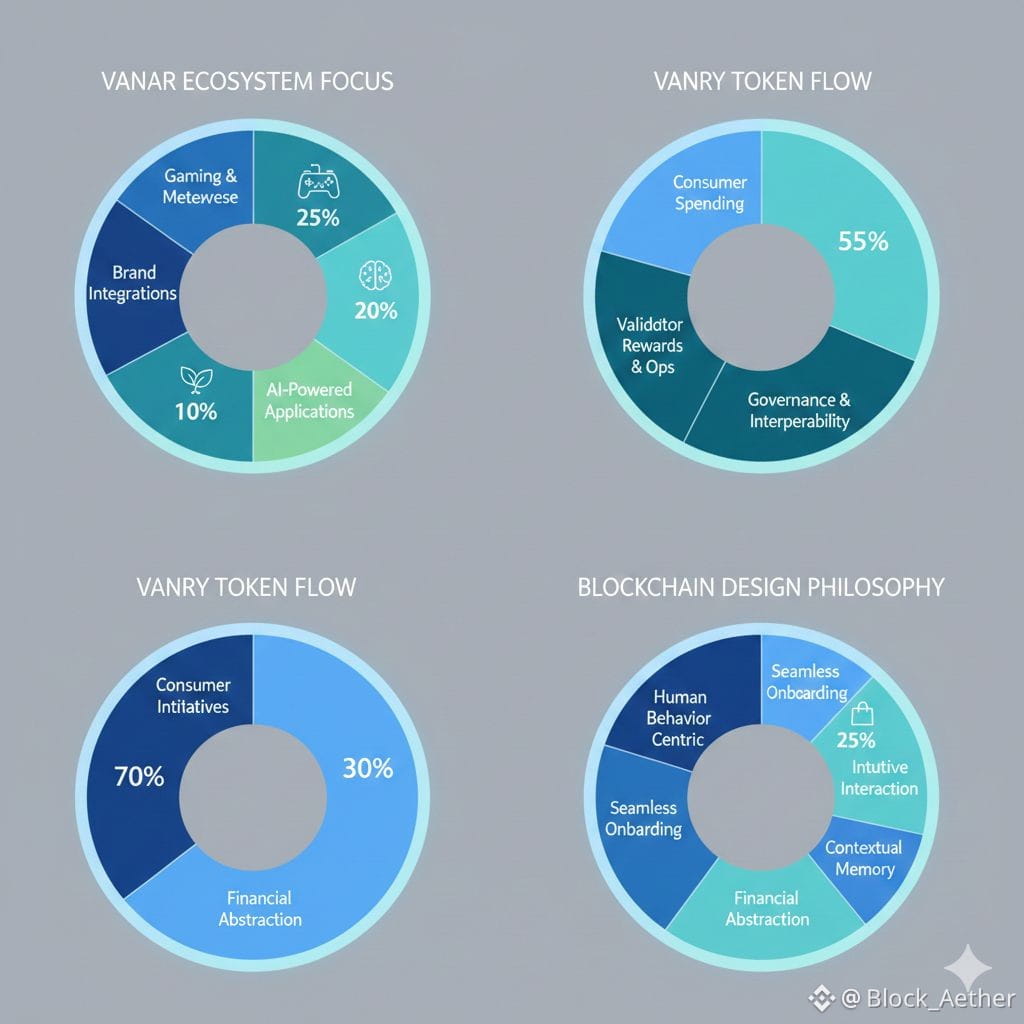
Of course, memory cuts both ways. What is remembered cannot easily be forgotten. A chain that stores context raises uncomfortable questions about privacy, consent, and governance. Vanar’s design acknowledges this tension rather than ignoring it. By emphasizing structured data, compression, and selective disclosure, it tries to balance permanence with restraint. But no technical solution can fully escape the ethical weight of storing human activity on immutable systems. If Vanar succeeds, it will not only face scaling challenges but moral ones, forced to decide what should live forever and what deserves the mercy of erasure.
The economic heart of the system is the VANRY token. Like all native tokens, it plays several roles at once: fuel for transactions, incentive for validators, and coordination mechanism for governance and interoperability. What distinguishes VANRY is not novelty but intent. It is designed to circulate through consumer-facing applications rather than remain trapped in financial loops. A player earns it, spends it, trades it, and perhaps never thinks of it as “crypto” at all. In that sense, VANRY is less a speculative instrument and more a linguistic one—a way different parts of the ecosystem speak to each other.
Yet tokens are unforgiving instruments. Volatility can undermine usability. Poor incentive design can hollow out networks from the inside. Vanar’s success will depend on whether VANRY can remain stable enough to support everyday activity while dynamic enough to reward participation. This is not a problem solvable by code alone. It requires active governance, responsive monetary policy, and a willingness to adjust when theory collides with reality.
Where Vanar becomes most interesting is in its relationship with brands. For years, Web3 has promised new models of ownership and engagement, but mainstream brands have largely stayed at arm’s length, wary of regulatory risk and reputational damage. Vanar speaks directly to those concerns. Its focus on compliance-aware architecture, traceable ownership, and predictable user experiences is an invitation to brands that want innovation without chaos. It suggests a future where digital goods are not gimmicks but inventory, where virtual presence is not a campaign but a strategy.
Still, ambition does not guarantee adoption. The history of technology is littered with platforms that were elegant, well-funded, and ultimately ignored. Vanar’s greatest risk is not technical failure but irrelevance. If its products fail to capture imagination, if developers choose simpler chains, if users do not feel a tangible improvement, the vision will remain just that—a vision. Consumer trust is earned slowly and lost quickly, especially in an industry that has burned its early adopters more than once.
What makes Vanar worth watching is that it understands this fragility. Its emphasis on single sign-on, seamless onboarding, and invisible infrastructure reveals a rare humility in blockchain design. It does not assume users want to be educated. It assumes they want to belong. The idea is not to convert the world to Web3, but to let Web3 dissolve into the world.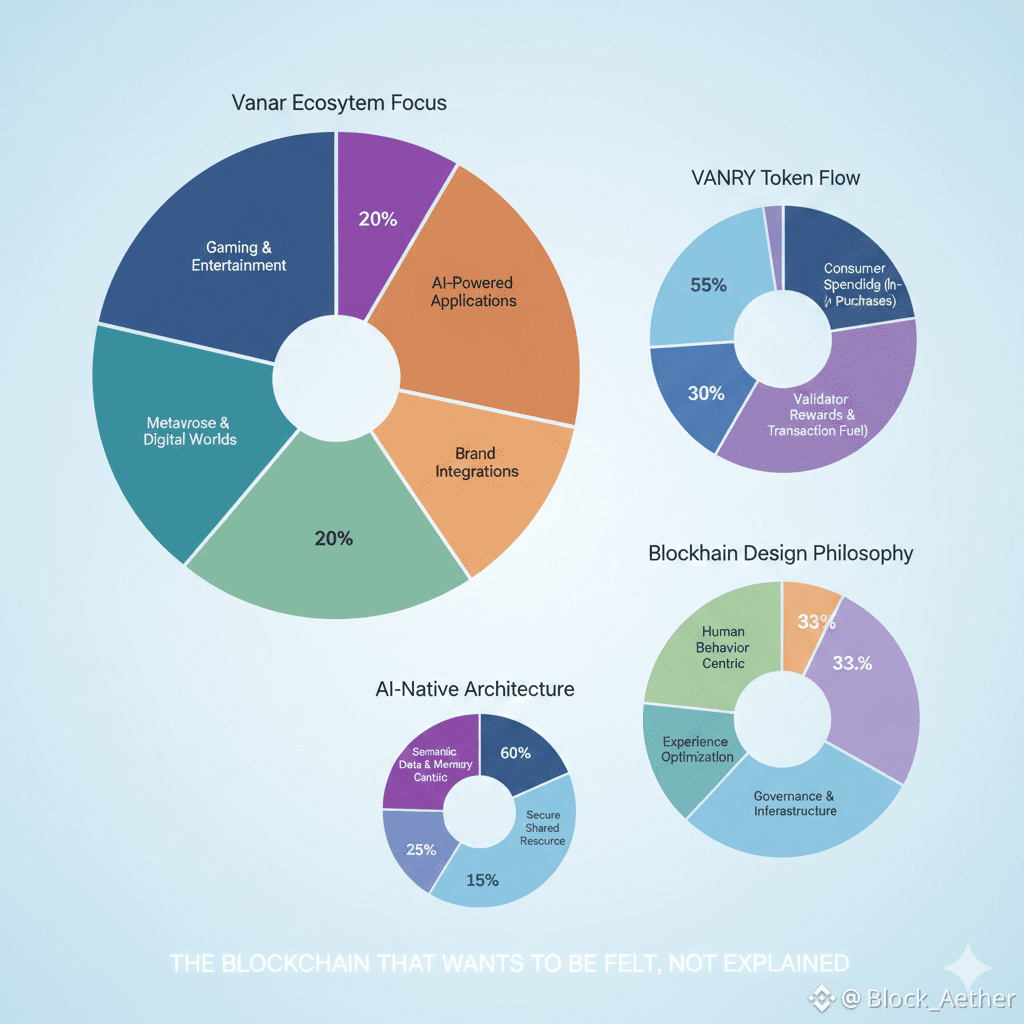
If Vanar succeeds, its victory will not look dramatic. There will be no single launch day that changes everything. Instead, there will be moments so ordinary they barely register: a game asset sold across titles without friction, a brand loyalty item that actually feels owned, an AI companion that remembers you across platforms without spying on you. These small experiences, repeated millions of times, would represent a quiet shift in how digital life is structured.
If it fails, it will still leave behind something valuable: a blueprint for thinking about blockchains as human systems rather than financial machines. Either way, Vanar is part of a broader reckoning in Web3, a recognition that decentralization alone is not enough. Technology must meet people where they are, speak their language, and respect their limits.
The real question Vanar poses is not whether blockchains can scale or whether AI can be decentralized. It is whether we can build digital infrastructure that understands us without overwhelming us. Whether we can create systems that feel less like tools and more like environments. In that question lies both the promise and the peril of what Vanar is trying to become.