
If youve ever watched someone curious about Web3 take one small step forward and then quietly step back, you already know the real problem is not only tech. The real problem is emotion. It is the little knot in the stomach that says what if I mess this up. What if I lose something. What if this world is not for me. Most blockchains were not designed around that feeling. They were designed around speed, features, and power for people who already speak the language. Vanar is trying to start from a softer place. Theyre trying to build a Layer 1 blockchain that makes sense for real people in real life, especially people who come from gaming, entertainment, and brand experiences where everything has to feel smooth or people simply leave.
And I want to say this clearly, because it matters. When a project says it wants the next billions of users, that can sound like marketing. But with Vanar, the direction is tied to where humans already spend emotion and time. People do not fall in love with infrastructure. They fall in love with worlds, competition, collecting, identity, and belonging. If a chain can sit underneath those experiences without turning every moment into a lesson, then Web3 starts to feel less like a club and more like a normal place you can enter. That is the kind of future Vanar is aiming for.
What Vanar is, in simple words
Vanar is an L1 network, which means it is the base layer where apps can be built. When the base layer is hard to use, everything on top feels hard too. Vanar publishes clear mainnet connection details, like the Chain ID 2040, the main RPC endpoint, and the official explorer. That might sound like builder talk, but it is actually a signal of something bigger: this is meant to be a real network people can connect to, not just an idea on a page.
This is also where the human goal shows up again. The chain is presented in a way that fits the tools many developers already know, which helps them build faster and ship faster. And when builders can ship faster, users benefit because the ecosystem becomes a living place with things to do, not an empty street with no lights on.
A story of evolution, not a sudden invention
Vanar did not appear out of thin air. It grew out of a project path connected to Virtua, and the shift into Vanar included a token transition from TVK to VANRY with a 1 to 1 ratio. This matters emotionally, because a transition like that is a moment where people either feel renewed trust or feel unsure. The project wrote about the swap in its own announcement, and Binance also published a completion notice for the swap and rebrand. When more than one reliable source lines up on a change like this, it helps reduce confusion for the everyday person who just wants to know what happened and why.
And the deeper meaning is simple. Theyre not only trying to build one app. Theyre trying to build a foundation. It is like moving from a single house to building the road system that many houses can use. If you care about long term adoption, that kind of move is a serious one, because it forces the team to think about the whole ecosystem, not just a single product moment.
The part that makes Vanar feel alive: real consumer experiences
Now lets talk about the part that touches real people, because this is where many projects become real or fade away. Vanar is closely tied to products that speak to mainstream habits, especially in digital worlds and gaming.
One key piece is Virtua. On the Virtua site, it describes Bazaa as a decentralized marketplace built on the Vanar blockchain, designed for buying, selling, and trading digital collectibles with on chain utility across experiences. That single line tells you a lot about the strategy. Vanar is not only saying we are a chain. They are showing how the chain can be used behind the scenes in a place where people already understand what to do: explore, collect, trade, and feel ownership in a way that makes sense.
Another part of the ecosystem story people often connect with is VGN, which is mentioned as part of the Vanar product landscape. Even without getting lost in details, the emotional truth is easy to understand. Gaming is one of the most natural doors into Web3 because gamers already accept digital items as meaningful. The difference is whether the onboarding feels kind. If it feels heavy, people run. If it feels simple, people stay long enough to understand why ownership matters.
VANRY, explained without hype
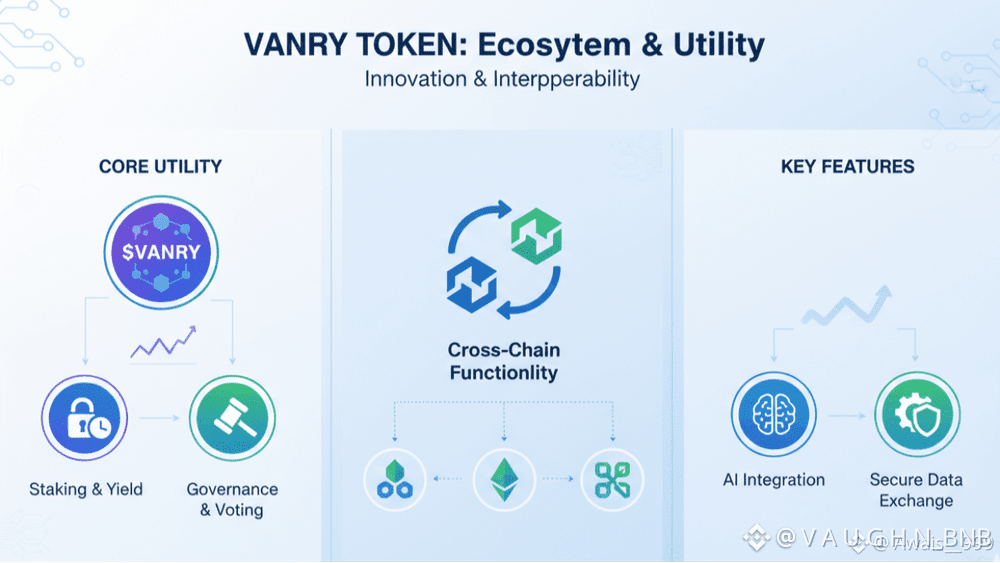
VANRY is the native token that powers activity on the network. In Vanar documentation, the token is described as having a maximum supply capped at 2.4 billion, with issuance designed so that after the genesis mint, additional tokens are generated as block rewards. This is a technical detail, but the human takeaway is about predictability. People trust systems more when the rules are clear and the limits are known.
You might also see supply figures tracked publicly, including circulating supply estimates that change over time as markets update. The important part is not the day to day number. The important part is the cap and the planned issuance model, because those are the anchors people use when they try to understand a token beyond short term noise.
And since you asked to only mention one exchange name if needed, here is the simple reality: Binance has pages showing VANRY price information and an active VANRY trading pair. I am not saying anyone must trade, and I am not pushing action. I am only saying that for people who want a familiar access point, it is there.
The big idea Vanar keeps leaning into: AI native infrastructure
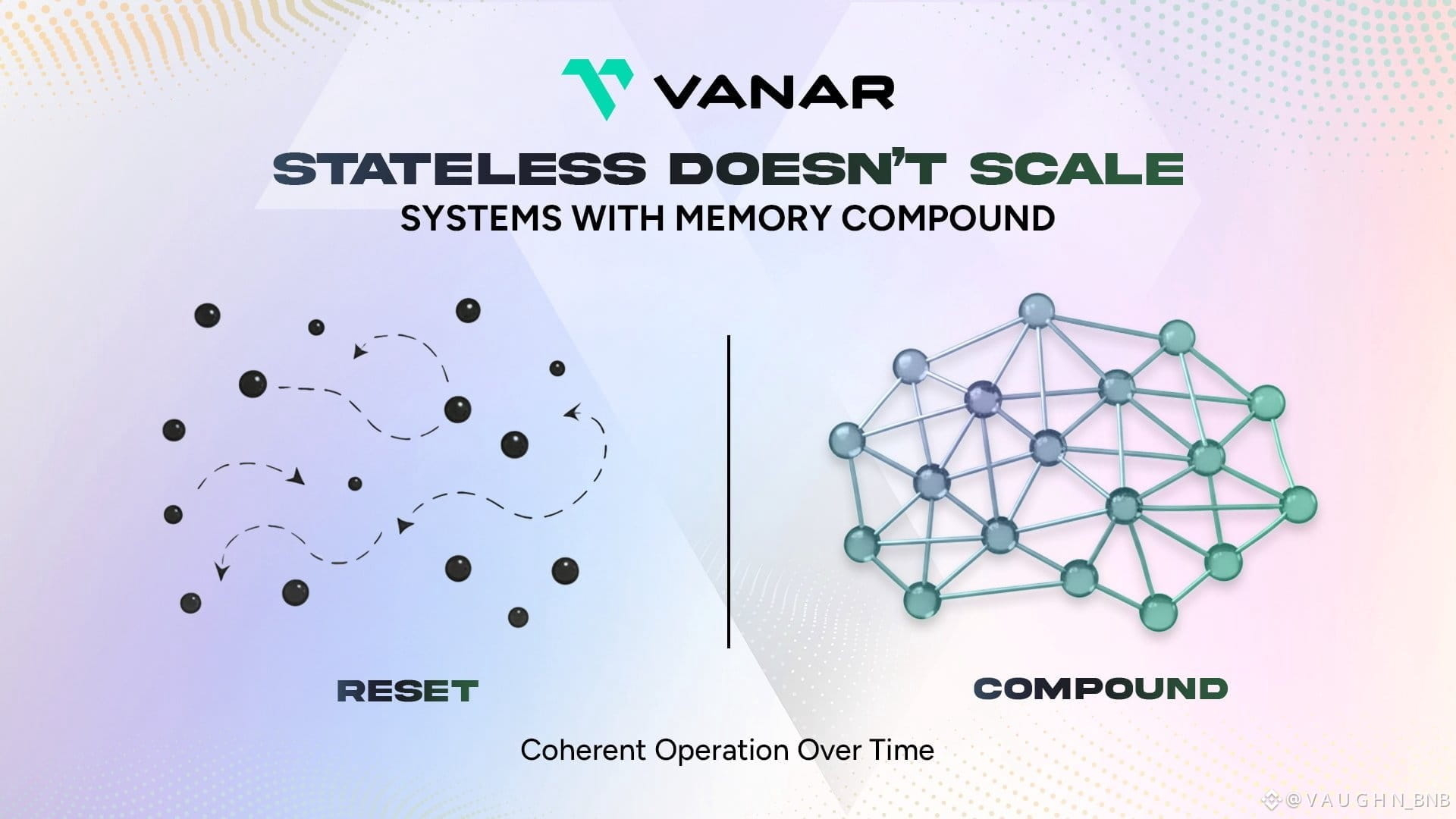
Were seeing many projects talk about AI, but the difference is whether the AI story connects to real user value. Vanar describes itself as an AI native Layer 1 stack, combining modular infrastructure with semantic memory and on chain reasoning so applications can store context and behave in more intelligent ways over time. In plain words, the vision is that apps should not feel static. They should be able to learn, adapt, and guide users more naturally.
If that sounds abstract, imagine how it feels when a digital experience remembers you. When it does not treat you like a stranger every time you return. When it can hold proof, context, and rules in a way that makes the experience feel safer and smoother. If Vanar helps builders create that kind of feeling, it could be a real advantage in entertainment, where people crave experiences that feel personal and alive.
Why predictability and trust matter more than slogans
Mainstream adoption is not won by shouting. It is won by removing fear. Vanar puts a lot of its story into usability, and the published network details show a focus on making connection straightforward. When a chain makes it easier for wallets and apps to connect, it reduces the chances that a new user feels lost in the first five minutes. And those first five minutes decide everything. People do not quit because they hate the idea. They quit because they feel unsafe or confused.
This is also why the ecosystem direction matters. A chain can claim anything. But when there are real consumer facing places where the chain supports collecting and trading in a world that feels familiar, it changes the emotional weight of the promise. It becomes less about belief and more about experience.
The future Vanar is really chasing
If Vanar succeeds, I do not think it will feel like a loud crypto moment. It will feel quiet and normal, and that is the point. It will look like a person joining a game or a digital world without fear, without a long checklist, without feeling like they need help to begin. Then later, when they are already comfortable, they realize something powerful: what they earned is theirs. Not just rented, not just borrowed, not just trapped in one place. That realization is emotional. It is pride. It is relief. It is a sense of fairness. And fairness is one of the strongest forces in technology adoption, because people will fight to keep what feels fair.
So when you hear Vanar talk about the next billions, try to measure it with human questions, not only technical ones. Does it reduce fear. Does it reduce confusion. Does it fit the places where people already feel joy. Does it help builders ship experiences that are easy to enter. If the answers keep becoming yes, then Vanar has a real shot at being the kind of chain that people use without even thinking about the chain at all. And honestly, that is what real adoption looks like.
