
Pandemics are remembered for their human cost, but their deeper impact is structural. Across history, major health crises have exposed weaknesses in economic systems, institutions, and trust mechanisms. Each time, societies were forced to adapt not by choice, but by necessity.
When viewed through this historical lens, crypto’s rise during the COVID era appears less accidental and more familiar. Crises tend to accelerate the adoption of new coordination tools, especially when existing systems struggle under pressure.
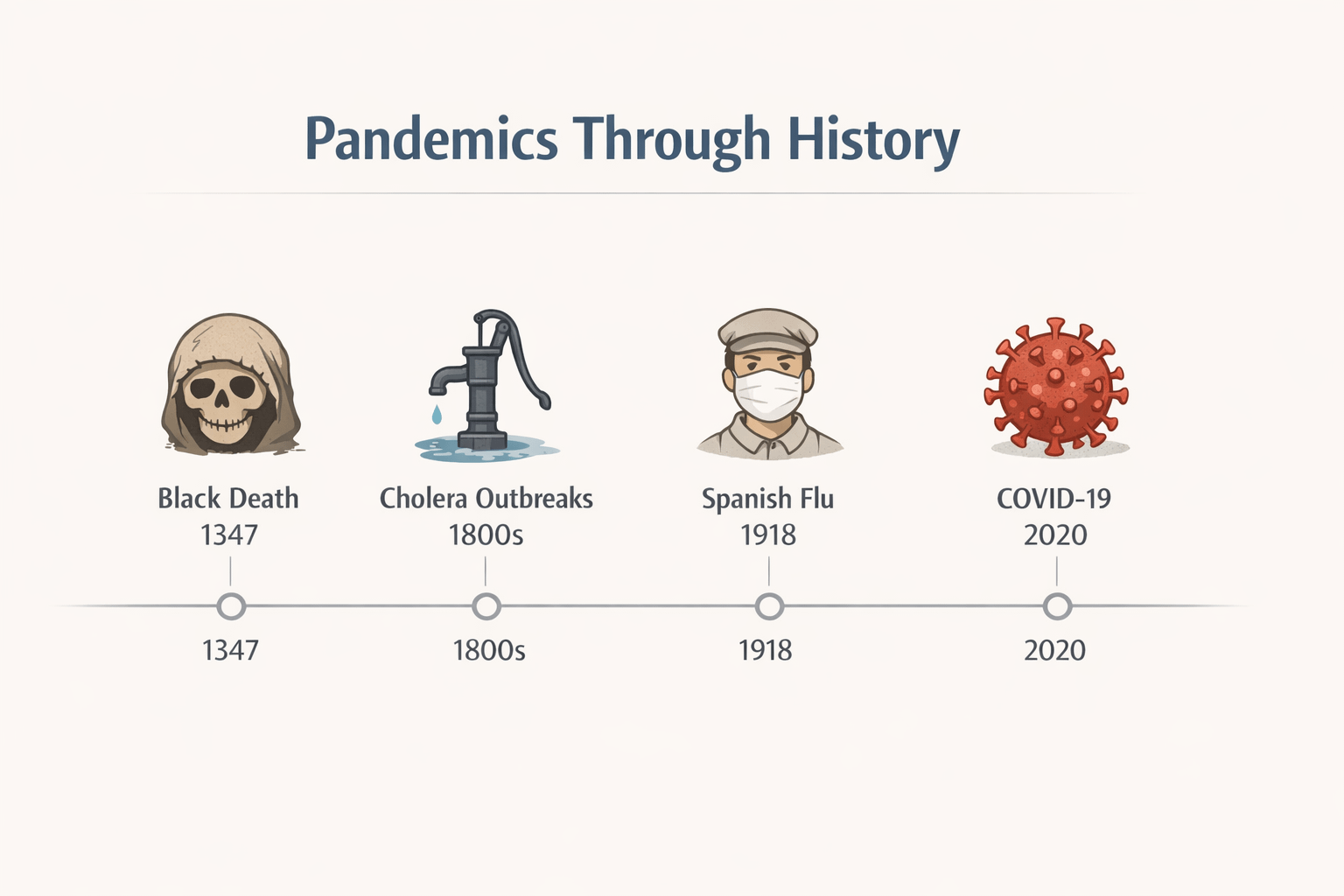
𝟭- 𝗛𝗼𝘄 𝗣𝗮𝗻𝗱𝗲𝗺𝗶𝗰𝘀 𝗥𝗲𝘀𝗵𝗮𝗽𝗲 𝗦𝘆𝘀𝘁𝗲𝗺𝘀
📍The Black Death (14th Century):
The Black Death wiped out roughly one-third of Europe’s population. Its most lasting effect was economic: feudal systems weakened as labor became scarce, power decentralized, and local arrangements replaced rigid hierarchies. The lesson is simple and recurring: 𝘄𝗵𝗲𝗻 𝗰𝗲𝗻𝘁𝗿𝗮𝗹𝗶𝘇𝗲𝗱 𝘀𝘆𝘀𝘁𝗲𝗺𝘀 𝗳𝗮𝗶𝗹 𝘂𝗻𝗱𝗲𝗿 𝘀𝘁𝗿𝗲𝘀𝘀, 𝗺𝗼𝗿𝗲 𝗱𝗶𝘀𝘁𝗿𝗶𝗯𝘂𝘁𝗲𝗱 𝗳𝗼𝗿𝗺𝘀 𝗼𝗳 𝗼𝗿𝗴𝗮𝗻𝗶𝘇𝗮𝘁𝗶𝗼𝗻 𝗲𝗺𝗲𝗿𝗴𝗲.
📍19th-Century Cholera
Cholera outbreaks revealed how dangerous fragmented information could be. Cities responded by standardizing records, improving transparency, and investing in shared public infrastructure.
Crises punish slow, opaque systems. They reward those that improve coordination and data integrity, a principle that remains relevant in digital systems today.
📍The 1918 Influenza
The Spanish Flu struck during global economic fragility. Supply disruptions and uneven policy responses weakened currencies and financial confidence. Informal economies expanded where formal systems lagged. Trust, once lost, proved difficult to restore, especially when institutions could not respond quickly or fairly.
📍COVID-19
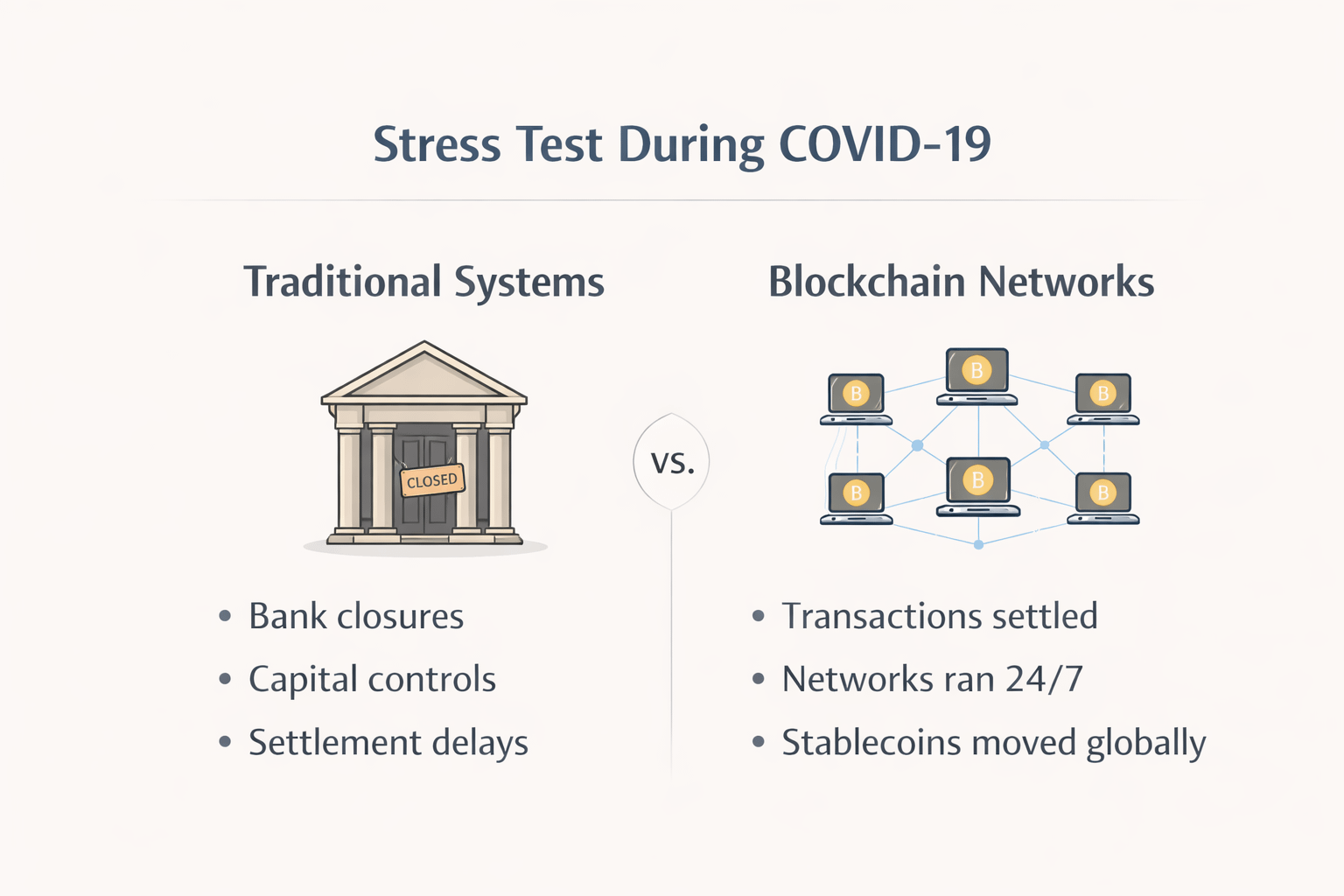
COVID-19 was the first pandemic to test a fully digitized global economy. Financial systems, supply chains, and labor markets were stressed simultaneously. Three dynamics stood out:
● Massive monetary expansion reopened debates about currency stability
● Large populations lacked access to reliable financial infrastructure
● Institutional trust declined amid uncertainty and inconsistent responses
During this period, crypto adoption accelerated. Not because crypto solved the crisis, but because it continued operating while parts of the traditional system slowed or restricted access. Blockchains did not pause. Transactions settled. Smart contracts executed. Stablecoins moved value globally without intermediaries.
𝟮- 𝗧𝗵𝗲 𝗖𝗼𝗿𝗲 𝗟𝗲𝘀𝘀𝗼𝗻: 𝗖𝗼𝗻𝘁𝗶𝗻𝘂𝗶𝘁𝘆 𝗨𝗻𝗱𝗲𝗿 𝗦𝘁𝗿𝗲𝘀𝘀
History shows that pandemics expose three recurring weaknesses:
● Single points of failure
● Poor information transparency
● Heavy dependence on institutional trust
Blockchain systems address these pressures structurally. Distributed validation reduces reliance on central authorities. Immutable ledgers improve auditability. Open networks allow participation without permission.
This does not make crypto universally superior but it explains why it performs well during periods of systemic strain.
𝟯- 𝗪𝗵𝘆 𝗧𝗵𝗶𝘀 𝗠𝗮𝘁𝘁𝗲𝗿𝘀 𝗶𝗻 𝟮𝟬𝟮𝟲
Pandemics do not create innovation in isolation, they accelerate adoption of ideas already waiting for pressure. Crypto’s rise during COVID fits a historical pattern seen across centuries of crisis-driven transformation.
Understanding this does not require belief in crypto as a cure-all. It requires recognizing that resilience, transparency, and continuity have always gained value when societies face uncertainty.
From the Black Death to blockchain, the lesson is consistent: systems that endure stress without breaking tend to shape what comes next.